Guide · 6 min read · Updated
Drone at a wedding:what the rules allow in Spain
People, place and permits: what to know before asking for aerial images.
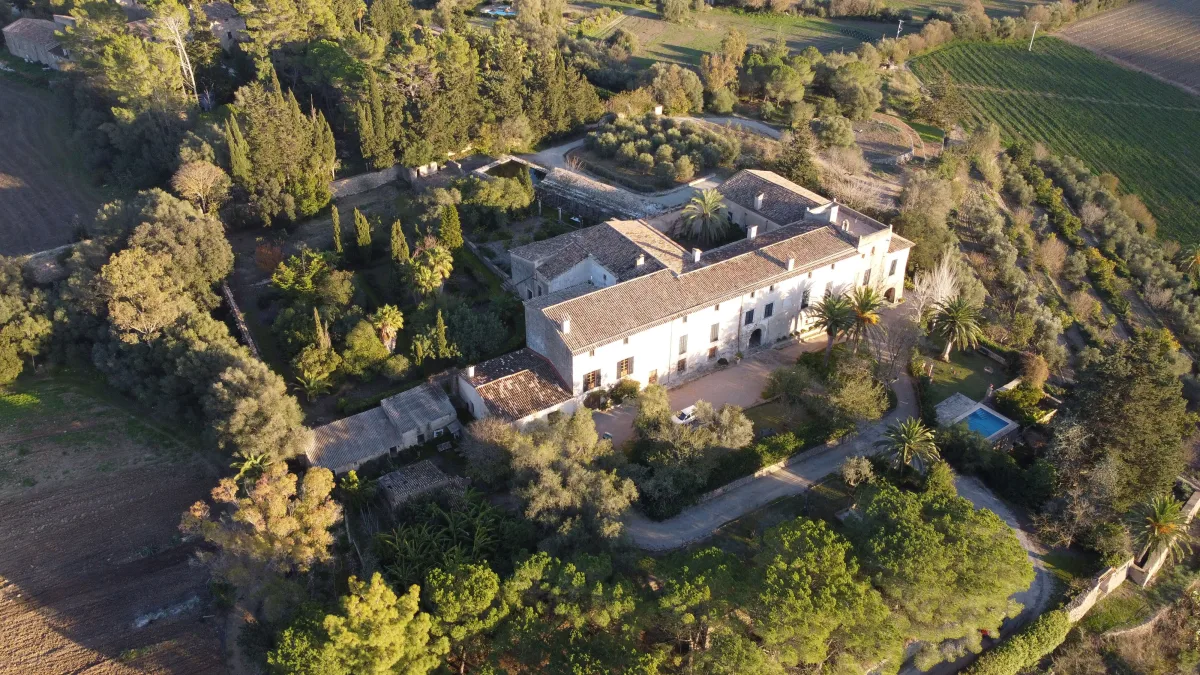
Flying a drone at a wedding looks like a decision about images, but first it is a decision about rules, people and place. Aerial shots depend on who pilots, who is underneath and where the wedding is held, and all three can be asked about in advance. This text sums up what the official sources say (the Spanish State Aviation Safety Agency, AESA; the European agency, EASA; and ENAIRE) and what to ask the venue and whoever will fly. The wedding film has its own guide; here is the detail on the drone.
One note first: this is general guidance, not legal advice. Rules change and every flight has its circumstances; for a specific case, AESA is the one to answer.
Who flies: registration, training and insurance
In Spain, the European drone rules apply to every aircraft, whatever its size. According to AESA, whoever uses the drone (the person or the company, which the rules call the operator) must register when the aircraft weighs 250 grams or more or carries a sensor able to capture personal data. The registration number must be readable on the drone, with the naked eye, while it is on the ground.
Besides that registration, for the open category AESA asks for a remote pilot training certificate. As for insurance, the obligation depends on the category and the weight of the aircraft, and Article 8 of Royal Decree 517/2024 sets it: for which one applies to your flight, AESA gives the answer. That is why the useful question is not "do you have insurance?" but which insurance your flight requires and what the policy in place covers. A team that flies regularly will have these papers to hand; one that improvises will not.
People: what limits a wedding most
The open category is the one for low-risk operations and, according to EASA, the main reference for most leisure and low-risk commercial activities. Its rules, according to AESA, include keeping a safe distance from people and not flying over assemblies of people. The European agency sums it up by subcategory: one allows flying over uninvolved people, avoiding it whenever possible, but never over assemblies; another requires distance from people; the third, that the flight be far from them.
A wedding is, almost by definition, a place where people are gathered: a ceremony with the chairs full or a dinner with the tables laid are the clearest examples of what that rule wants to avoid. That is why, in practice, what fits with guests present tends to be limited to the landscape, the arrival or the empty venue, and not to following the ceremony from above.
What does not fit in the open category is not simply banned: it moves to the specific category. AESA describes it as the one for medium-risk operations, and requires the operator to be registered in Spain and to obtain prior authorisation, or to submit a declaration when the operation fits a standard scenario. Neither is settled in the week of the wedding; it is best to ask as early as possible, not the day before.
The place: airports, controlled airspace and urban areas
On top of the rules for each flight, there are rules for each place. AESA calls them UAS geographical zones and they are set out in Royal Decree 517/2024. The ones most likely to affect a wedding:
- Aerodromes and heliports, civil or military. Flying around them is prohibited unless agreed with whoever manages the aerodrome through a coordination procedure.
- Controlled airspace. Also prohibited, unless the conditions set by the rules are met or the flight is coordinated with the relevant air traffic service provider.
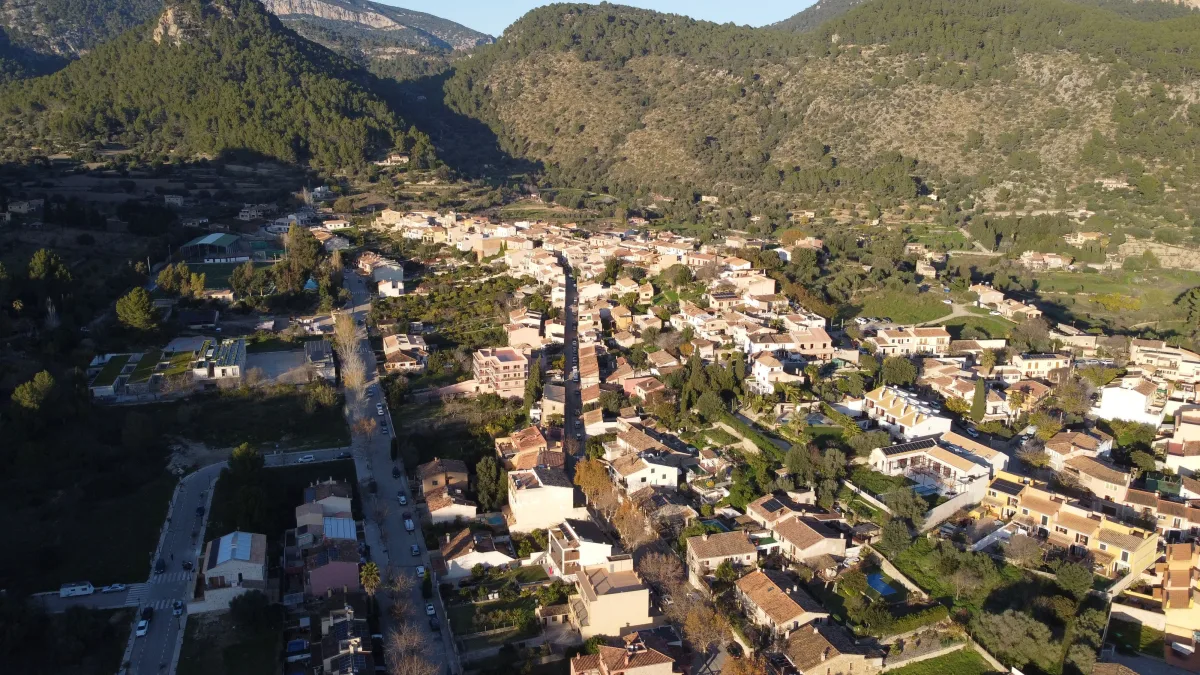
- Urban areas. AESA's guide includes towns and built-up areas, residential or commercial areas with services, and publicly accessible recreational areas, among them beaches with facilities and parks. Whoever must register as an operator and will fly there, or over assemblies of people, must notify the Ministry of the Interior first, at least five calendar days ahead. And in the open category, buildings and homes, with their yards and gardens, may not be overflown unless whoever manages them grants an exemption beforehand.
- Other zones. Royal Decree 517/2024 also provides for particular zones for reasons of security, protection, privacy or the environment.
An isolated venue may fall outside the definition of an urban area, but the rules and the map will say so, not intuition. To find out, AESA points to the ENAIRE Drones application, available on web and mobile, where you can check the areas with bans or restrictions, dangerous zones and other alerts. It is worth looking again close to the date, and not only when you sign.
What to ask the venue
The rules are the minimum; the venue may be stricter. Before counting on aerial images, ask the venue, in writing:
- Whether it allows drones, and whether at all times of day or only at some.
- Whether there are neighbours, public paths, buildings or protected areas around that it knows of and that affect the flight.
- Whether, as it has buildings and gardens, it can grant in writing an exemption from the overflight ban the rules set when the place falls in an urban area.
- Whether it already has aerial images of its own and under what conditions they could be used.
A venue that has hosted many celebrations tends to have clear answers; if it does not, that is worth knowing before the date.
Guests and their image
A drone records from above and, often, without anyone seeing it. The Spanish Data Protection Agency publishes a guide, "Drones and Data Protection", which also covers recording events with drones and guides whoever captures images of identifiable people. For a wedding, the practical consequence is simple: let the guests know there will be a drone and when, and ask whoever flies it to explain what they do with the images.
If the drone is not possible
No drone does not mean no perspective. Some alternatives, as a general approach:
- A high point in the venue itself. A terrace, a staircase or a slope gives a wide view from a safe place, with the venue's permission.
- The place without guests. Images of the empty space, from the ground and in good light, before the first guest arrives.
- A flight at another time. An aerial shot without guests, for example in the morning, avoids the question of people; it does not avoid the place or the venue's permission.
- Existing images. If the venue has its own, the question is under what conditions they could be part of your film.
Talking it through before signing avoids deciding on the day, which is when it is hardest to decide well.
What to get in writing
If aerial imagery is part of what you hire, these are the points worth having in writing:
- Who pilots and which company they work for.
- The operator's registration number with AESA and the pilot's certificate.
- The insurance your flight requires, according to AESA, and what the policy in place covers.
- Whether the flight fits the open category or needs authorisation or a declaration, and who handles it.
- Which zone was checked on ENAIRE Drones, and when.
- The venue's permission.
- What will be done if the day does not allow flying.
If you would like us to talk about aerial imagery for your wedding, tell us the place and the date and we will look at it with the rules in front of us. To know what else to ask whoever films, see the questions before choosing a photographer.
Frequently asked questions
Can you fly a drone at a wedding in Spain?
It depends on who flies, who is underneath and where. In the open category you may not fly over assemblies of people, and what does not fit there is handled in the specific category, with prior authorisation from AESA or a declaration. The place may also have its own bans.
Does the drone have to be registered?
AESA requires the operator, not the aircraft, to register when the drone weighs 250 grams or more or carries a sensor able to capture personal data. The registration number must be readable on the drone.
Where can I check whether a place can be flown over?
On ENAIRE Drones, the application AESA points to, where you can check areas with bans or restrictions, dangerous zones and other alerts. It does not replace the venue's permission or the other obligations of the flight.
Can a venue ban the drone?
Yes, it can have its own rules, which is why it is worth asking in writing. Also, in an urban area the rules prohibit, in the open category, flying over buildings, homes, yards and gardens unless whoever manages them grants the pilot an exemption beforehand.