Guide · 7 min read · Updated
Wedding album:choosing it, copying it, backing it up
Choose, print and keep: what to do with the wedding once the day has passed.
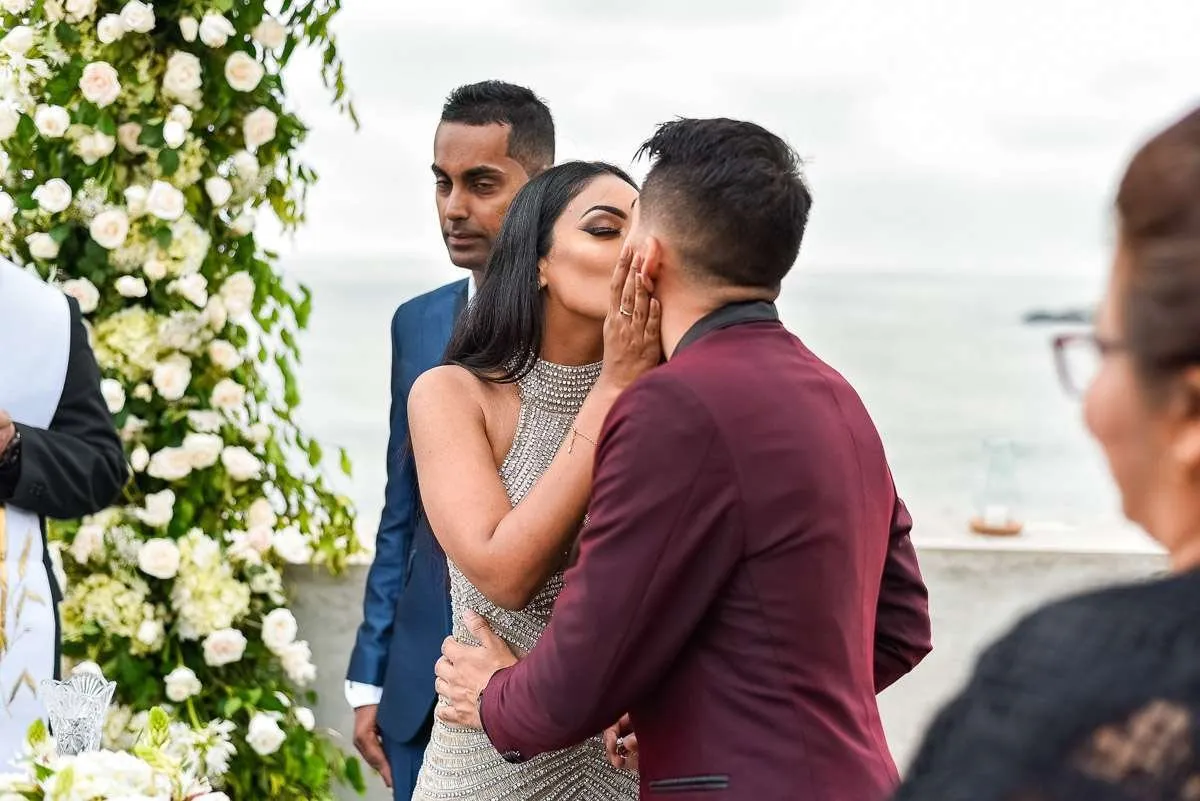
A wedding album is decided when the wedding is already over, which is why it is so often chosen in a hurry, tired and with five hundred images in front of you. This text is about what comes after the day: how to choose and design the album, which materials and formats exist, what to do with printed copies and instant prints, and how to keep the files so that a wedding that cannot be repeated does not depend on a single drive. When the images arrive is explained in when you will receive your wedding images; this is where what you do with them begins.
Choosing the images: fewer than you think
An album is not the whole gallery. It is a selection with a beginning, a middle and an end, and it works better the shorter it is. Many couples find when choosing that their favourites are not the ones they expected: a grandfather's hand, a gesture from the preparations, someone laughing out of frame.
A method that saves arguments: a first pass, each on your own, marking whatever moves you without thinking too much. Then let it rest for a few days and come back with the opposite question, what is surplus. Of the same moment, one image is enough.
Ask too who selects. Some authors propose a first selection and you correct it; others prefer that you choose from the gallery. Both ways work, but it helps to have it said before signing, because the album clock runs from the day you hand in your choice, as the article on timings explains. The sooner you choose, the sooner it starts.
The design: order, space and proof
Ask whether the author does the layout or you have to, and above all whether you will see a proof before printing. Once printed, an album cannot be corrected. Ask in writing how many rounds of changes are included and how long each one takes.
There are two ways of ordering. The chronological one follows the day, from the preparations to the last song, and almost reads itself. The thematic one groups by people, places or light, and is closer to a magazine. Neither is better; it depends on how you want to look at it in ten years, and whether you will view it alone or with the family.
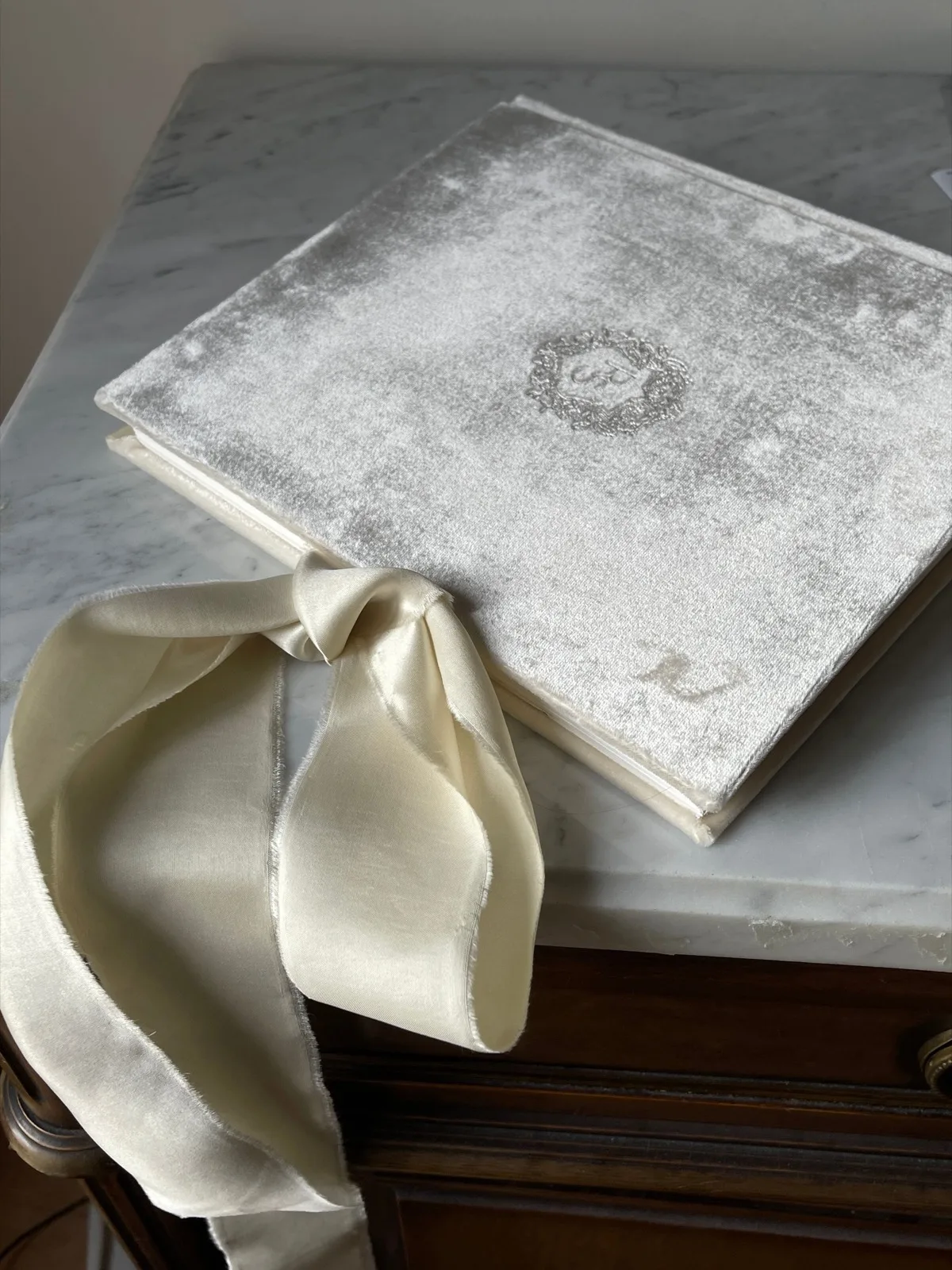
Two layout criteria that almost always work. The first is to leave space: a page with a single image and white around it says more than four squeezed together. The second is the fold: on a double-page image, the middle of the album crosses the photograph, and a face should not fall there. Ask to see it in the proof.
Materials and cover
The cover is the first thing seen and touched. Laboratories that print albums usually offer three families of materials:
- Acrylic over faux leather. The image is seen through a clear sheet, with gloss and depth, like a framed picture.
- Brushed-aluminium print over faux leather. A metallic finish with a brushed texture that brings out the light areas of the image.
- Faux leather or linen, without an image. The most restrained: what you choose is the colour and the feel. There is usually black, white and titanium, wood imitations in grey or brown, cork and natural linen. Some allow a line of text to be stamped.
A criterion, not a rule: a cover without an image hardly ever goes out of fashion, and one with an image says who you are. Choose by touch, not only by the catalogue photograph: the gloss of the acrylic, the texture of the linen or the warmth of the cork cannot be judged on a screen. Ask for a materials sample or photographs of the real finish, and ask which options your author offers, because not all work with the same laboratory.
Format and size
The format follows the photographs. If wide shots, the sea and groups dominate your selection, a landscape album gives them room; if there are many portraits, a portrait or square one respects them more. There is no right format, only the one that resembles your images.
Size is similar. A large one takes the images to an impressive scale; a small one is leafed through sitting down, on your knees, without a thought. Ask for the size in centimetres and the number of pages in writing, especially if the album appears in the proposal as included (the article on how a wedding is quoted explains what to look at), and check the measurement against a book at home.
Printed copies and instant prints
Loose copies serve three purposes: framing one or two, giving to those who will not see the album (grandparents, godparents) and keeping. Choose few, and ask the author what size each can take and for which uses you may print them yourself without asking permission; the article on quotes covers it under usage rights.
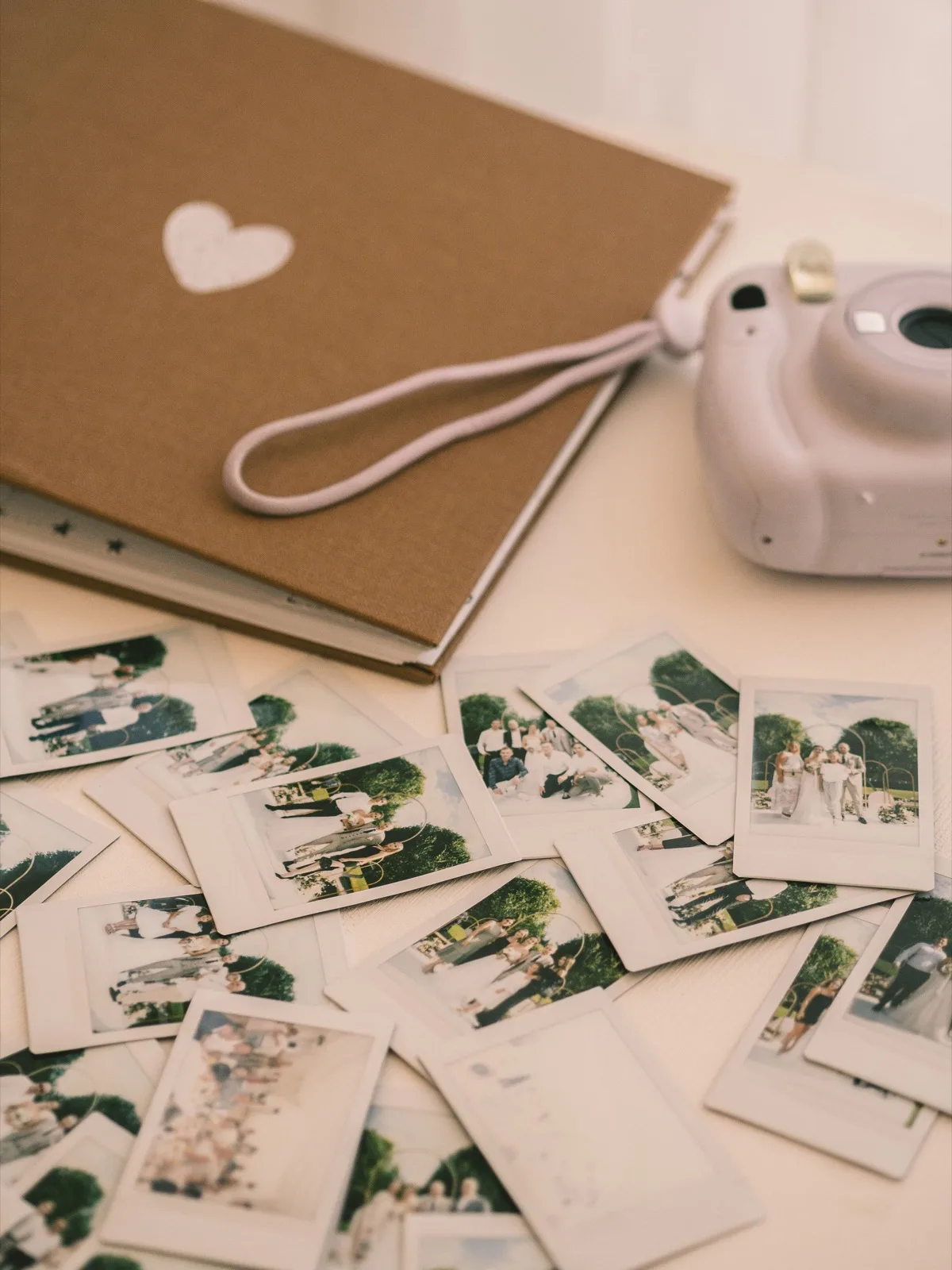
Instant prints are another matter. The ones taken on the wedding day, at a table or in a guest book, do not compete with the album: they are small, imperfect and meant to be handled. Keep them apart, or in a memory book of their own, and do not stick them into the designed album. And if you keep them in a stick-in album, the US Library of Congress advises avoiding those with coloured, "magnetic" or self-adhesive pages.
To keep printed copies, the same institution recommends a relatively dry (30 to 50% relative humidity), cool (about 21 °C or below) and stable environment, and avoiding attics, basements and the proximity of radiators or outside walls. Also, limit light. At home: an interior wardrobe, not the box room or the shelf by the window.
Backup: three copies, two media, one away
The files are the only thing that lets you print another album in twenty years. The rule taught for keeping them is short: three copies, on two types of medium, and one of them away from where the others are. It is what the US cybersecurity agency (CISA) recommends on its page about backing up data: keep three copies of every important file, one original and two copies, and spread them over two different media, such as a hard drive and the cloud.
The Library of Congress explains the reason for the distance: a copy somewhere else, in case a disaster strikes your home.
Applied to a wedding, without jargon:
- The first copy is the download the author gives you, kept on your computer.
- The second, on an external drive, a different kind from the computer.
- The third, away from home: cloud storage, or a drive at a relative's house.
Do it the day they arrive, not when you have time. The online gallery does not count as a copy: it belongs to the author and may be withdrawn in time. If the article on timings told you to make two copies, this rule adds the third and the distance.
Film weighs far more than photographs. Check that your drive and your cloud space have room before it arrives, so you do not find out with the download half done.
Two more habits that cost nothing. Give the folders a name that will make sense in twenty years, with the year, the wedding and the names. And once a year, open a file from each copy: a copy that has never been opened is a copy you know nothing about.
What to ask before signing
Almost all of this is settled before the wedding, in the proposal. These questions save surprises:
- Who selects the images for the album, and how many rounds of changes are included.
- Whether the album is included or contracted separately, and with what size and how many pages.
- Which cover materials are offered and whether there is a physical sample.
- Whether there will be a proof of the design before printing, and how long each stage takes from the moment you choose.
- Whether there are small replicas and loose copies, and for which uses you may print them yourself.
- How long the author keeps a copy of the files, without it being your only guarantee.
If you hire photography and film with the same team, the album and the film are thought through together, and it is easier for them to tell the same story; we explain it in wedding photographer and filmmaker. And if you would like your wedding to arrive here with that care, tell us your story.
Frequently asked questions
How many photos fit in a wedding album?
It depends on the number of pages and how many images go on each; a design with room to breathe uses few per page. Ask the author about the pages and how many images they usually place, and remember that fewer images usually make a better album.
How long does a wedding album take to be ready?
The clock usually starts when you hand in your selection, not on the wedding day. That is why it is wise to ask in writing for a number of days from that moment. We explain the timings of the delivery and the album in the article on when you will receive the images.
Where should I keep the wedding photographs and film?
In three copies: the one you receive, an external drive and a copy away from home, in the cloud or at a relative's house. According to the CISA guide, that is two different media and one copy offsite. Make the copies the day of delivery and check them once a year.
Can instant prints be stuck into the wedding album?
It is better to keep them apart, in a memory book of their own. If you stick them into a stick-in album, avoid coloured, magnetic or self-adhesive pages, which the US Library of Congress advises against for keeping photographs.