Guide · Destination · 3 min read · Updated
Destination weddings:arriving the day before
Marrying far from home calls for a different way of organising. Here is what changes, and why.
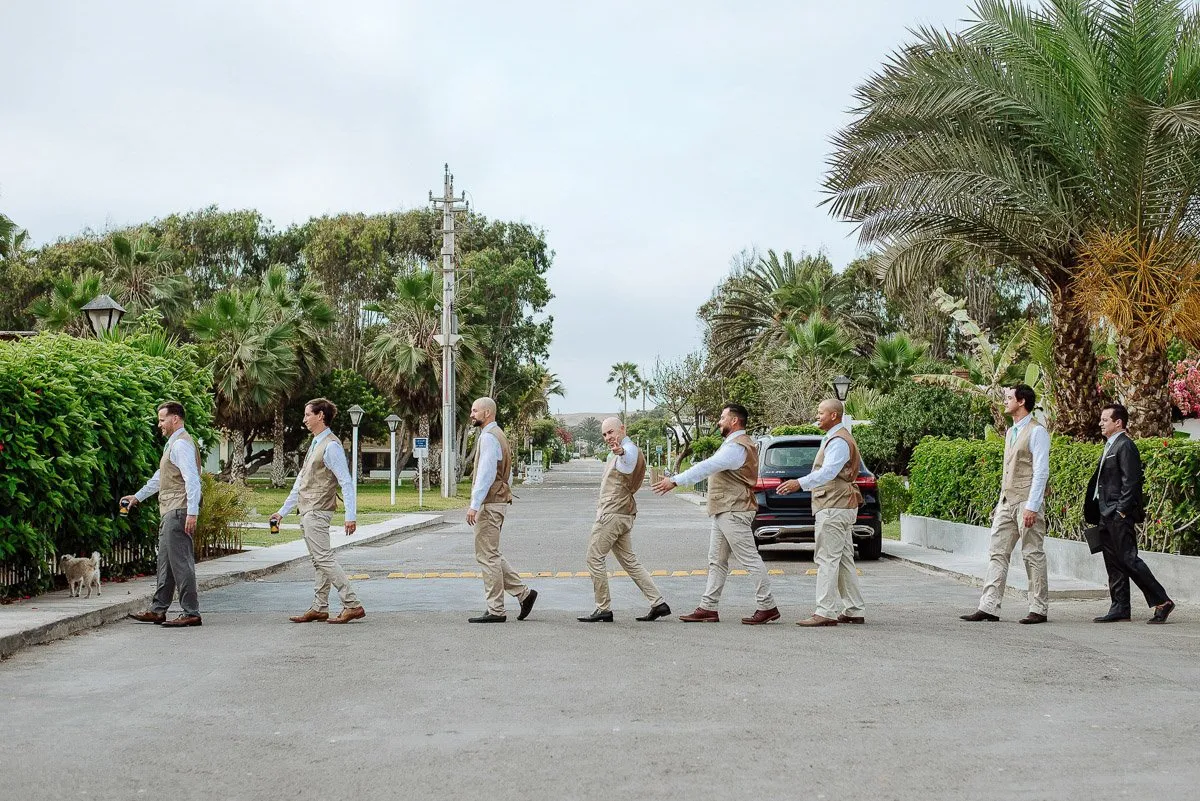
A destination wedding is rarely a single day, and it is almost never organised like a local celebration. On a coast or an island, three decisions shape the outcome: when you arrive, when you see the place, and what to do if something goes wrong.
What truly changes
- Arriving the day before. A delayed flight leaves no second chance. If the wedding is in Madrid and the team comes from Palma: how it is organised.
- Seeing the venue in its light before the date. Knowing where the sun enters the terrace avoids improvising during the day's only beautiful half hour.
- Doubling the equipment. On an island, on an August Saturday, there is nowhere to replace a part.
- Allowing for more than one day: welcome dinner, wedding and Sunday lunch.
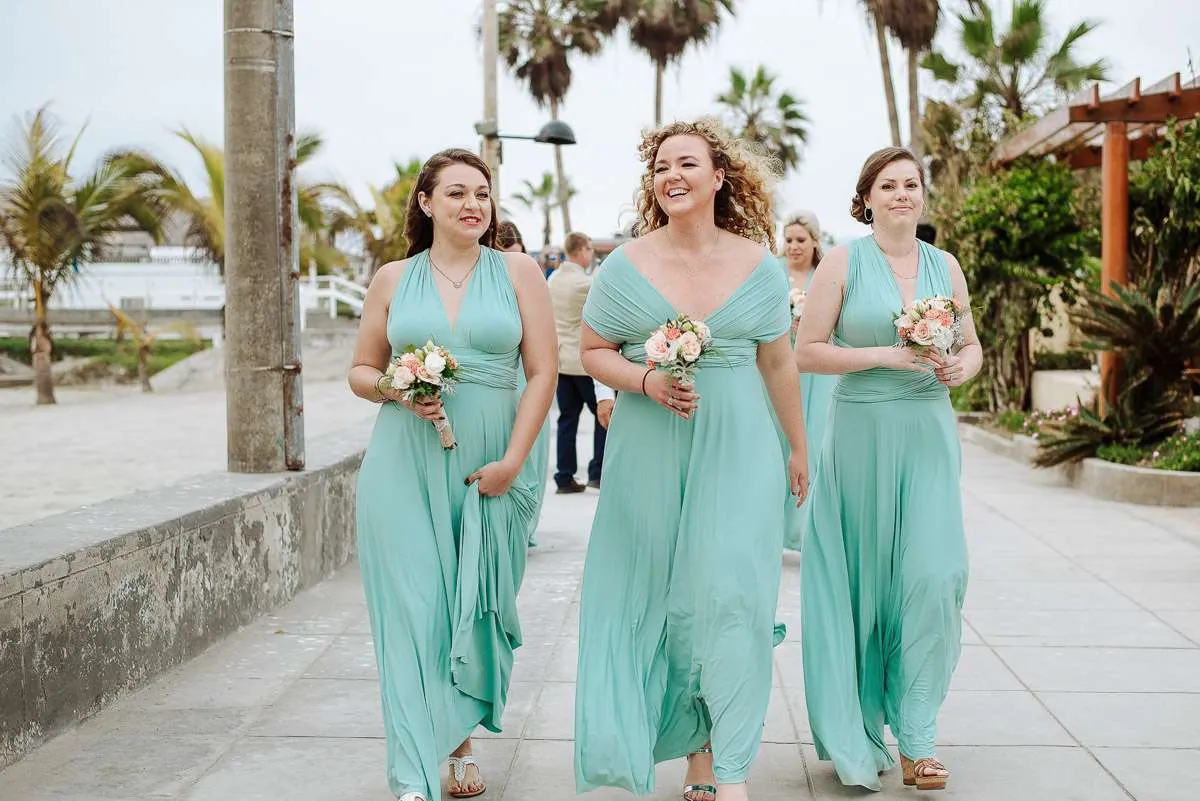
The hour of light is not the same
It is the most common mistake when organising from afar. In Ibiza, for instance, the sun sets some twenty-five minutes earlier than in Madrid, which is the same as the most favourable window of light. A timetable copied from the home city arrives late.
We calculate the exact hour for your date and venue before you settle the schedule with the estate.
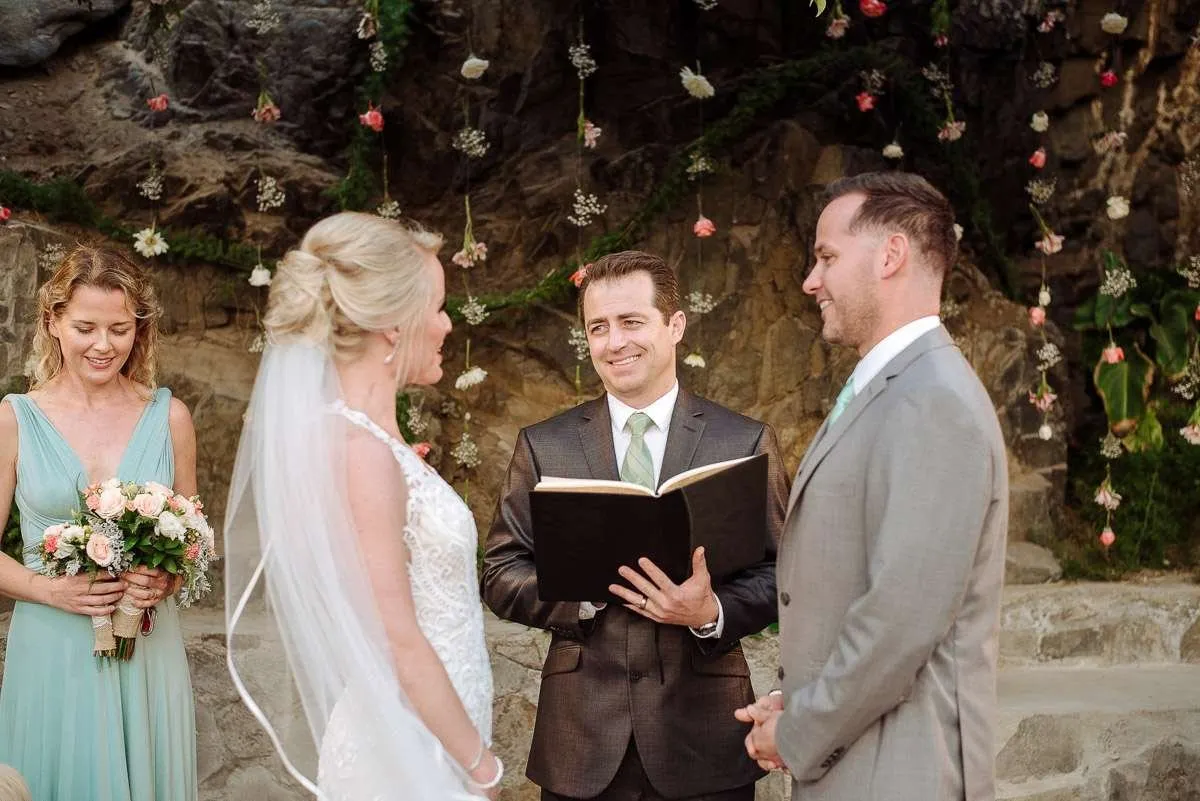
Weddings abroad
Photographing weddings far from home leaves a useful habit: assume something may fail and arrive with the alternative already prepared. That is not learnt by reading, but when the equipment takes a day to arrive and the nearest shop is ninety minutes away.
Marrying in Spain from abroad: the paperwork
This section covers weddings held in Spain; if yours is in another country, that country's requirements apply. For a civil marriage held here to be legally valid, a file must first be processed showing that both of you are free to marry and that there are no impediments. It is handled by a notary, a court clerk (letrado de la Administración de Justicia) or the civil registry officer where one of the two lives.
When one of you is a foreign national, more documents are added. The Aragón Civil Registry, as a published example, asks for a recent birth certificate and civil-status certificate (valid for six months), a passport, apostille and a Spanish translation. For citizens of certain countries it also asks for a certificate of capacity to marry. Two witnesses of legal age who know both of you must attend. Once the file is opened, the wedding must take place within one year. The exact requirements and times are set by the registry that applies to you: ask them as early as you can, because obtaining and apostilling documents in another country takes time.
The apostille is the stamp that, among the countries party to the 1961 Hague Convention, replaces consular legalisation of public documents.
Symbolic ceremony and legal ceremony
Those who can conduct a legal civil ceremony include the mayor or a councillor to whom the mayor delegates, a court clerk, a notary or, abroad, a consular official. A symbolic ceremony on a terrace facing the sea can be unforgettable, but it does not replace that act. Those who want both can separate them in the calendar: the legal act one day, the celebration on the date of the trip. Telling guests this avoids confusion.
The estimate
It is prepared to measure and in writing. Outside the centre of Palma, Ibiza and Madrid, travel is quoted separately, as is accommodation, and settled in writing before signing. Days on site are chosen freely: whatever does not interest you can be left out.
Frequently asked questions
Is only the wedding day covered, or the welcome dinner too? Whatever you'd like covered. A destination wedding is almost never a single day: welcome dinner on Friday, wedding on Saturday, lunch on Sunday. It's quoted by days on site, not as a fixed bundle, so you can leave out whatever doesn't interest you.
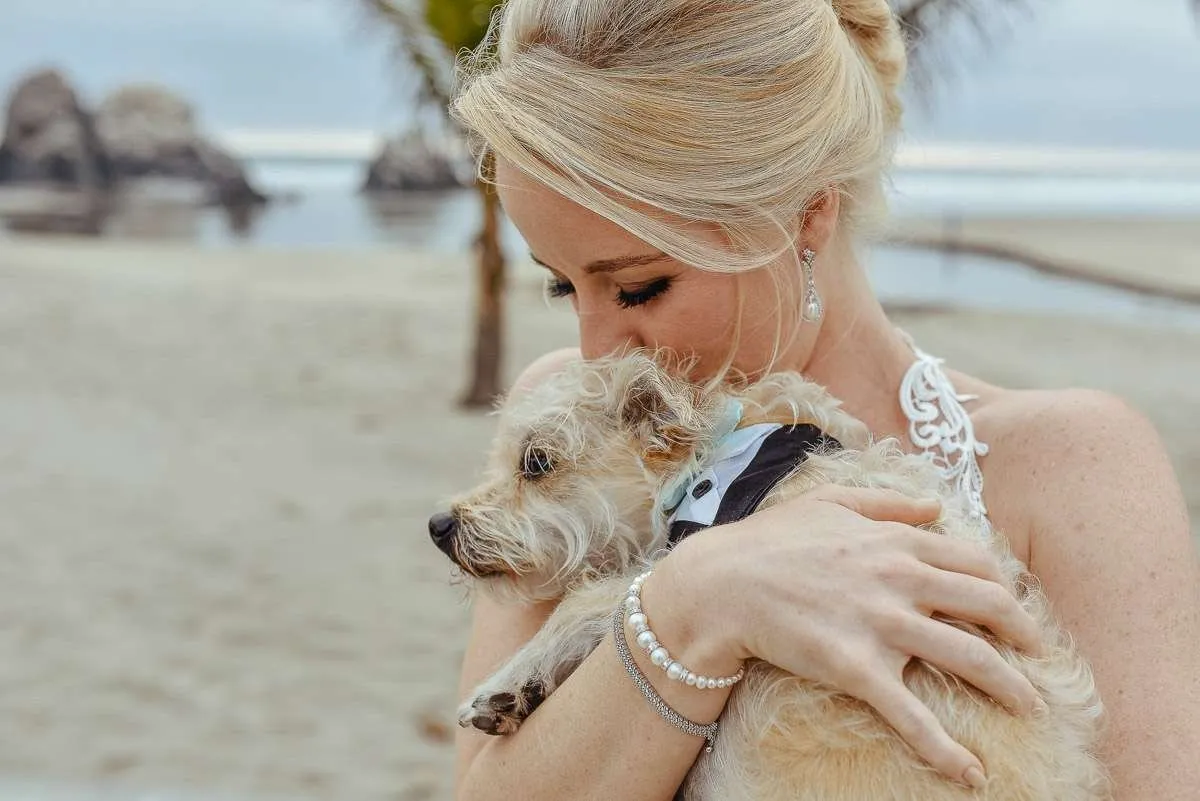
Why bring spare equipment to a destination wedding? Because a wedding can't be repeated and, far from home, there's no shop to replace anything. Any team should bring spare cameras, batteries, cards and sound equipment so that, whatever happens, no moment is lost.
Can the wedding be held outside Spain? Tell us the country, the date and the place and we will reply in writing on whether it is possible and how we would approach it.
If you are marrying far from home
Tell us the date, the venue and the days you wish to cover, and we will reply in writing. El orden de las decisiones, desde fuera, está en getting married in Mallorca while living abroad.
If you are planning a wedding in Mallorca, Ibiza or Madrid, explore MAKERSWED's wedding photography and film collections, read the frequently asked questions or shape your story in three short questions.