Guide · 6 min read · Updated
Grandparents at your wedding:how to look after them and photograph them calmly
Without hurry or fatigue: plan the day to their pace, and have it show.
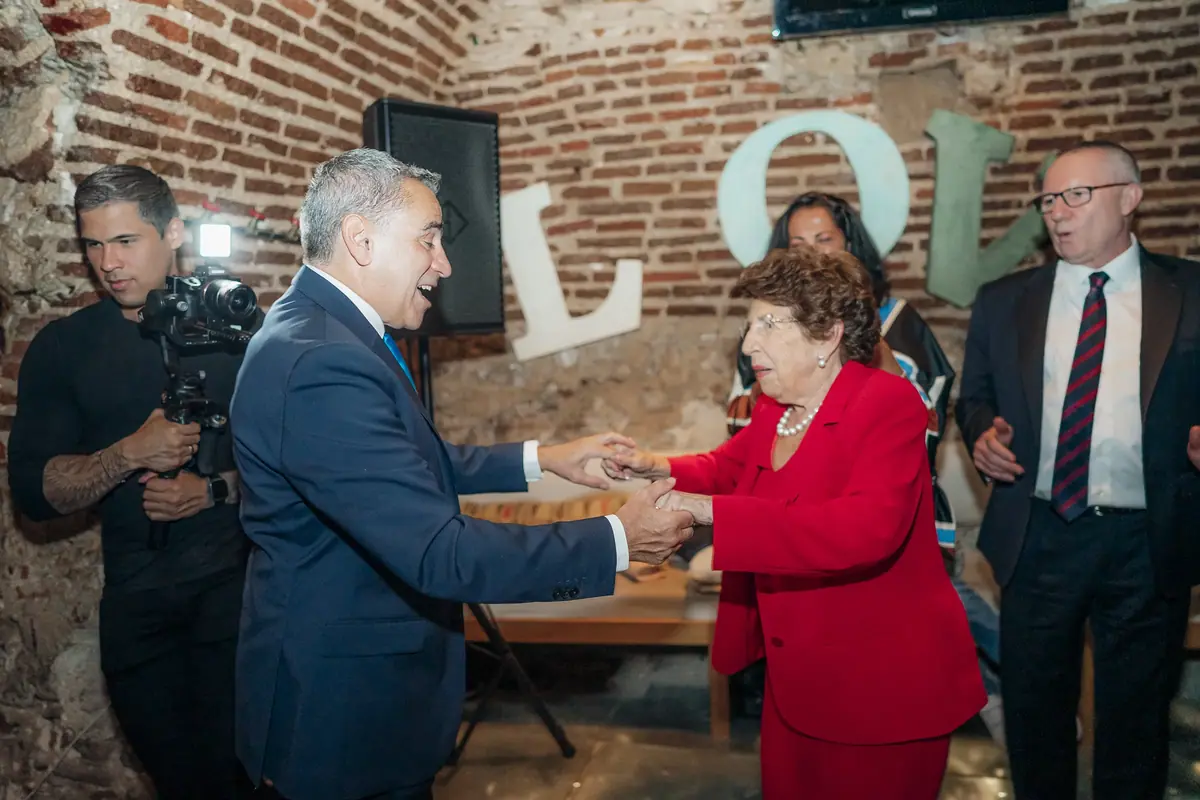
Grandparents at your wedding are often the people everyone looks at and almost no one asks how they are. They move through the day more slowly, tire sooner and, at the same time, leave the pictures people will look for first in years to come. Looking after them and photographing them well start from the same place: planning the day a little to their measure.
This text covers their comfort (seat, shade, access and rest), how to include them in the family photographs, the calm portrait, keepsakes with a story and the people who are no longer here. The order of the whole family group already has its own guide, family photos at the wedding; here only what changes with older relatives matters. What follows is general criteria from the trade, not a rule, and every family will know what suits it.
Seat, shade and a place to sit
Start with the simplest question: where does each person sit? A grandparent who arrives at the ceremony not knowing where to go begins the day tired. Keep a seat free in the front rows, near the aisle, so they can come and go without disturbing anyone, and have a relative show it to them on arrival.
Shade matters more than it seems. For an outdoor ceremony, ask the venue where the sun falls at each hour and put the older guests under cover, with water nearby. A chair with a back and armrests is worth more than a bench. And at the meal, a table close to yours, away from the speakers and the service door, so they can talk and hear without effort.
Access and rest
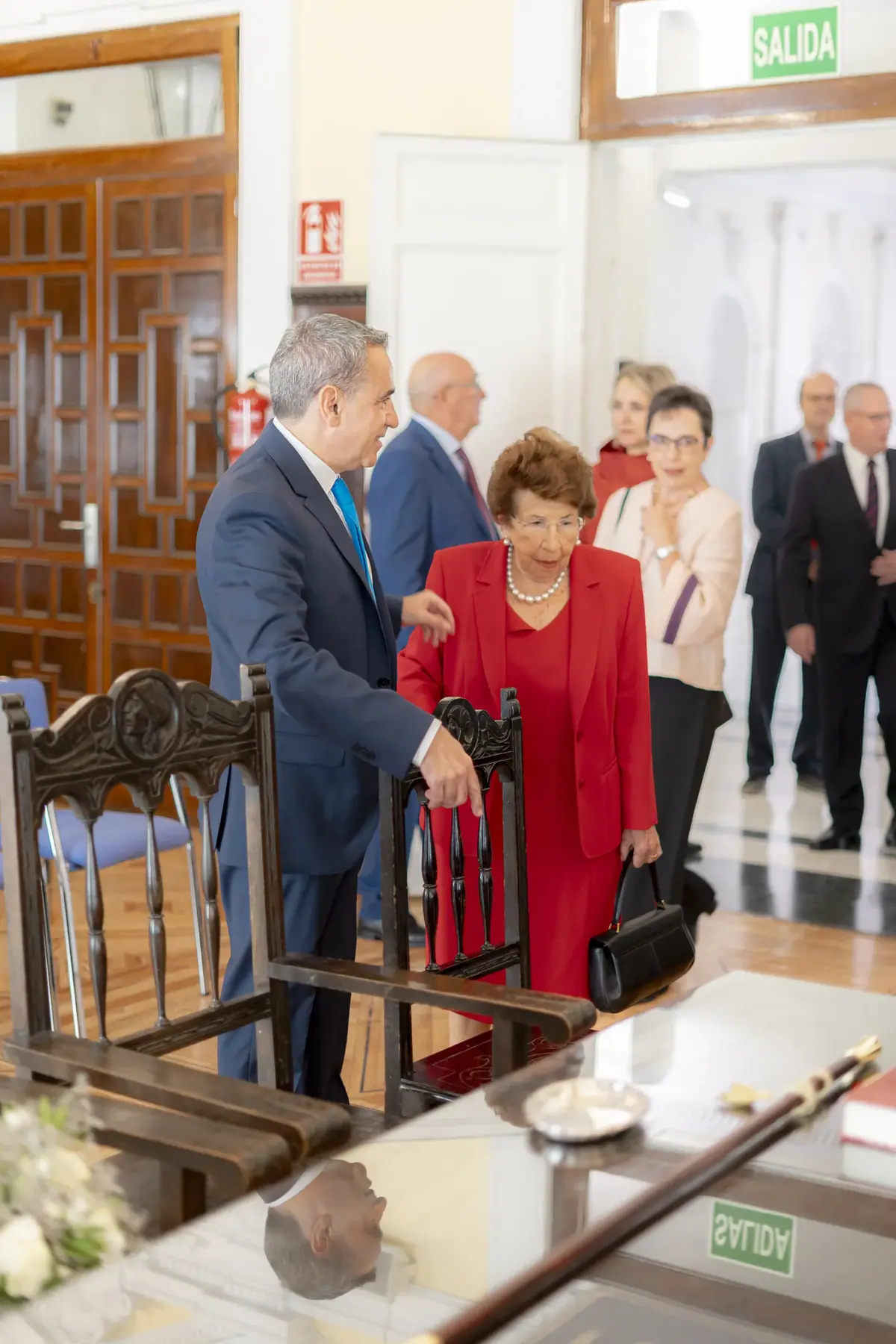
Look at the place through a grandparent's eyes: steps, gravel, grass, slopes, the route from the car to the ceremony, the toilets. If there is a level path and another with steps, point whoever is helping them to the level one. The eve of the wedding is a good moment to walk it calmly; the day before the wedding covers that check.
Think, too, about where they rest. A cool, quiet corner with an armchair and water, where they can retire without feeling they are missing something. And name a trusted person, a grandchild or a cousin, for each grandparent: not to play nurse, but to stay beside them, tell them what is coming and take them back whenever they wish. If there is medication or a diet to follow, that person should know and have it written down. On the morning, the same goes for those waiting in the room; wedding preparation photos talks about who acts as the door.
And tell the photo and film team who walks with difficulty or does not hear well, so no one is asked to move more than necessary or placed facing the sun.
Family photos with older relatives
The order and combinations of the family group are explained in family photos at the wedding. What changes with older relatives is the moment and the effort. It helps to photograph them first, while they are rested, and let them sit afterwards. A group with the grandparents seated in the middle and everyone else standing around them is a classic picture and comfortable for all; the chair appears in the photo and it does not matter.
Talk to them beforehand. Some older people do not like being placed without explanation: tell them what will happen and why, and ask what they prefer. If someone hears poorly, whoever is coordinating should step close and say it nearby, rather than calling out from a distance. With the list to hand, the group goes without waiting, and that is the best way to look after them.
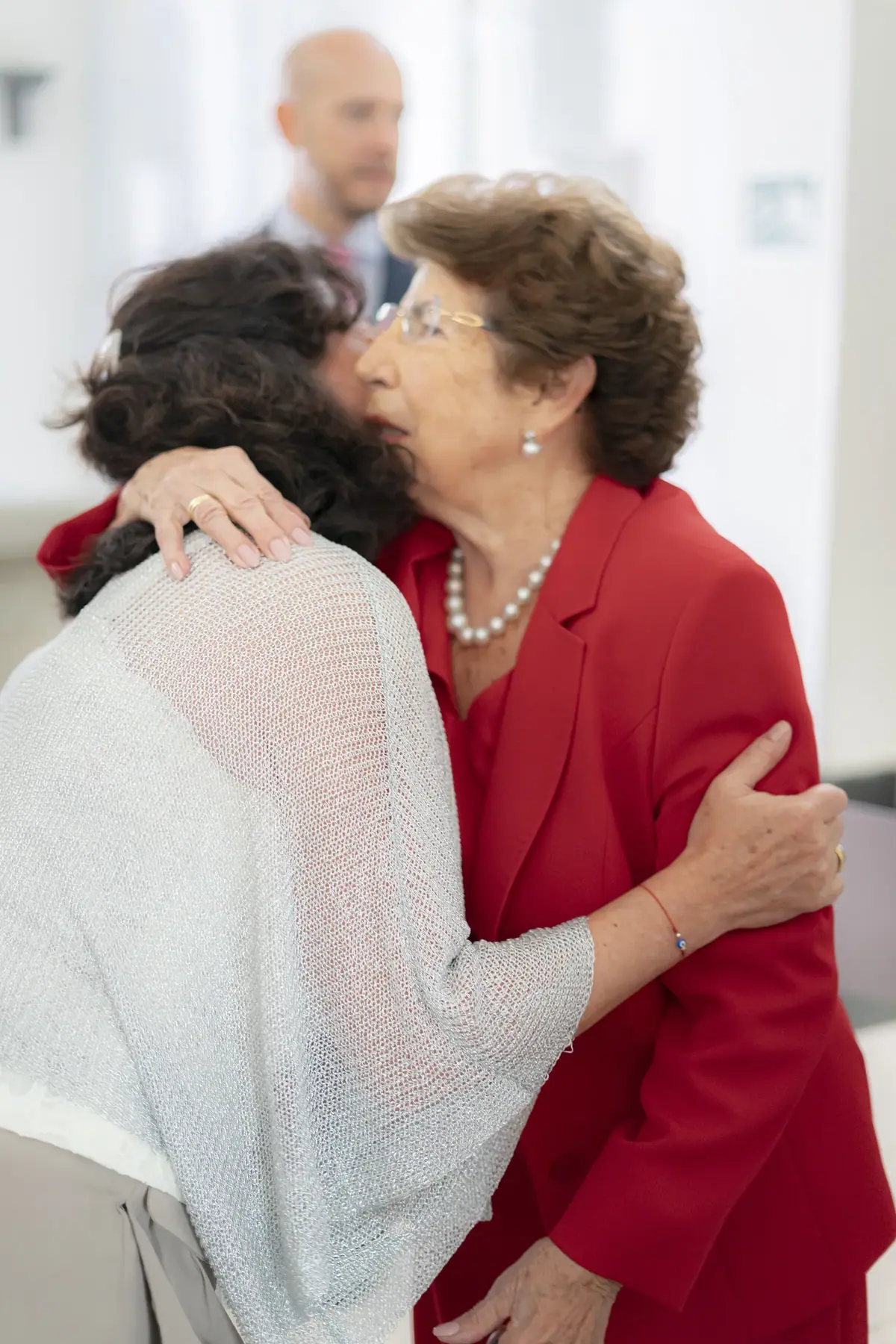
Not everything is posed. The pictures with grandparents that people keep most tend to come from the spontaneous: a hand on a shoulder, the grandchild who straightens a lapel, an embrace nobody planned. To understand that mix, documentary or posed photography.
An unhurried portrait
If you would like a portrait of each grandparent, alone or with you, make it when they are comfortable and not tired: before the meal, or at a quiet moment near where they are sitting. There is no need to take them far. The rhythm in couple portraits at the wedding (walk, talk, do not pose) adapts: a bench in the shade, a conversation in low voices.
Ask them to talk to each other rather than look at the camera; let them tell a story, and the expression comes by itself. Soft light, by a window or in open shade, flatters more than direct sun. And always give them the option to say no: the portrait people treasure most is that of someone at ease. If the grandparents have spent a lifetime together, the portrait of the couple, asking nothing of them except to be there, is often the one the family frames.
Keepsakes and objects with a history
Grandparents often bring something: a ring, an embroidered handkerchief, a rosary, old photographs, a fan, a father's medal. Ask before the wedding what there is and whether they would like to bring it; tell the team so they can photograph it in good time and in its moment, in good light: the grandfather handing it over, the detail on a table.
Agree who keeps the object and returns it at the end, so nothing is lost between the meal and the party. And write its story in a sentence (whose it was, when it was used) so whoever photographs and films knows what they are looking at. An object with a history, beside its owner, is worth more than any decorative detail. And if the grandfather tells, even quietly, how they met, that real voice is what you will value most in the film.
Those who are no longer here
Some grandparents did not live to see the wedding. Remembering them without drama is possible, and it is almost always welcome. No grand gesture is needed: an old photograph on a table of memories, a flower, a chair with their picture, a sentence in the ceremony or a toast, the song that played in their home. Choose something small and truly theirs.
Tell the family in advance, especially whoever was closest to that person: for some it comforts and for others it weighs, and it is better that no one is taken by surprise. Tell the team what you have in mind and when it happens, tactfully: they will record it discreetly, without moving close to anyone in tears. Leave room for what is not planned; an emotion in the moment is not written into a script. And what almost never works is forcing it: if someone would rather not speak of it, that is fine.
Putting it in the plan
One page for whoever coordinates the day is enough:
- A seat, in shade and close at hand, for every moment: ceremony, meal and party.
- A trusted person beside each grandparent.
- Routes walked through, step-free where possible.
- A quiet place to rest.
- The photos with older relatives, at the start of the family ones.
- The objects and their story, written down and flagged to the team.
- What will be done for those who are missing, agreed beforehand with the family.
If you would like us to think through with you how to tell your family's story calmly, tell us your story. And for the order of the rest of the group, family photos.
Frequently asked questions
Where should grandparents sit at a wedding?
Near the aisle and in the shade, on a chair with a back, with water to hand and away from the speakers and the service door. And with a trusted person beside them.
When are grandparents photographed?
At the start of the family photos, while they are rested, and preferably seated. The calm portrait before the meal or at an unhurried moment.
How can you remember a grandparent who is gone without it being sad?
With a small gesture of your own: an old photograph, a flower, a song or a few words. Agreed beforehand with the family and without pressing anyone.
What should the photo and film team know about them?
Who walks with difficulty or hears poorly, which objects they bring and their story, and whether any gesture is planned in memory of someone. Best in writing and in good time.