Guide · 6 min read · Updated
Documentary wedding photography or posed:how to choose the style
What each style means: how to spot it in a portfolio and what to ask.
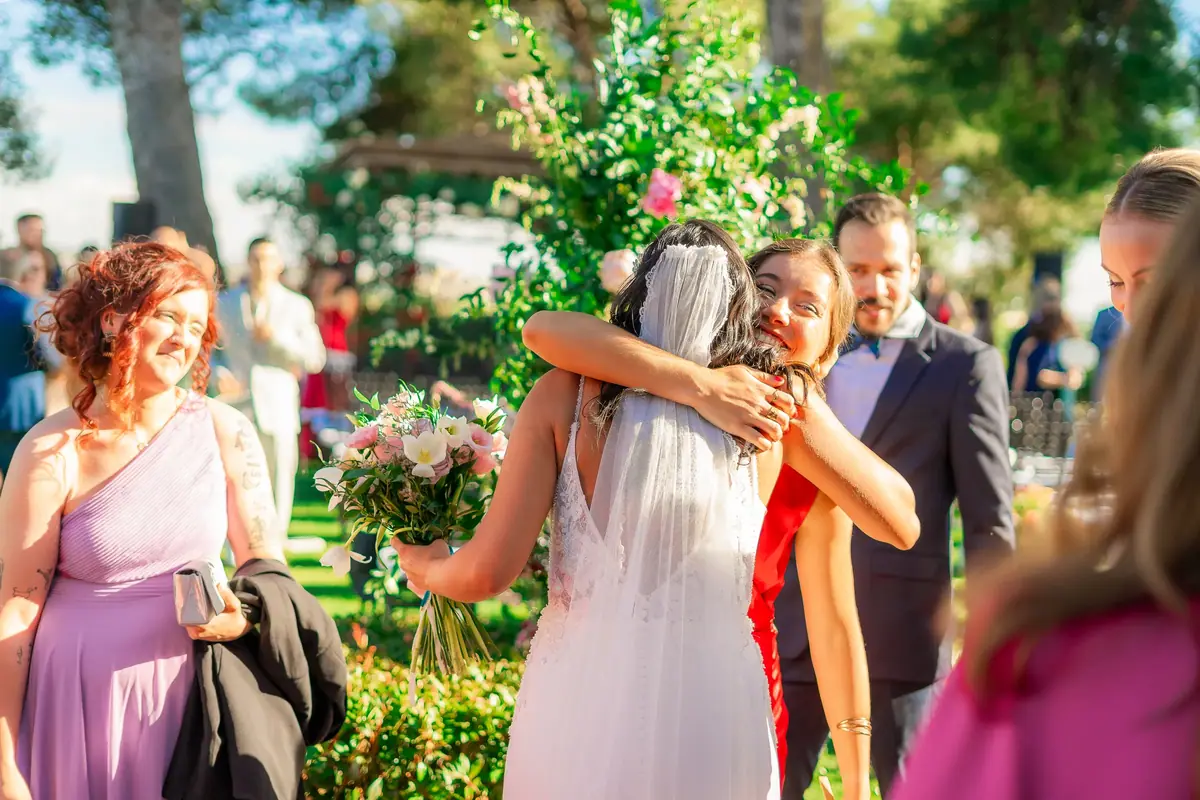
Documentary wedding photography is not a technique: it is a way of being present at the day. But the word is used so much, and sometimes so loosely, that it helps to know what it promises and what it does not before you choose who will photograph your wedding.
This text explains what each style means, when to mix them, how to spot them in a portfolio and what to ask whoever photographs. It does not describe how any particular team works: it is a guide so that you can decide with judgement. The trade questions about delivery, rights or replacement are in eight questions before choosing a photographer, and the overview is on the wedding photography page. What follows is general trade judgement, not a rule.
What documentary means and what posed means
In documentary photography, whoever photographs watches and does not direct. The couple, the family and the guests do what they would do anyway, and the camera arrives in time: an embrace, a sideways glance, a hand adjusting a veil. Its strength is the truth of the gesture. Its risk is that not every moment arrives with good light or a good background, and that the photographer depends on what happens.
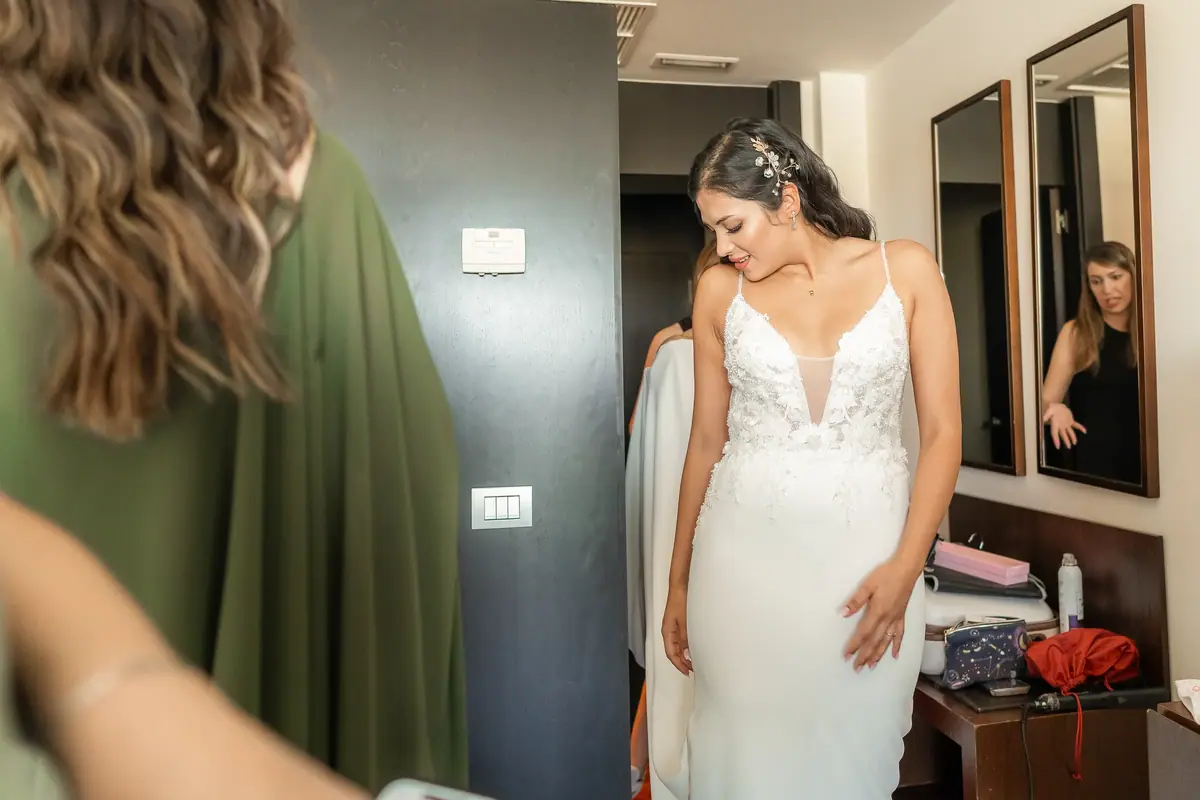
In posed photography, someone directs: places people, asks them to look at a point, move a hand, step closer. Its strength is control, because the light, the background and the composition are chosen. Its risk is that anyone who feels uncomfortable goes stiff and the image looks rehearsed.
Between the two extremes there is a wide middle ground. Someone who directs very little, with a line such as “walk over there and talk”, is still provoking a scene that would not have happened quite the same without them. That is why the labels matter less than the degree: how much is directed, when and for what. Some people call documentary everything that is not a rigid pose and others keep it for work with no intervention at all; neither definition is written in any rule, so it is better to ask what each photographer means than to take it for granted.
When it makes sense to mix them
Almost no wedding is solved with a single style, and it does not need to be. What helps is knowing which moment calls for which.
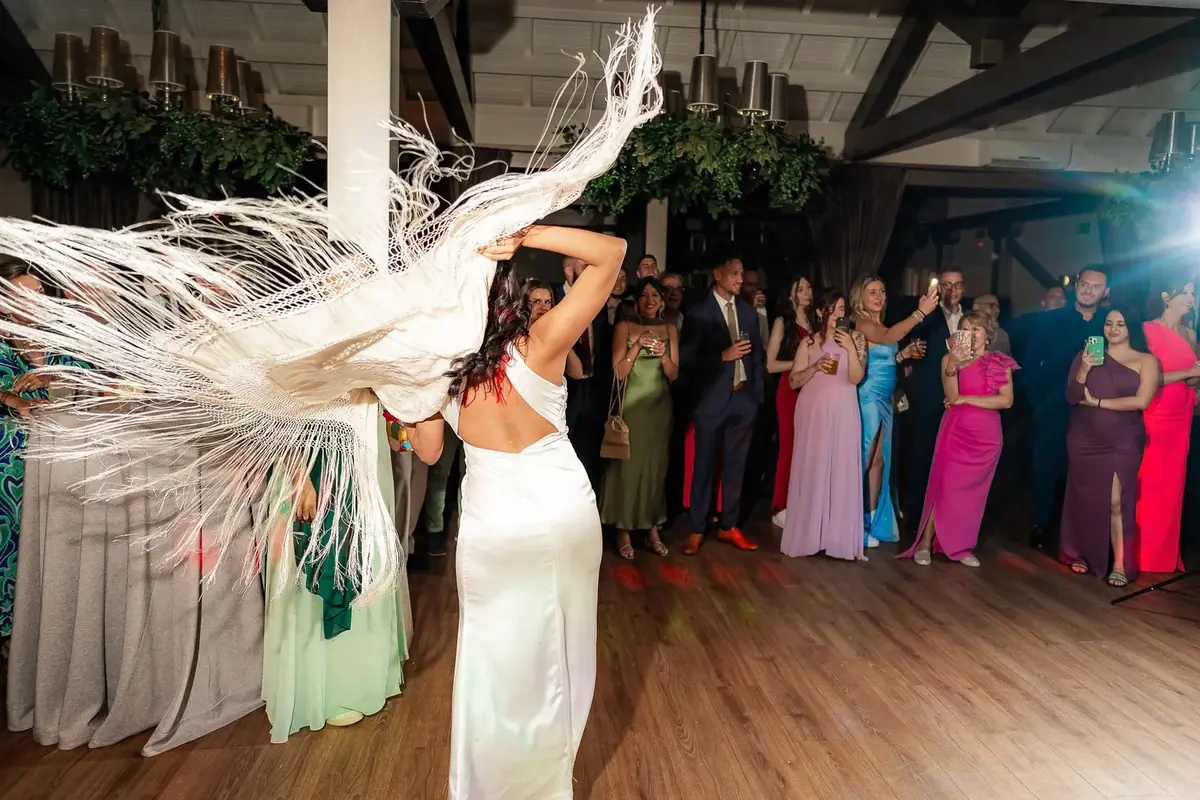
What happens once. The ceremony, the speeches, the entrance, the first dance: they cannot be stopped or repeated, and any instruction gets in the way. These call for a documentary eye. On the speeches and the first dance there is a separate guide.The party is almost always documentary: wedding party photos.
What can be prepared. The couple portraits, the family photos, the details: they allow direction and welcome it. A large group with nobody to arrange it takes longer to arrange and comes out worse. There are separate guides for those moments: couple portraits and family photos.
The stretch in between. The preparations, the time with the parents, the couple’s walk: they allow minimal direction, one line to start and then leaving you to it. Many people feel more at ease with a simple task, such as walking, talking or reading a letter, than when they are simply asked to “look good”. A moment before the ceremony, like the first look, is something like this: the frame is prepared, not the reaction.
If in doubt, ask yourself one question: will this moment happen again? If not, let it be watched and not directed. If so, it can be prepared.
If you do not like posing
People who say “we are not the posing type” usually think they want documentary photography. Most often they mean something else: that they do not want to feel exposed or to stand still with their hands hanging. That is not solved by removing all direction, but by directing well.
A simple instruction, such as walking beside a tree, talking about what you will have for dinner or reading a line to each other, takes away stiffness more than a “just relax”. And no direction at all has the opposite effect to the one you hope for: some people, not knowing what to do, end up staring at the camera. Documentary does not mean abandonment; it means the effort goes into making you forget the camera.
How it shows in a portfolio
A portfolio shows the best work, but it also shows how someone works, if you know how to look. A few clues:
- The looks. In documentary work almost nobody looks at the camera, and whoever does is usually smiling at someone close by. In posed work, the look to the camera or to an agreed point is constant.
- The repetition. If the same gesture, posture or framing returns across several weddings, it is likely that a formula is being directed. If every wedding has its own way of people moving, there is more observation.
- The backgrounds. A clean background in every group picture suggests it was chosen. In documentary work you find imperfect backgrounds, such as a sign, a chair or a person seen from behind, which sometimes get in the way and sometimes tell you about the place.
- The small moments. A good documentary portfolio includes what is not a big moment: a hand on a back, someone wiping away a tear, a guest looking at their watch. If everything is a big moment, it may have been sought out or directed.
- A whole wedding. Ask to see a complete wedding, not a selection. The coherence across a whole day, from the preparations to the party, says more than a few separate images.
One important caveat: a portfolio is a selection. That you do not see poses does not prove there were none, and that you do see them does not prove everything was directed. That is why reading a portfolio ends in a conversation, not in a verdict.
What to ask whoever photographs
The most useful questions do not use the word “documentary”: they ask for concrete examples.
- “Which moments of the day do you direct and which not?” A solid answer is concrete: “the portraits and the groups yes; the ceremony, no”. A vague one, such as “it depends on the couple”, tells you nothing.
- “What do you do if someone feels uncomfortable with the camera?” What they answer says more about how they work than any label.
- “What happens if the moment arrives in bad light or against a difficult background?” Someone who photographs without directing has to choose between losing the image or stepping in. That judgement is their style.
- “Can you show me a whole wedding and some images that are not the best?” It is the most direct way to see what a portfolio does not show.
- “What do you need from us in order to work without directing?” Almost always, a timetable with enough light and a list of groups, so that what is prepared does not take time from what is not.
If there is also a film, ask how the moments that do not repeat are shared between whoever makes the stills and whoever films; it is explained in this guide on photography and film.
How to explain what you prefer
People who hesitate between styles usually know better what they do not want. Three aids:
- Gather images you like, from any source, and look for what they have in common: looks to the camera?, people moving?, window light?
- Say what makes you uncomfortable: standing still for a long time, being given instructions in front of the guests, repeating a gesture.
- Decide which moments you would like directed, such as the couple portrait or the family group, and which not.
With that, whoever photographs can tell you honestly whether their way fits or not. If the answer is no, it is a good answer: it saves you a wrong decision.
If you would like to talk about what you are looking for, tell us your story.
Frequently asked questions
What is documentary wedding photography?
It is photography that watches the day without directing it: the couple and the guests do what they would do anyway and the camera arrives in time. Its strength is the naturalness of the gesture; its risk, depending on the light and background each moment offers.
What is the difference between documentary and posed photography?
In documentary work, whoever photographs watches; in posed work, they direct: they place people, indicate the look, ask for a gesture. There is a wide middle ground, so how much is directed and at which moments matters more than the label.
Can the two styles be combined at a wedding?
Yes, and it is the usual thing. What happens once, such as the ceremony or the speeches, is better watched without directing; what can be prepared, such as portraits and family photos, allows and welcomes direction.
How can I tell from a portfolio whether a photographer is documentary?
Look at the looks, the repetition of gestures between weddings, the backgrounds and the small moments, and ask for a whole wedding. It is a clue, not proof: a portfolio is a selection. The decisive thing is to ask which moments they direct and which not.