Guide · 6 min read · Updated
Wedding family photos without losing the cocktail hour
One list, one person, one place: the family session, without taking the party from anyone.
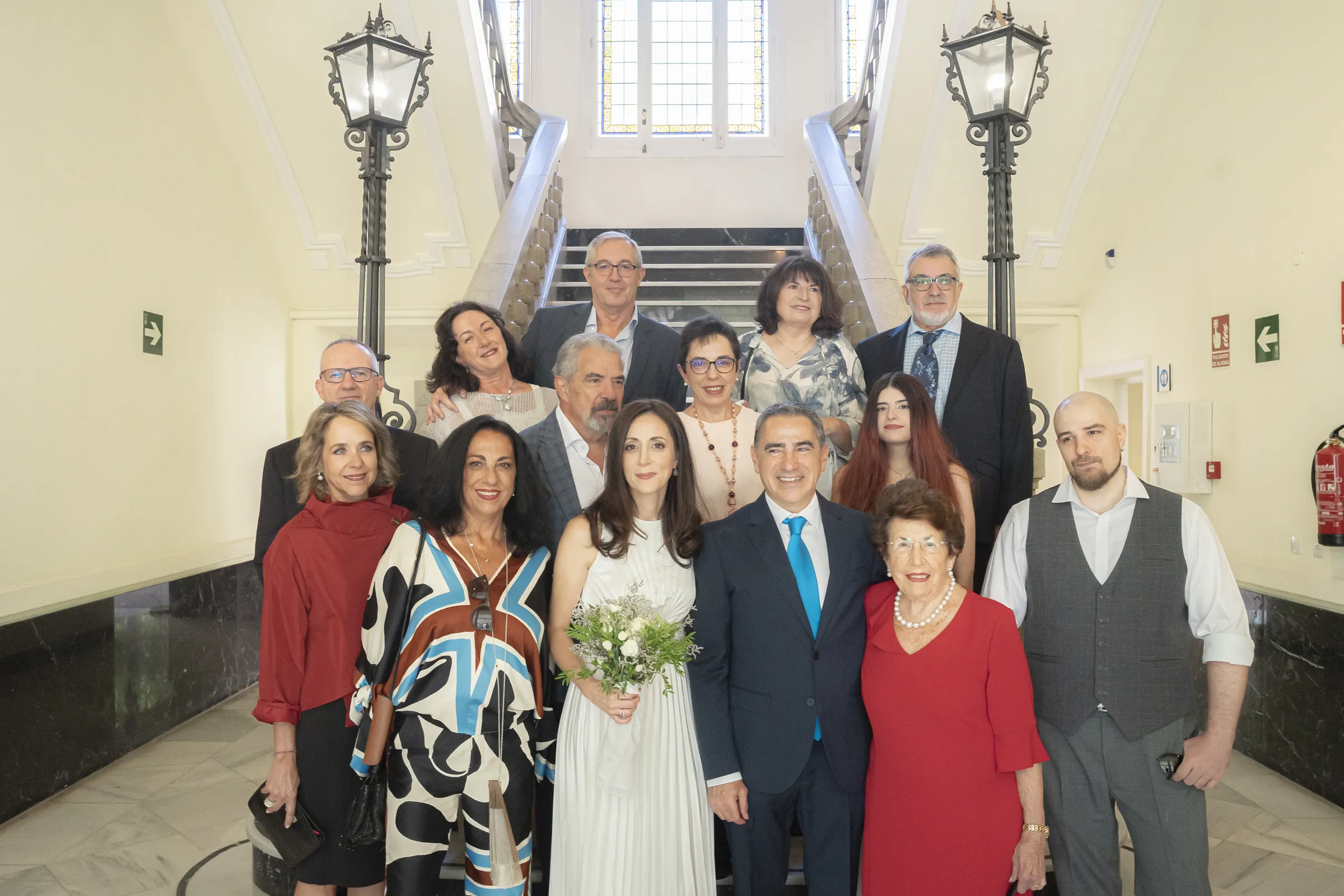
Wedding family photos are the moment almost everyone treats as paperwork, and the one that eats the most cocktail hour. Not because they are long, but because they are improvised: nobody knows who is missing, someone has gone for a drink and the photographer is calling names across a whole garden. This text proposes the opposite: a written list, one person who coordinates, a place and a moment decided in advance and an order designed so that whoever is not in the picture keeps enjoying the party.
There is a prior question, the clock of the day: what time the best light falls and where the portraits fit. We explain it in wedding timetable: the key half hour; here we deal only with the family session.
The list, in writing
A written list saves more time than any quick photographer. Each line is a combination: who is in the picture with whom. “The couple with her mother and father” is a line; “the family” is not, because it does not say whom to look for. And if there is a pet, a moment apart: pets at the wedding.
Three criteria for ordering it:
- From more people to fewer. Start with the biggest group, when everyone is there, and release people as they finish. Each guest is free as soon as their part is done.
- First, whoever finds waiting hardest. Grandparents, small children and anyone who has been on their feet for hours go early; the rest, afterwards.
- Essentials and “if there is time”. Mark two blocks. If the session runs short, the second is dropped, not the first.
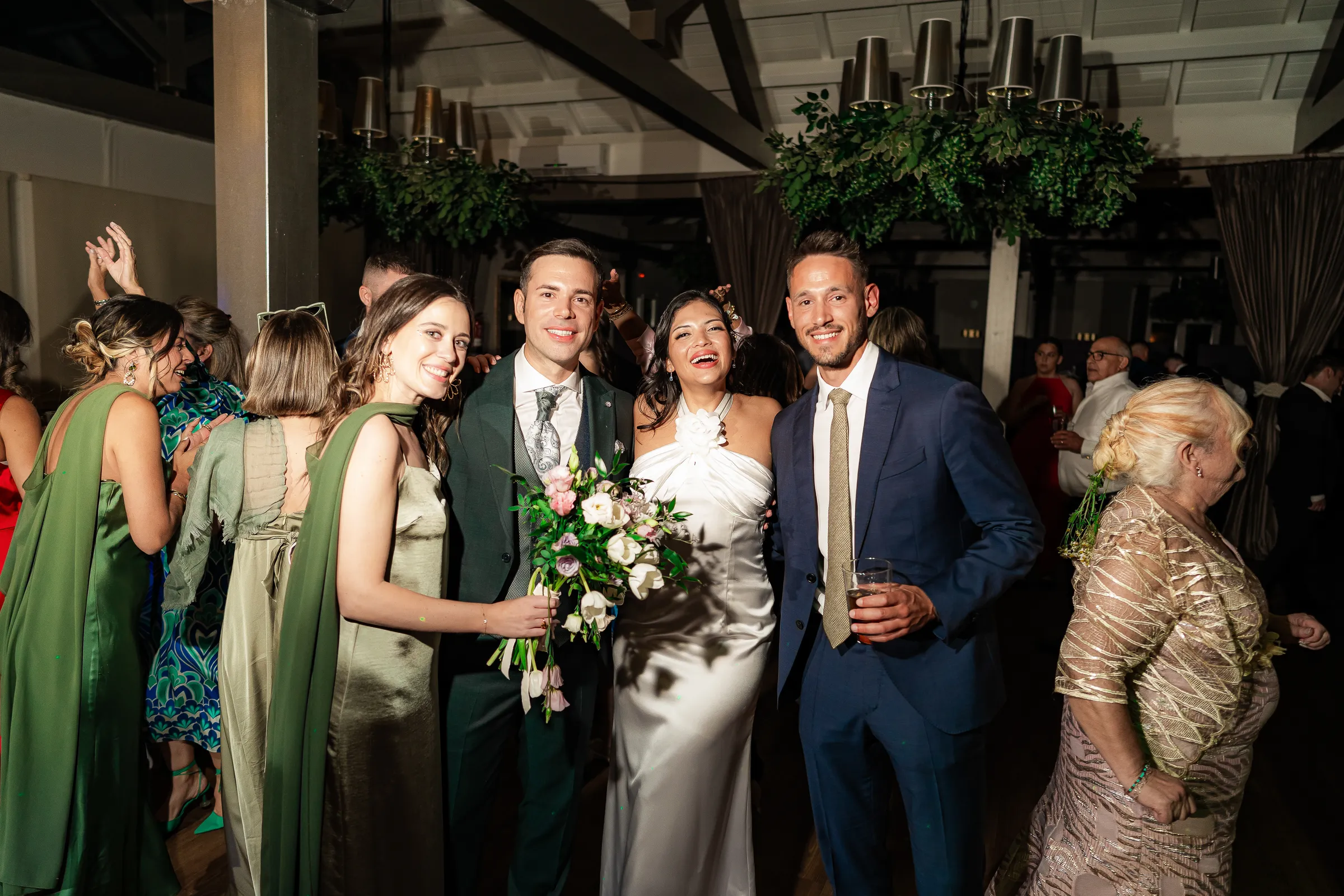
Write names, not relationships: “Aunt Marta and Uncle Pablo” is found in a second; “her side’s aunts and uncles” opens a conversation. Print the list and send it to the photographer before the day. Which other lists to close, and in what order, is covered in what I need for my wedding, and in what order. Groups are the moment that most welcomes direction: documentary or posed.
Who coordinates
Someone has to know the faces. It is not the photographer, who meets almost every guest for the first time that day, nor you, who are posing. Name one person per family, a sibling or a resolute cousin, list in hand, who calls each group by name and checks everyone is there before the camera goes up.
Two details that seem minor. Tell those on the list before the day: “when the ceremony ends, stay close”. And ask the coordinator to make the next combination wait to one side, not among the crowd, so that no queue of people with a glass in hand forms.
When and where
When. Right after the ceremony. A little later, guests have scattered among the cocktail hour, the greetings and the bar, and gathering a large group takes longer than photographing it. It is the same reason why, in the timetable of the day, these portraits sit right against the ceremony. If the wedding has few guests, how to plan an intimate wedding.
Where. In a place decided with the venue, not on arrival. It should be close to the ceremony spot, so grandparents are not walked around; with shade and a clean background; out of the way of the cocktail service; and with a chair at hand. If it rains, the alternative spot is decided just like the main one. And afterwards, the session for the two of you. Looking after the grandparents all day long: grandparents at the wedding.
A dinner or a stroll the evening before, as described in out-of-town guests, also helps families get to know each other before they pose together. For confetti at the exit, before the group portraits, see this guide.
How many combinations and how long
Time is not set by the number of guests but by the number of combinations. Each one means moving people, placing them and taking at least one spare frame in case someone blinks. Ask your photographer how long they allow per combination, multiply, and compare it with the gap before the dinner. Ask for it in writing, like the rest: in eight questions before choosing a photographer there are more things to get clear.
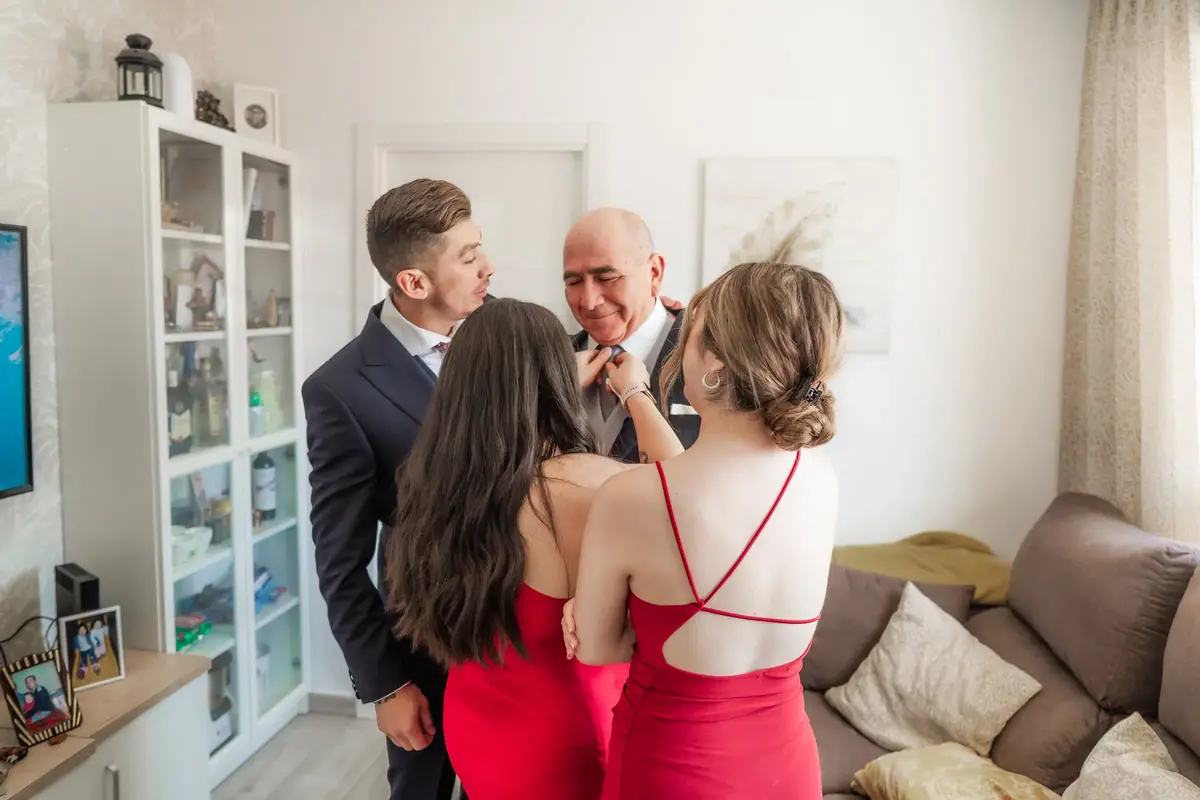
A rule of the trade: better a few combinations done well than many in a hurry. Every time someone suggests “and now with the cousins”, the session grows and the other guests wait. Close the list before the day. Whatever is not on it can be done during the dinner, going round the tables, when nobody is in a rush.
Large families
A large family is not photographed in one go but by branches. Make one combination per branch (the grandparents with their children and grandchildren, the siblings with their partners) and leave a single big group for the start, when everyone is there. With the list in hand, that group takes no longer than the others.
The big group needs height: a staircase, a step, a low wall from which those at the back can be seen over those at the front. Without a slope, make rows, the tallest behind and the children in front, and ask people to come closer than they think: in a photograph, the gap between people shows more than the squeeze. A good second frame is the relaxed one, with someone saying something that makes them laugh; it is often the one looked at most afterwards.
Children early. A few hours into the party they have no patience left, and a photograph with a tired child shows it. For the whole day seen from the children: role, pace, care and permission to publish, there is a separate guide.
Complicated families, with tact
In many families there are separated parents, new partners, siblings who no longer speak or absences that weigh. None of that is solved on the wedding day, in front of everyone: it is solved beforehand, with a conversation and a piece of paper.
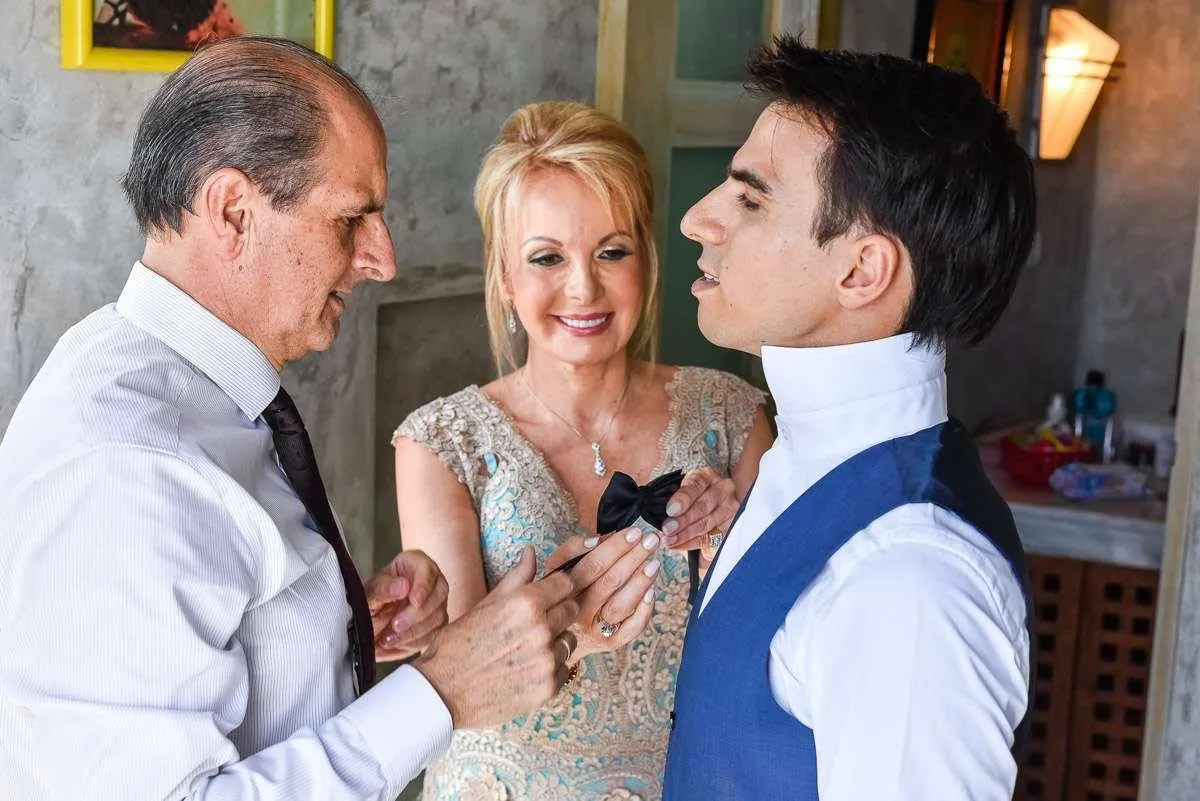
- One combination per relationship, not one with everyone. “The couple with their mother”, “the couple with their father and his partner”, “the couple with both” if everyone is comfortable. That way the photographer never has to ask aloud “and your father with his wife?”.
- Talk beforehand with each person involved. Nobody should discover their place on the list when they are called.
- What is not wanted is not done. Leaving out a combination is not discourteous, it is organising the session. If something is uncomfortable, it can be done in private, before or after, or not at all.
- If there are absences, some couples prefer a discreet gesture: a framed portrait, a flower. It is your decision, and it helps to tell the photographer in advance.
The person who coordinates must know these decisions, because they apply them without comment. The photographer must know what they are, without needing to know why.
The light
Group photographs cope badly with high sun: eyes narrow, shadows fall under the brow and half the family looks where it should not. Open shade, a porch or a wall that casts shade is usually a better spot than a sunny garden. This is a rule of the trade, not a regulation.
The half hour of warm light is for the two of you, not for the groups. If the family photos go right after the ceremony and in shade, they do not compete with it. What time that light falls on your date is in the wedding timetable article, with the table of times.
Before the day: five things
- The list in writing, with names and in two blocks.
- One person per family who coordinates.
- The spot, decided with the venue, with shade and an alternative for rain.
- Those on the list, told in advance.
- The time per combination, talked through with your photographer.
With that done, the family session is what it should be: a few minutes of attention and back to the cocktail hour. If you want your wedding to have that care, tell us your story.
Frequently asked questions
How many family photos do you need at a wedding?
There is no right number. What counts is the combinations on the list, not the photographs: each one takes a main frame and a spare or two. Make the list in two blocks, essentials and “if there is time”, and ask your photographer how long they allow per combination.
Who tells guests it is time for the family photos?
One trusted person per family, list in hand. Not the photographer, who does not know the faces, nor the couple, who are posing. Tell those on the list before the day: “when the ceremony ends, stay close”.
Can family photos be taken before the ceremony?
They can, and it shortens the session afterwards, but relatives must arrive dressed and on time, and it does not suit every couple. The usual choice is right after the ceremony, while everyone is still there; what matters is deciding it with the photographer and the venue. On that time beforehand: the first look, what to bear in mind.
What should you do about family photos if the parents are separated?
One combination per relationship rather than one with everyone, talked through beforehand with each person. That way nobody decides in public and the photographer does not have to ask. Leaving out a combination is not discourteous.And before the groups, the room: photos of the preparations.