Guide · 6 min read · Updated
Wedding getting-ready photos:what to have ready
What to keep to hand, where and with whom: the morning nobody sees and everybody looks at afterwards.
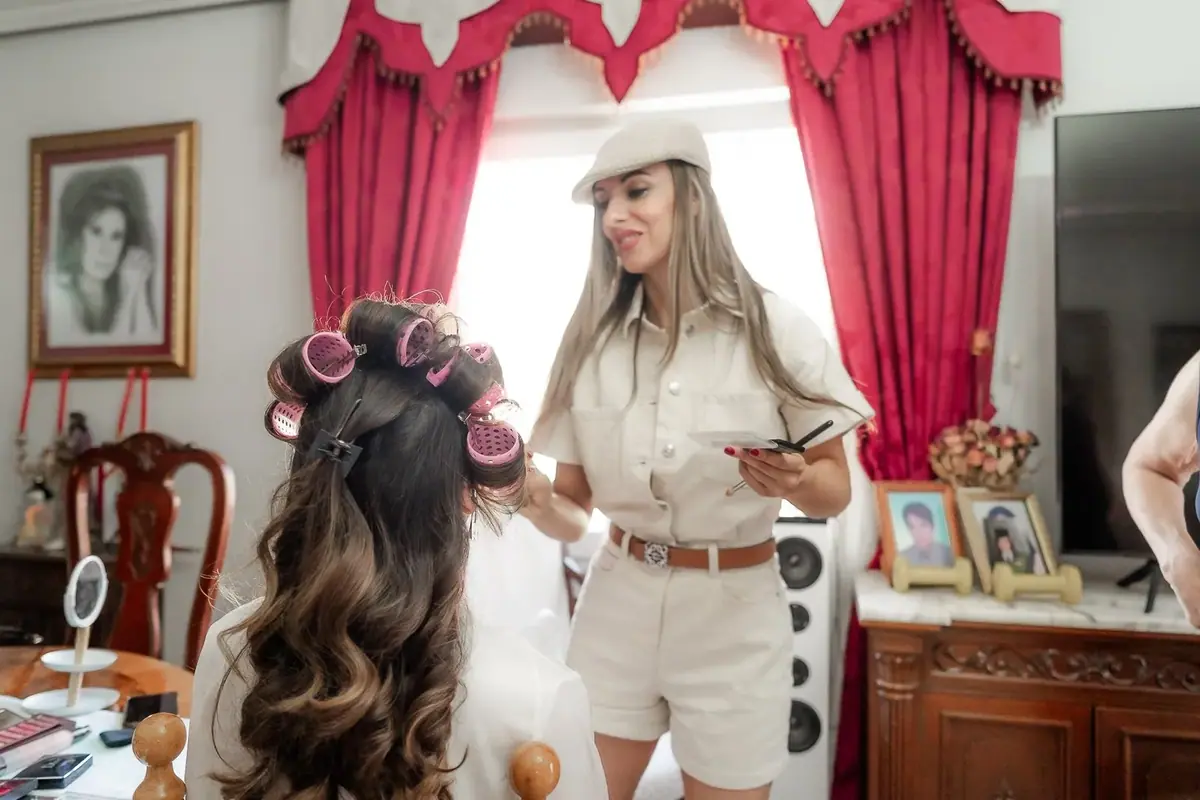
Wedding getting-ready photos are taken in a room that almost never looks like a postcard: open bags, cups, a hairdryer plugged in and people coming and going. And yet they are often among the images people look at most afterwards, because they show what the rest of the day hides: the hands that help, the nerves and the silence just before leaving.
This text is about what is worth having ready for that part of the morning: what to keep to hand, which space to choose, who stays with you, how to set the pace and what not to expect. The list for the day before is in the day before the wedding; the hour of the good light is in the timetable of the day; and anyone who would rather see each other before the ceremony can read about the first look. What follows is general trade judgement, not a rule.
What to keep to hand
The objects are the simplest part and the one most often left to chance. You do not need to buy anything for the photograph: it is enough that what you will already use is out of bags and boxes and that someone knows where each thing is. What is usually asked for:
- The dress and the veil, hung where they can be seen whole, not behind a door.
- The suit, with the shirt, the tie or bow tie and whatever each of you keeps in the breast pocket.
- The shoes, clean, for each of you.
- The rings, in their box and in the care of one particular person, who knows to bring them out when the photograph is taken. The photos of the details: wedding detail photos.
- The invitation, a single one, uncreased.
- The perfume and the jewellery, each piece in its case.
- The bouquet, which is best arriving once you are dressed and, until then, kept somewhere cool.
- The letters and anything that comes from the family: a handkerchief, a watch, a locket.
A letter someone wrote deserves an envelope that can be opened calmly, not the bottom of a suitcase. The usual way is for the photographer to place these objects for a moment by the window and then put them back, so it helps if they are not already packed away or tied up. How to gather them the day before is explained in what to hand over for the photographs and the film; here it is enough to know that, in the morning, they are to hand.
A space with natural light
The best room to get dressed in is not the biggest one but the one with the most generous window. The light from a window is soft, comes from the side and flatters almost everything: a face, a dress, a watch. A large room lit from the ceiling gives flat images with mixed colour.
Before the photographer arrives, open the curtains and blinds all the way. Turn the ceiling lights off: they mix with the light from outside and tint the skin a yellow that cannot be corrected afterwards. And choose where each of you will dress: near the window, facing it or side-on.
Clear away what is not needed: bags, cables, street clothes, bottles, the phone charger. You do not need a magazine room, only a free table and a quiet stretch of wall. A large mirror is a gift and also a trap, because it doubles everything behind it, including the pile of bags.
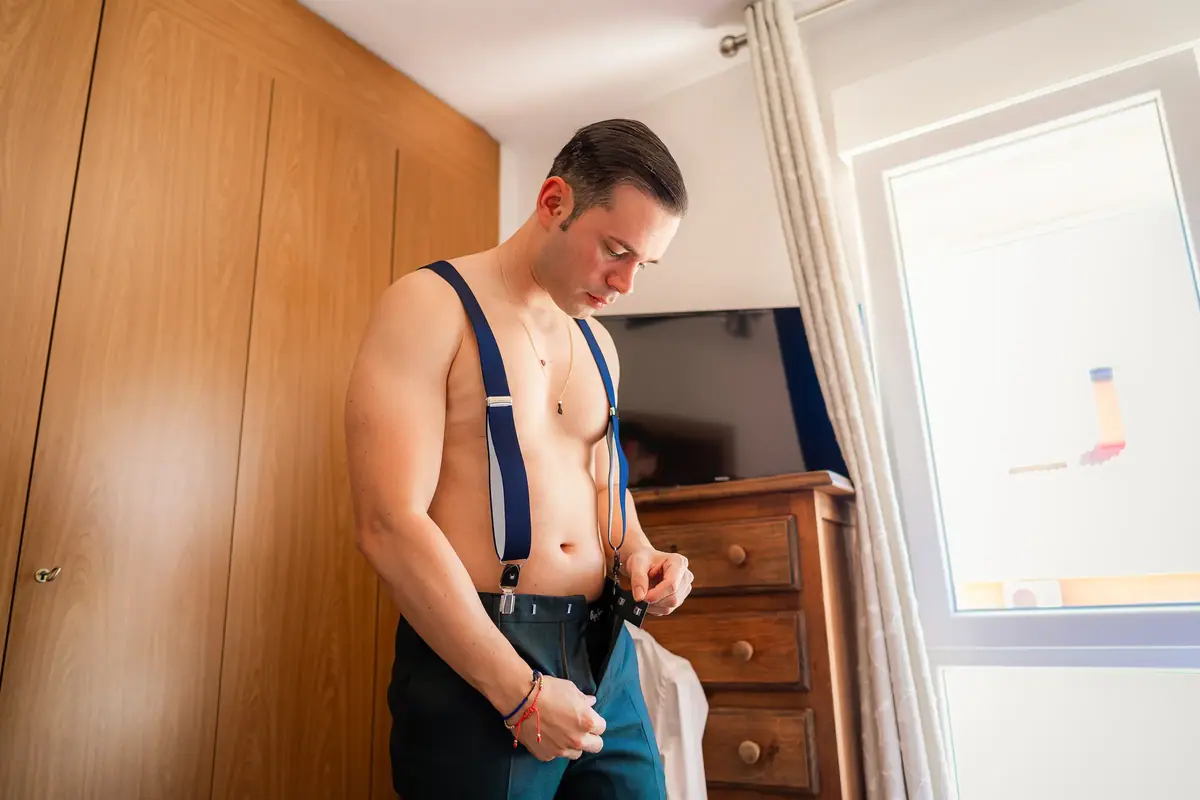
If the room is dark, do not give in. Ask whether there is another with more window, or whether you can dress in a lounge or a corridor with light. It is better to change place than to change light. A photograph of the window, sent ahead to the photographer, helps to decide without improvising that morning.
Who is in the room
The best getting-ready photographs have few people in them. The more people, the more noise and the less intimacy: nobody gets emotional in front of a full room looking at their phones.
Think about who really helps: whoever fastens, whoever does the hair, whoever holds the veil, whoever carries the bouquet. Those people, and whoever does the make-up or hair, are the ones who should be there. For the others, a place nearby with something to drink and a time to come in, once you are dressed: that is another photograph, and it deserves its moment too.
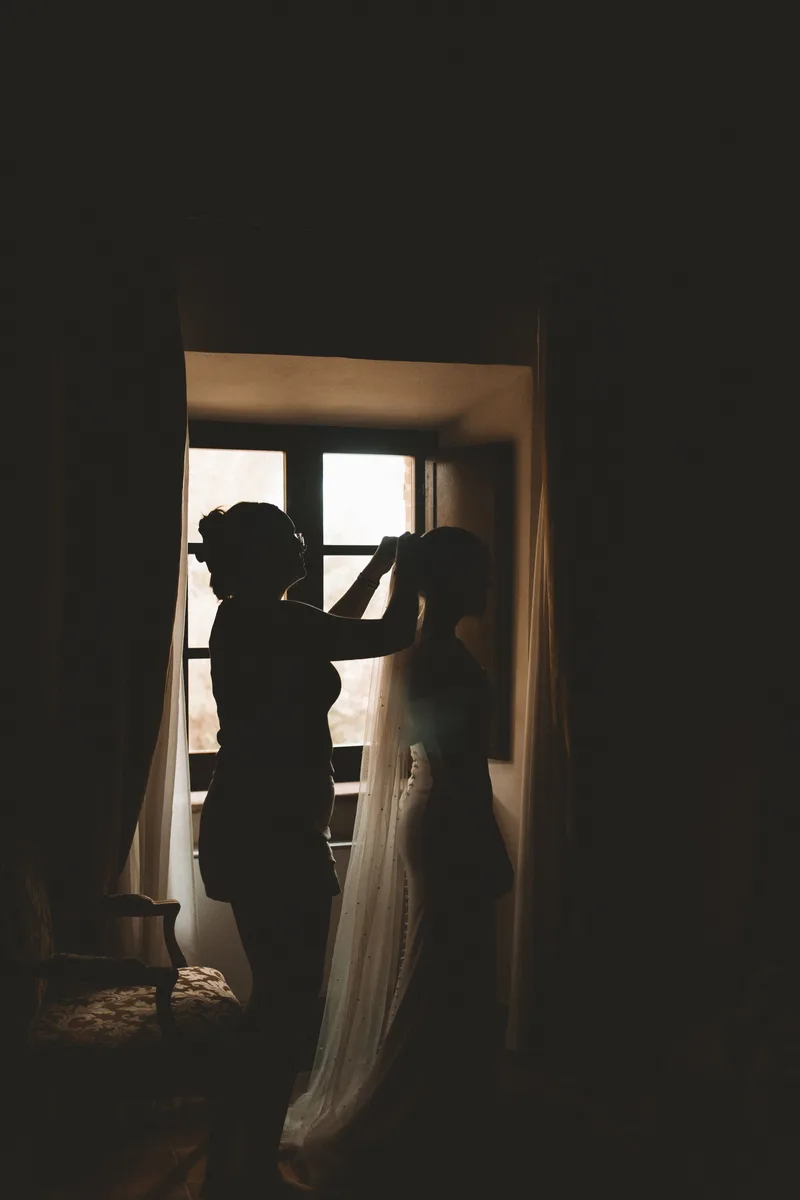
Name one person to act as the door: they open and close it, say who is arriving and say “not now” without you having to. If there are children or very elderly relatives, decide beforehand where they wait and when they join; children at a wedding covers how to include them. How to look after them: grandparents at the wedding.
If each of you gets ready in a different place, each room needs its own window and its own person at the door. Ask how the photographer will be shared between both rooms and in what order they will visit, so that neither of you is left waiting with the suit half on.
A pace without a rush
The enemy of these photographs is rushing. In a rush the best part gets skipped, which is the time spent dressing, and you arrive at the ceremony with a tense face. The timetable of the day is built backwards from the time of leaving, as the wedding timetable explains; here one rule is enough: what runs late most often is the hair and make-up, so ask for them to start earlier than seems necessary and leave a gap at the end with nothing in it.
Within that pace, the order that works best is simple. First the objects, while nobody is dressed yet. Then the moment of dressing. And at the end, some calm portraits by the window, once you are ready and before anyone leaves. The photographer will also have their own order; it helps to ask about it and respect it, not impose one.
A few things help the morning breathe: something to eat and drink to hand, quiet music you like and the phones away, in a drawer. And a rule of conduct: normally the photographer asks for very little and watches a great deal.
What not to expect
It helps to know what this part of the morning is not. It is not a studio session: the room will be what it is, with its bed and its socket, and the photograph tells it as it is. It is not a parade: there will be moments when nothing photographable happens, and that is normal. And it is not the time for group photographs, which come later, as explained in family photographs at the wedding.
Nor do you have to show everything. If you do not want to be seen in underwear or while someone helps with a delicate button, say so before it begins: it is framed differently, and the image from behind or of a detail is often the most elegant. What is seen is up to you.
And do not expect the best moments to announce themselves. A mother adjusting a collar, a friend in tears, the groom alone in front of the mirror: they happen suddenly and do not repeat. So, rather than preparing the moment, you prepare the room so that it fits.
The list, on one page
- Dress, veil, suit and shoes in view, not in bags.
- Rings, invitation, perfume, jewellery and letters out of the suitcases.
- One particular person in charge of the rings and another to act as the door.
- Curtains open and ceiling lights off.
- Bags, cables and street clothes out of sight.
- Few people inside; the rest told when to come in.
- Hair and make-up started with margin, and a gap at the end.
- What you do not want seen said beforehand.
If you would like us to organise that part of the morning with you, tell us your story. And if you are unsure whether to see each other before the ceremony or wait, this guide explains it.
Frequently asked questions
How many people should be in the room during the getting-ready?
As few as possible: whoever really helps with dressing and hair, and whoever does the make-up. The more people, the more noise and the less intimacy. One trusted person acts as the door and tells the others when they can come in.
Does the room have to be beautiful?
No: it needs light. A plain room with a generous window gives better images than a suite lit from the ceiling. Clear away bags and cables, open the curtains and turn the ceiling lights off.
What should I keep to hand?
The dress and veil, the suit, the shoes, the rings in their box, the invitation, the perfume and jewellery, the bouquet and the letters or something that comes from the family. Out of bags, and with someone who knows where each thing is.
What if I do not want to be photographed while I get dressed?
Say so before it begins. The getting-ready can be told through details, hands, a back or the help with the last button, without showing anything you would rather not. What is seen is up to you.