Guide · 6 min read · Updated
Couple portraits at a wedding:how long and where
When, how long and where: the half hour for the two of you within the day.
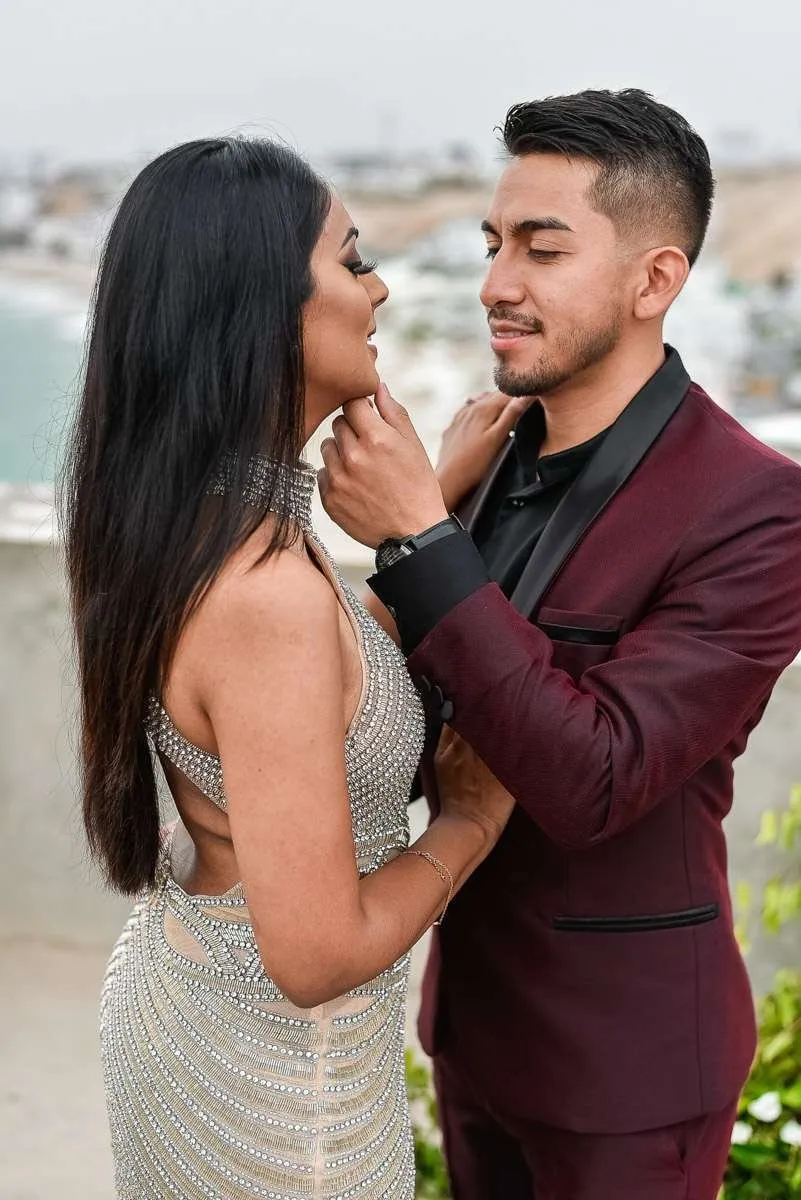
Couple portraits at a wedding are the time when the two of you are alone with the camera, and they are almost always improvised in the most awkward gap in the timetable: in a hurry, with guests waiting and at an hour when the light no longer helps. This text is about the opposite. When it is best to take them, how much time to give them in the plan for the day, where, and how to make them look natural without anyone telling you how to stand.
It is not the first look, which brings the first meeting forward to before the ceremony and which we explain in first look at a wedding. Nor is it the pre-wedding session, held another day in other clothes (when to hold a pre-wedding session), nor the family photos (how to organise the family photos). It is the session of the two of you within the day itself, in the wedding clothes and the wedding mood.
When: the light decides
With the sun high the light falls from above and hardens faces; when the sun drops, it arrives from the side and turns warm and soft. That is why this session wants the last light of the afternoon and not whatever gap is left over. The times for each date and the full table are in the article on the wedding timetable; what matters here is the idea: the hour for the portraits is not chosen at random, it is calculated.
The starting point is the sunset time for your date and place, which you can look up in the NOAA solar calculator, the United States ocean and atmosphere agency. That time is corrected for the refraction of the atmosphere, which makes the sun stay visible a little after it has crossed the horizon. With it in front of you, the timetable is built backwards: the session starts before sunset, not at it.
After sunset there is a while of soft, bluish light; NOAA measures it as the time until the sun is six degrees below the horizon. It fades fast, so do not count on it as margin: if it comes, it is a gift.
If the ceremony ends with the sun already low, the session can go right after the group portraits. If you do a first look, part of the portraits moves to the early afternoon and the sunset slot is left for a few more, without pressure. And from September the good light starts before cocktail time: how to deal with that is covered in the same timetable article.
How long: less than you think
Typically, for the two of you, about twenty minutes of camera time is enough, as long as the light and the place are settled. It is the same figure we propose in the timetable article. More time rarely improves the images: guests wait, the cocktail hour goes on without you and you both start watching the clock, which shows in your faces.
In the plan for the day, set aside half an hour: twenty for the camera and the rest for leaving, walking to the spot, gathering the dress and coming back without running. Time that is not written into the plan is taken by the cocktail hour.
If you want more quiet images, two short moments are better than one long one: one in the afternoon light and, if the timetable allows, another of five or ten minutes after dark, with the party behind you. There is no need to spread it any thinner.
And tell people. Let the caterer, whoever coordinates the day and the family know at what time you disappear and at what time you return. Nobody misses the couple for twenty minutes if they know; they miss them when nobody knows where they are.
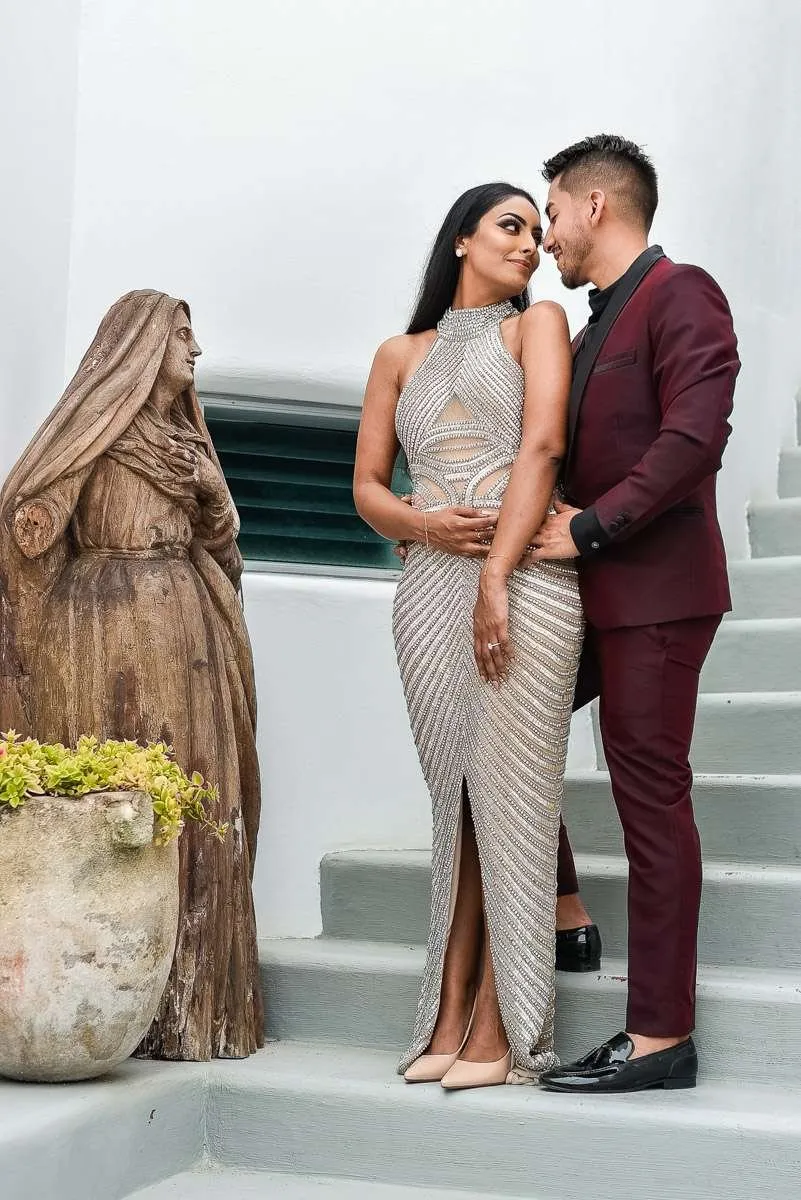
Where: close by, no transfers
The best place for couple portraits is the one you can reach on foot from where the party is. Every transfer by car uses up light, breaks the mood and, in a long dress, is a nuisance. What to look at on the visit to the venue, and not on the wedding day:
- Which way it faces. On your phone, the compass shows degrees. Compare them with the direction in which the sun sets on your day, as explained in the timetable article: if there is a mountain range or a wall in front, direct light will be gone before the stated time.
- A clean background. A pale wall, a garden, a staircase, an old door. Three options are enough; you choose the backgrounds you like and the hour when they work best is decided with the photographer.
- Comfortable ground. Gravel, long grass or steps in heels and a long dress are a complication. Ask about the path.
- A plan for bad weather. A porch or a room with a window. What to settle is covered in the rain and wind plan B.
If the photographer does not know the venue, let them see it beforehand, even through photographs or on a quick visit. A place discovered on the day is entered in a hurry, and hurry is what shows most.
The pace: walk, talk, do not pose
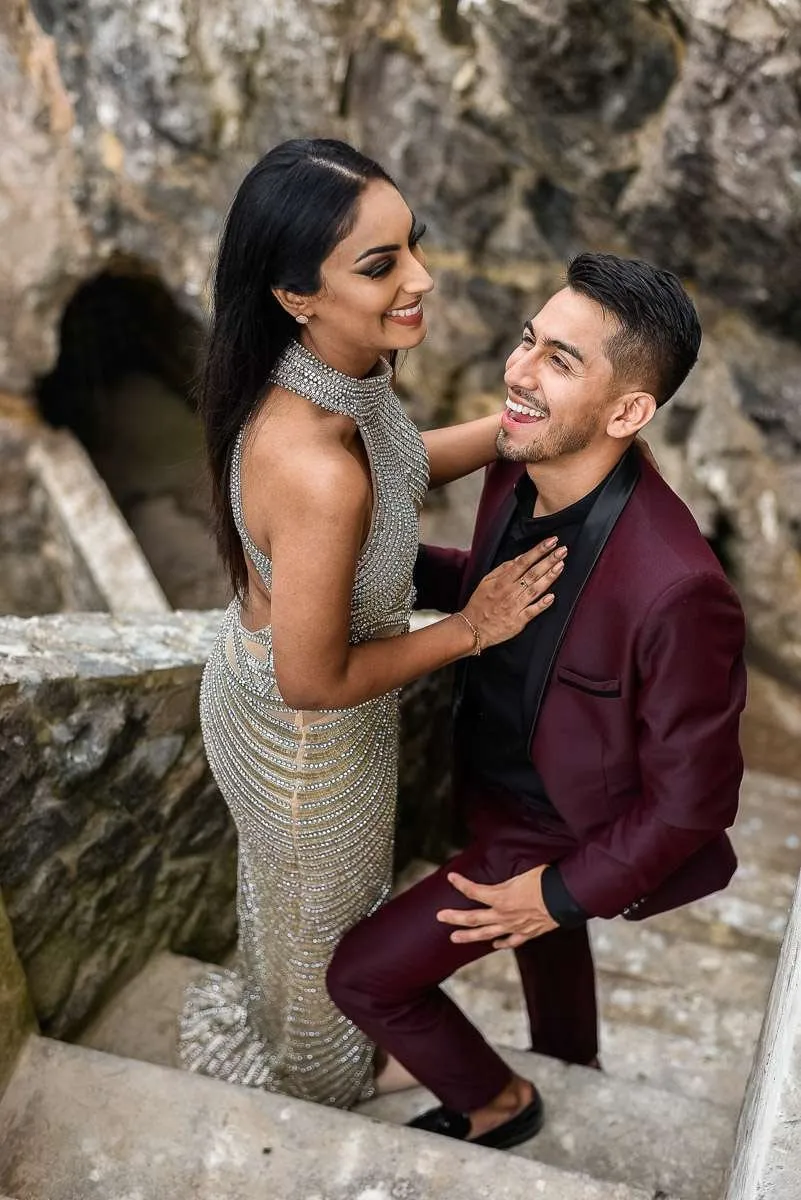
Posing is what people do when they do not know what to do with their hands. A good couple session is more like a stroll: you walk, you talk, you climb a staircase, you laugh at something. The camera follows at a distance and moves closer when something happens. When to direct and when to watch is explained in documentary or posed wedding photography.
Three things help:
- Talk for real. About what has happened that day, not facing the camera. What the image shows is how you look at each other, not how you are placed.
- Move slowly. Walk hand in hand, side by side, and stop when you feel like it. The pauses give the best images.
- One instruction at a time. If you are asked for three things at once, you both think about posture instead of about each other.
One thing that works: each of you tells the other something you have not said all day. The face changes by itself.
What not to do
- Leaving it for “when there is time”. With no slot in the plan, the session lands wherever there is a gap, which is usually midday or full darkness.
- Choosing the place on the day. With the ceremony over and every guest waiting, nobody decides well.
- Bringing an audience. Family and friends watching change the faces of both of you. Ask them to stay at the cocktail hour.
- Stretching it because it is going well. What is gained in the session is lost at a dinner that runs late. It is better to return in good time.
- Moving the time without telling anyone. If dinner slips by half an hour, the light no longer falls where it was planned. Whoever holds the timetable must know.
- Forgetting the practical. Comfortable shoes in a bag, water and a trusted person to gather the dress and arrange the veil.
How to put it in the plan
One sentence in writing is enough, for everyone involved in the day to read: what time the couple leave, to which place, with whom and what time they return. The rule we give in the timetable article is simple: find your date, take the time when the good light begins and subtract twenty minutes. At that time you should be able to slip away from the cocktail hour. If there is a dog, a short, early portrait: pets at the wedding. And the calm portrait of the grandparents: grandparents at the wedding.
If you would like us to organise the day with you so that half hour exists, tell us your story. What we do and how we work is in wedding photography. If there are children, a separate moment with them helps. While you pose, the details are photographed separately: wedding detail photos.
Frequently asked questions
How long do couple portraits last at a wedding?
Typically, about twenty minutes of camera time, and half an hour in the plan for the day to go and come back without hurry. It is a trade judgement, not a rule: if the light and the place are settled, those twenty minutes are enough.
Are couple portraits taken before or after the ceremony?
Without a first look, after the ceremony and the group portraits, in the afternoon light. With a first look, part of them moves to before the ceremony and the rest is left for sunset.
Do we have to leave the venue?
No, and it is better not to. A transfer by car uses up light and mood. Choose a corner you can reach on foot and decide it on the visit, not on the wedding day.
What if we feel shy in front of the camera?
It is the most common thing. A short session helps, without an audience, with a walk and conversation instead of poses. After a few minutes the camera stops being noticed.