Venue guide · 4 min read · Updated
Weddings in monasteriesabbeys and convents near Madrid
Seven venues with centuries behind them: what to know about the ceremony, sound, conservation and light.
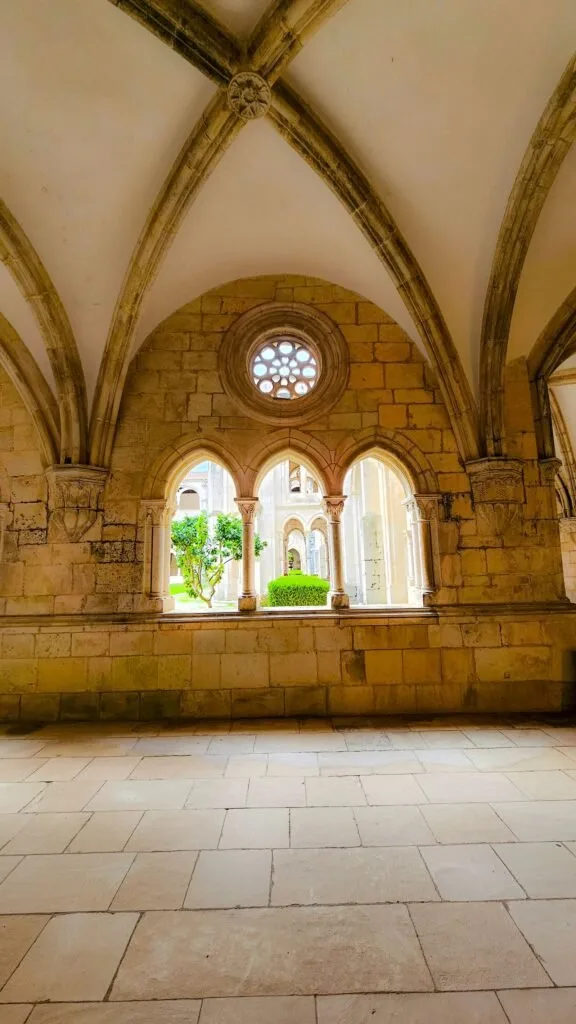
Some couples want a religious ceremony without the usual parish church, and others do not want one but seek a place with five hundred years upon it. Both cases end in the same kind of venue.
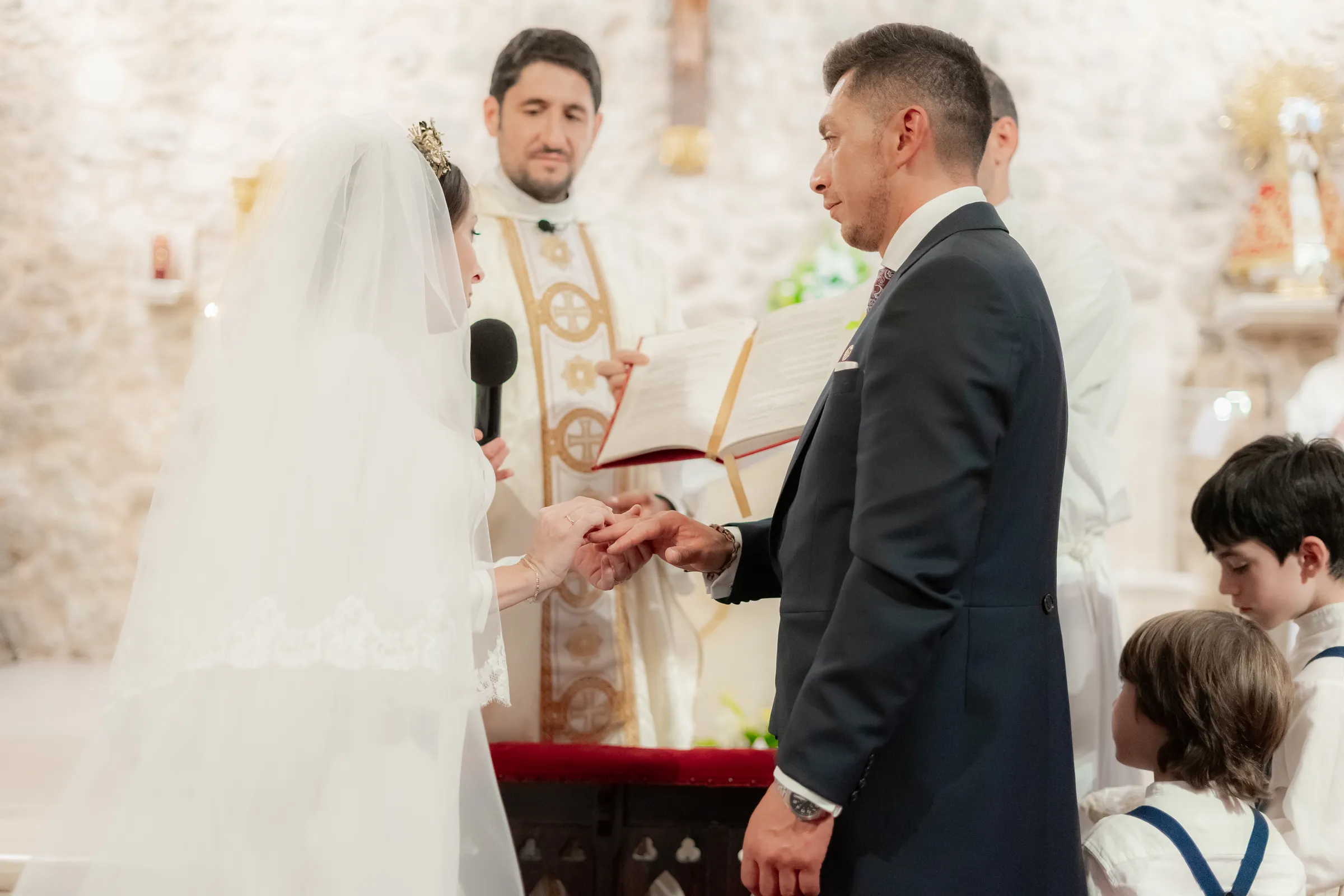
Seven venues within two hours of Madrid
| Venue | Where | Century | From Madrid | Feature |
|---|---|---|---|---|
| Monasterio de San Bartolomé de Lupiana | Lupiana, Guadalajara | — | ~1 h 05 | National Monument, mother house of the Order of St Jerome; Renaissance cloister and roofless church |
| Abadía de Párraces | Bercial, Segovia | 16th | ~1 h | Two Renaissance cloisters, a swimming pool and wheat fields |
| Los Claustros de Ayllón | Ayllón, Segovia | Founded 1214 | ~1 h 35 | Restored ruins of a thirteenth-century monastery; 35,000 m² of gardens and a pond |
| Convento de Lillo | Lillo, Toledo | 17th | ~1 h 10 | Adjoining church for the religious ceremony; one wedding per day |
| El Legado de los Jerónimos | Bonilla de la Sierra, Ávila | 16th | ~2 h | Former Hieronymite estate with restored sixteenth-century chapel |
| La Vega del Henares | Alcalá de Henares | 18th | ~35 min | Former Trinitarian convent on an estate of over 500 ha |
| Abadía de Recas | Recas, Toledo | 16th | ~40 min | Restored conventual building in the town centre |
Travel times are approximate, by road. Capacities are not listed: they depend on the layout. Confirm details when booking.
- venues less than two hours from Madrid
- 7
- to the nearest, La Vega del Henares
- 35 min
- to the furthest, El Legado de los Jerónimos
- ~2 h
- wedding a day at the Convento de Lillo
- 1
The first question, which almost nobody asks
That a building is a convent does not mean a church wedding can be held in it. These are two separate matters: the venue is privately owned, and the religious ceremony is authorised by the diocese. Some, such as Lillo or El Legado de los Jerónimos, have a church or chapel in use; others offer only the setting for a civil ceremony.
The venue
It is privately owned. That it is a convent does not mean a church wedding can be held in it.
The religious ceremony
It is authorised by the diocese. Some, such as Lillo or El Legado de los Jerónimos, have a church or chapel in use; others offer only the setting for a civil ceremony.
It helps to put the question plainly: whether a Catholic ceremony may be held on the premises, and who processes the permission. The answer shapes the whole calendar, because parish paperwork takes months.
What the Church's rule says
The Code of Canon Law establishes that a marriage between Catholics is celebrated in a parish church. With the licence of the local Ordinary or the parish priest, it may be held in another church or oratory, as a monastery chapel may be (canon 1118). The licence is not granted by the monastery: it is granted by the Church authority.
How much time to allow
The Archdiocese of Madrid recommends a margin of at least three months before the wedding for all the preparations: the pre-marriage course, the documents and the details of the ceremony. Among the documents it asks for are:
- The baptism certificate of each partner, valid for six months.
- The birth certificate and an identity document.
- The pre-marriage course certificate.
- Two witnesses, one for each side.
Each diocese has its own procedure and deadlines: ask in the diocese the monastery belongs to, not just in your home parish. If the ceremony is civil only, the file is a different one and the calendar changes.
If one of you is not Catholic
The same canon provides that, between a Catholic party and an unbaptised one, the marriage may be held in a church or in another suitable place. And if the marriage is between a Catholic party and a baptised non-Catholic, the general rule applies: a parish church or, with a licence, another church or oratory.
In both cases the procedure and documents may vary. If the baptism certificate comes from another diocese, the Archdiocese of Madrid says it must be legalised, which adds time. Talk to the diocese before taking anything for granted.
Three differences from an estate
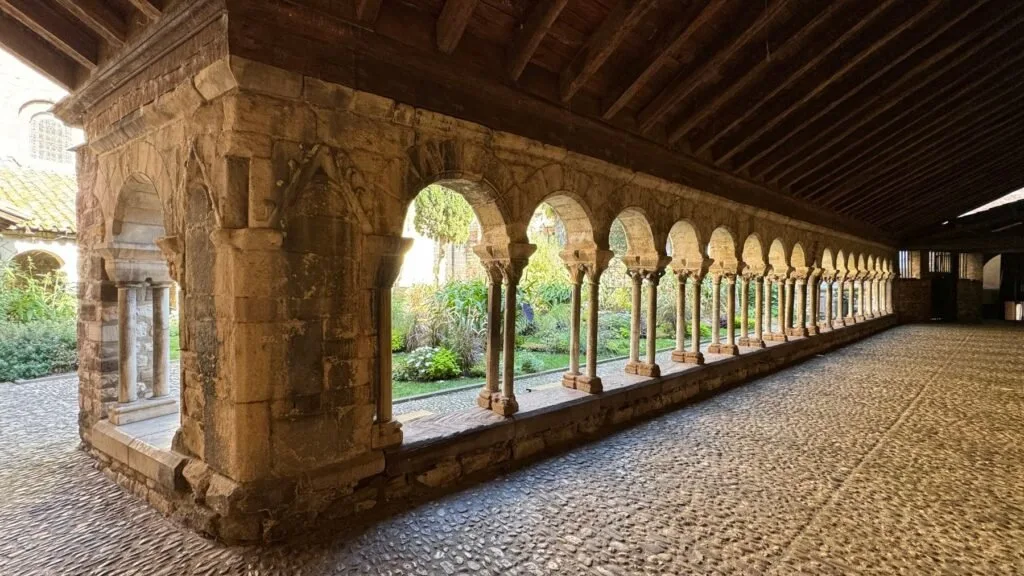
- SoundA stone cloister with galleries has a very long reverberation. Vows are hard to follow without amplification and live music sounds different from the rehearsal.
- ConservationIn a protected monument nothing is fixed to the walls, marked areas are not stepped on, and there may be closing hours. Ask what is forbidden before booking decoration.
- Capacity under coverA figure that includes gardens and ruins is no use if it rains.
Light in a cloister
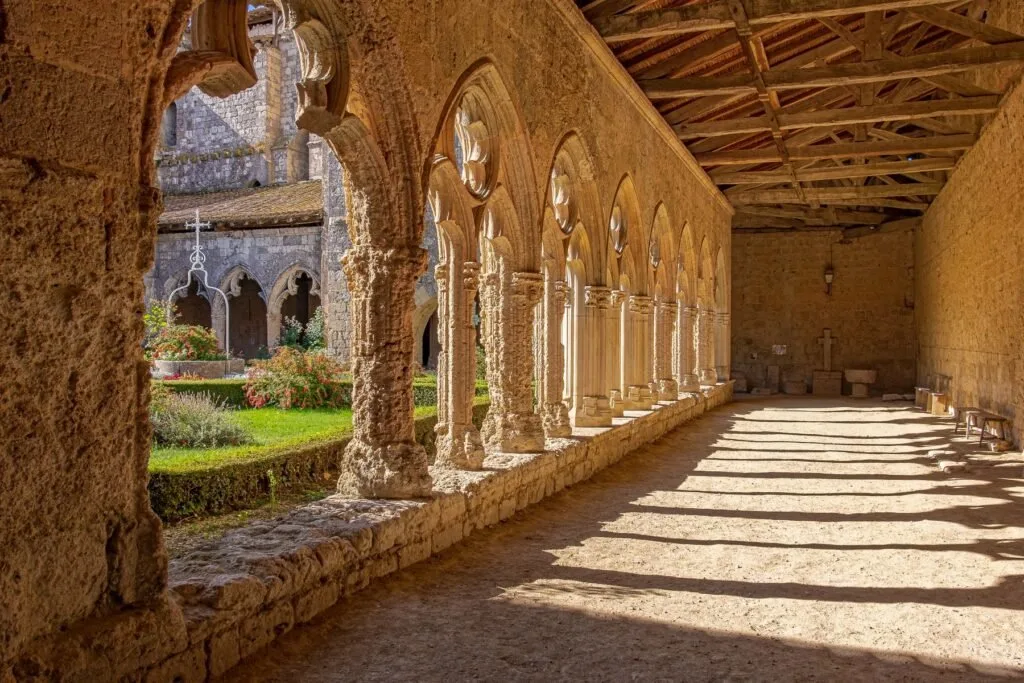
A cloister is the best set there is and the worst, and the difference is the hour. Arched galleries give a very soft side light, ideal for portraiture, but only when the sun does not fall straight into the courtyard. At midday the central courtyard becomes a well: scorched ground and hard shadows beneath the arches. By mid-afternoon, open and even shade flatters any couple.
And one singular case: a roofless church, like that of Lupiana, behaves like a studio with light falling from above. High walls trim the sun and open sky lies above; by day it is difficult because of the contrast, and at night, with the party lighting in place, it is among the loveliest settings to be found.
Before requesting a quotation
None of these venues publishes rates. What helps is arriving with comparable questions and requesting each proposal in writing.