Guide · 4 min read · Updated
Estates and country houses for weddings in Mallorcaby area
Four areas, four kinds of light: how to choose the place of a wedding on the island before settling on date and budget.
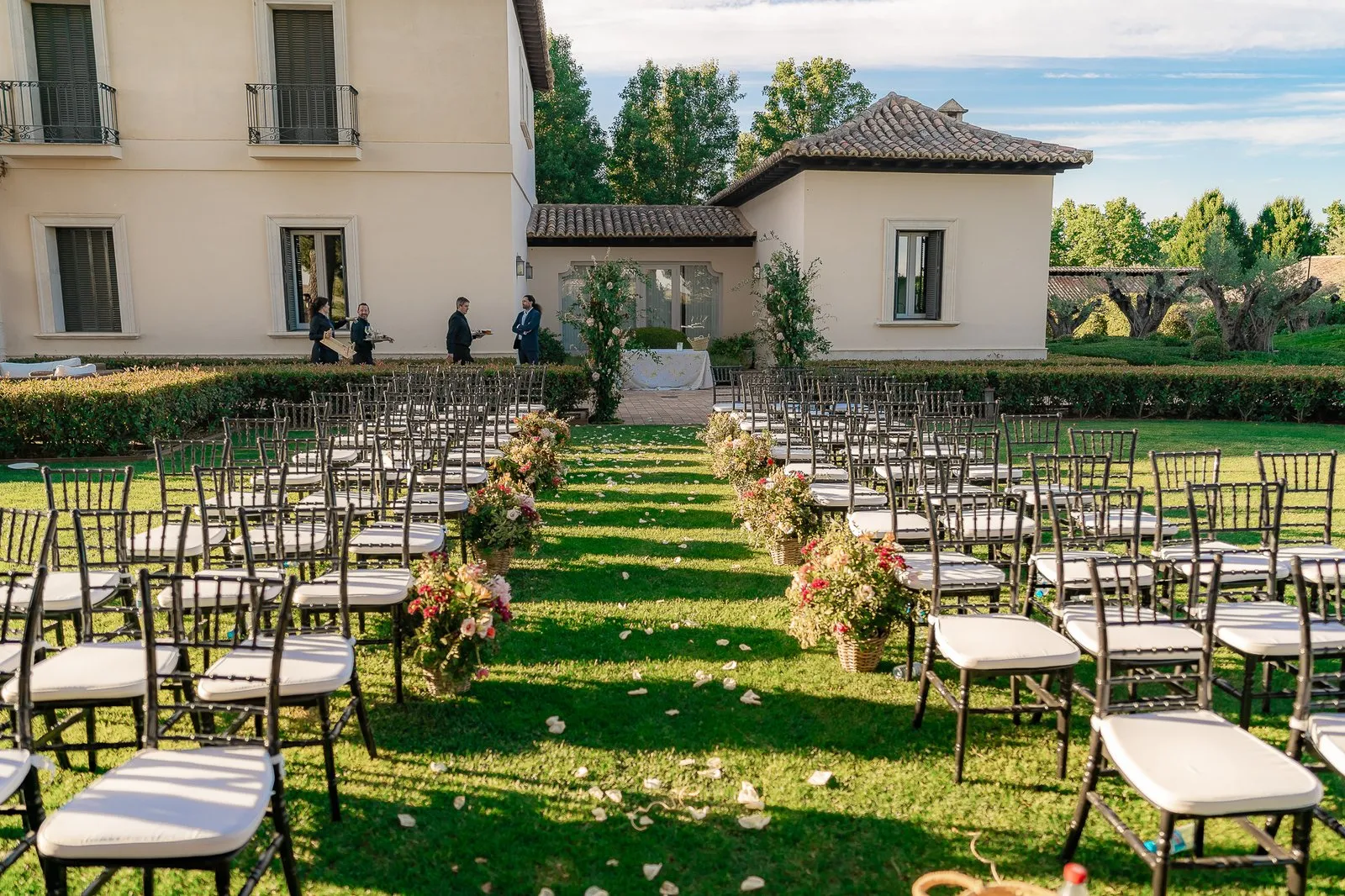
Choosing where to marry in Mallorca is the first decision and the one that conditions all the others: the date, the budget and how many guests sleep elsewhere. Possessions are the island's great rural estates, each with a manor house; this guide arranges them by area and by the character of their light. ¿Prefiere decidir primero el tipo de lugar? where to hold a wedding in Mallorca.
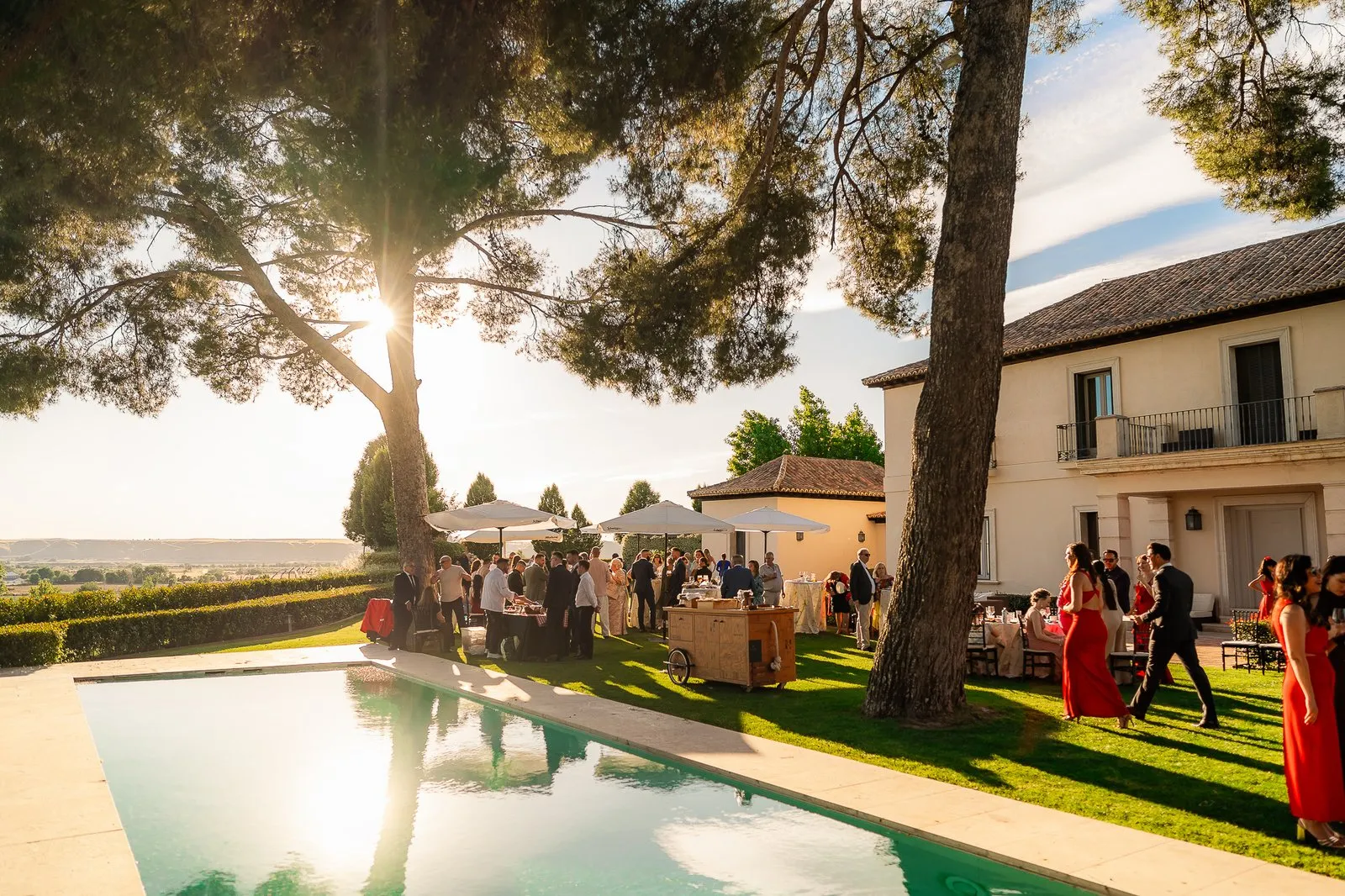
North: the Serra de Tramuntana
The mountains rule: cliffs, enclosed valleys and possessions hanging over the sea or tucked inland. Do not assume they are uniform. The coast of Deià and Sóller faces west and receives the setting sun head-on; an inland valley, by contrast, loses the light earlier, because the mountain takes it away. The same sunset hour does not mean the same last light.
Centre: the inland vineyards
Es Pla is the inland plain: vineyards, almond trees and houses under less tourist pressure than the coast, and home to a good part of Mallorcan wine. Several celebrations take place among the vines, with open light and long horizons.
South and south-west
From the Bay of Palma to Llucmajor and Calvià lie the houses with the most history built in stone: castles, former fortresses turned into hotels. Marés, the golden sandstone used on the island for centuries, is common in this area.
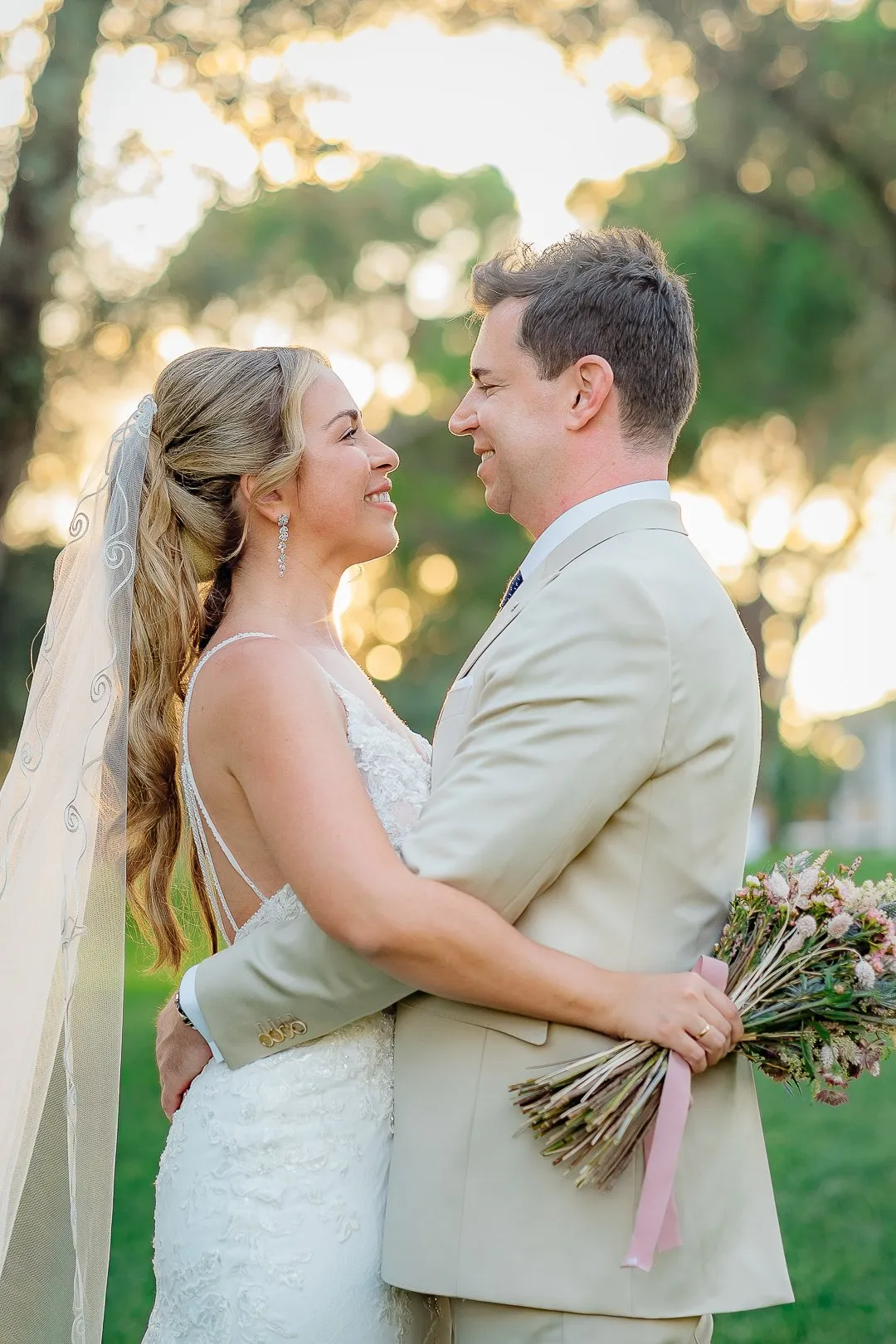
North · Tramuntana
The range rules. The coast of Deià and Sóller faces west and gets the sun head-on as it sets; an inland valley loses the light sooner.
Centre · Es Pla
Vineyards, almond trees and houses with less tourist pressure. Celebrations among the vines, with open light and long horizons.
South and south-west
From the Bay of Palma to Llucmajor and Calvià: castles and former fortresses, with marés, the golden sandstone of the island.
What changes when photographing on marés and dry stone
Pale stone returns far more light than a brick or painted wall, with two opposite consequences. At midday a closed stone courtyard is a box of hard light that bounces off all four walls and leaves no clean shade; if the cocktail falls there at three in the afternoon, the answer is to look for the shaded side, not the prettiest corner. At sunset the opposite happens: with the low sun, that same stone acts as a great reflector and warms the tone of the whole couple portrait. It is the best half hour of the day and it does not repeat.
At midday
A closed stone courtyard is a box of hard light bouncing off all four walls. Look for the shaded side, not the prettiest corner.
At dusk
With the low sun, the same stone acts as a great reflector and warms the tone of the whole portrait. It is the best half hour of the day and it does not repeat.
Hence the one question to put to the venue before fixing the cocktail hour: where does the sun fall at the end of the afternoon, and what lies between that point and the house. If the estate opens to the west, the portrait goes last and the stone works in your favour. If the courtyard is enclosed or faces east, that hour is no use, and you should have another corner chosen before the day, not search for it with a hundred and twenty guests inside.
And if it rains
AEMET records about 411 mm of rain a year for Palma Airport (1981-2010). Most of it falls in autumn: October (62 mm) and November (55 mm) are the wettest months, September reaches 50 mm and summer is dry. A house with a lovely garden solves nothing if it rains; the indoor space does.
So the question is not whether there is a plan B, but what it is. Ask in writing for the real capacity of the hall, gallery or marquee, which need not match the garden's. Ask also how long the switch takes, who decides, and by what hour of the day the decision is closed. From the photography and film side there is one more thing: how much natural light reaches that fallback space, and how it looks at seven in the evening.
What to look at when you visit
If you can, visit at the hour and in the month of your wedding. Beyond where the sun falls, four things are worth checking that rarely appear on the fact sheet:
- Access: how cars arrive and, if there are coaches, where they stop and turn.
- Electricity: where the music and lighting draw power from, and whether it is enough for everything at once.
- Where the couple get ready, with natural light and out of the suppliers' way.
- Where each supplier's equipment is kept between set-up and take-down.
Note the answers and compare them across venues: they are what websites make look most alike and the wedding day shows most different.
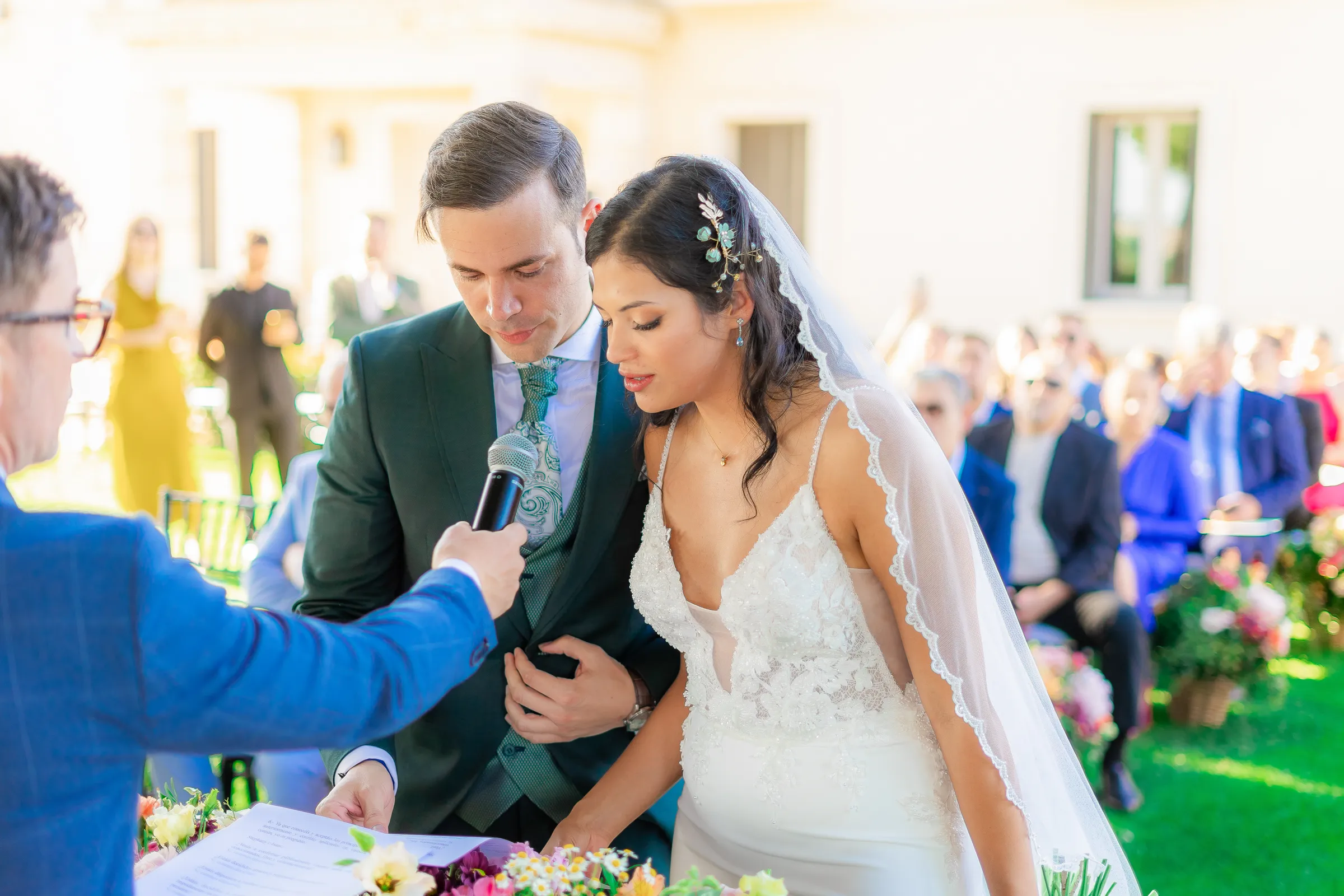
The only question worth asking the venue before fixing the cocktail hour: where the sun falls at the end of the afternoon and what lies between that point and the house. One team for photo and film? What changes on the island: photo and film from one team.
Rates and proposals
The island's venues generally work by bespoke proposal; it is worth writing to each one to compare. That is why what to ask matters more than whom.
Questions before booking
- If it does not offer rooms, where does the wedding sleep? Settle it with a nearby hotel and put it in writing: it is the cost that appears latest in a destination wedding. Lodging and music, with figures: what it costs to get married in Mallorca.
- Real capacity, not the brochure figure: ask for the number on the venue's licence.
- Is the venue exclusive that day? Some possessions host more than one event in parallel.
- Is accommodation included or billed separately?
- Until what time may music play? Rules vary by municipality; ask in writing before signing.
- May you bring your own catering? Some houses have an exclusive kitchen and others do not state the condition; ask all of them in the same words: whether it is exclusive, whether there is a list of approved suppliers, and whether bringing your own carries a fee. With an email template: outside catering and music.
If you are planning a wedding in Mallorca, explore MAKERSWED's wedding photography and film collections, read the frequently asked questions or shape your story in three short questions.