Guide · 6 min read · Updated
Wedding detail photos:flowers, rings and stationery
The small things: what to gather, when to take them and who to coordinate with.
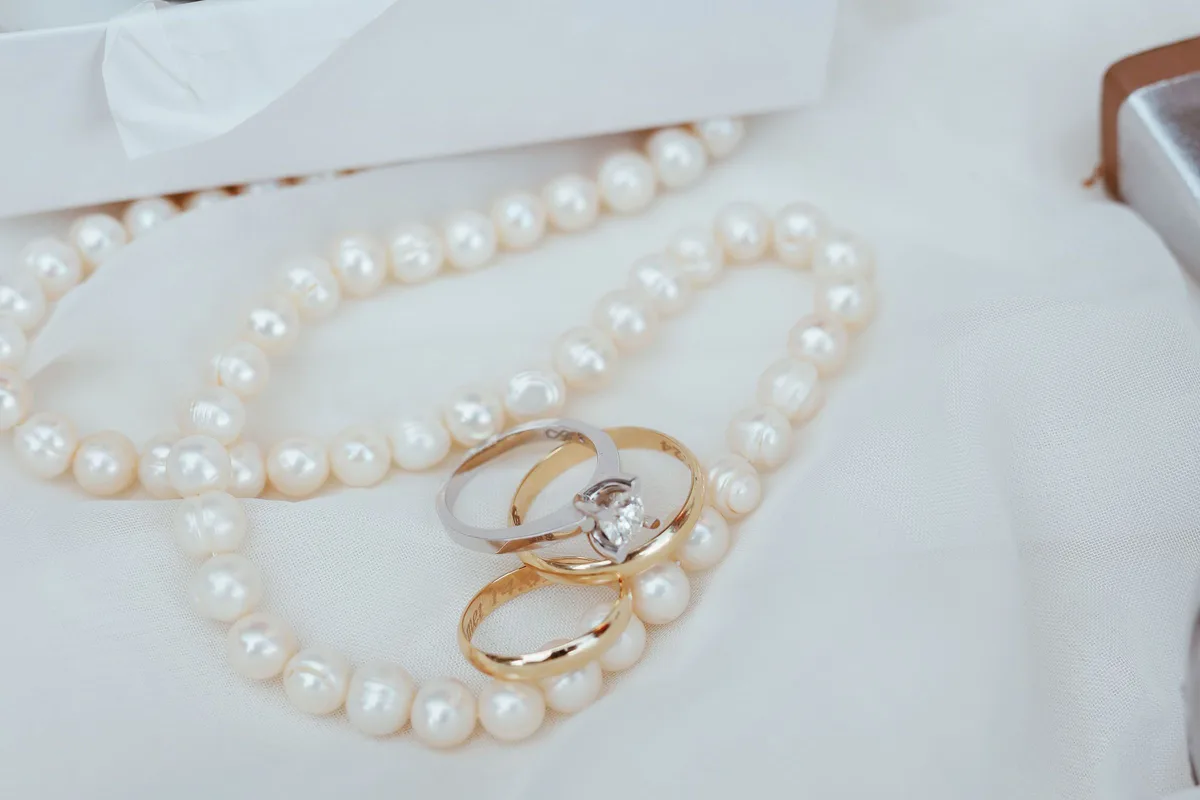
Wedding detail photos are the ones taken most calmly and improvised most often: the rings, the invitation, the flowers, the laid table and the signs wait until there is time, and time is the first thing missing on the wedding day.
This text is about what is worth gathering, when to photograph it before the guests arrive, how to work with whoever decorates, and what really matters and what does not. The morning in the room has its own guide, wedding getting-ready photos, and what is set up the evening before is covered in the day before the wedding. What follows is general advice from the trade, not a rule.
What counts as a detail
They are the small things that tell you what the wedding is like without anyone appearing in them: the rings, the invitation and the rest of the stationery, the bouquet and the flowers around the venue, the laid table and the signage, those signs and letters that say where everything is. They are not filler. They give an album or a film a breath between the people, and they keep what took the longest to choose.
They also share one trait that decides everything else: they do not move on their own. A person can be asked to stand where the light is; a table cannot. So these images depend almost entirely on how everything is prepared and on when it is finished.
What to gather, and who has it
Make a short list and put a name to each item and to whoever has it. The usual ones:
- The rings, in their box and in the care of one person who knows how to bring them out when asked. How to leave them to hand in the morning is in what to keep to hand.
- The whole invitation: envelope, card and any sheet that goes inside, all together.
- A spare copy of each printed piece: menu, seating plan, programme, place cards. It is the thing most often missing when asked for, because the rest has already been handed out.
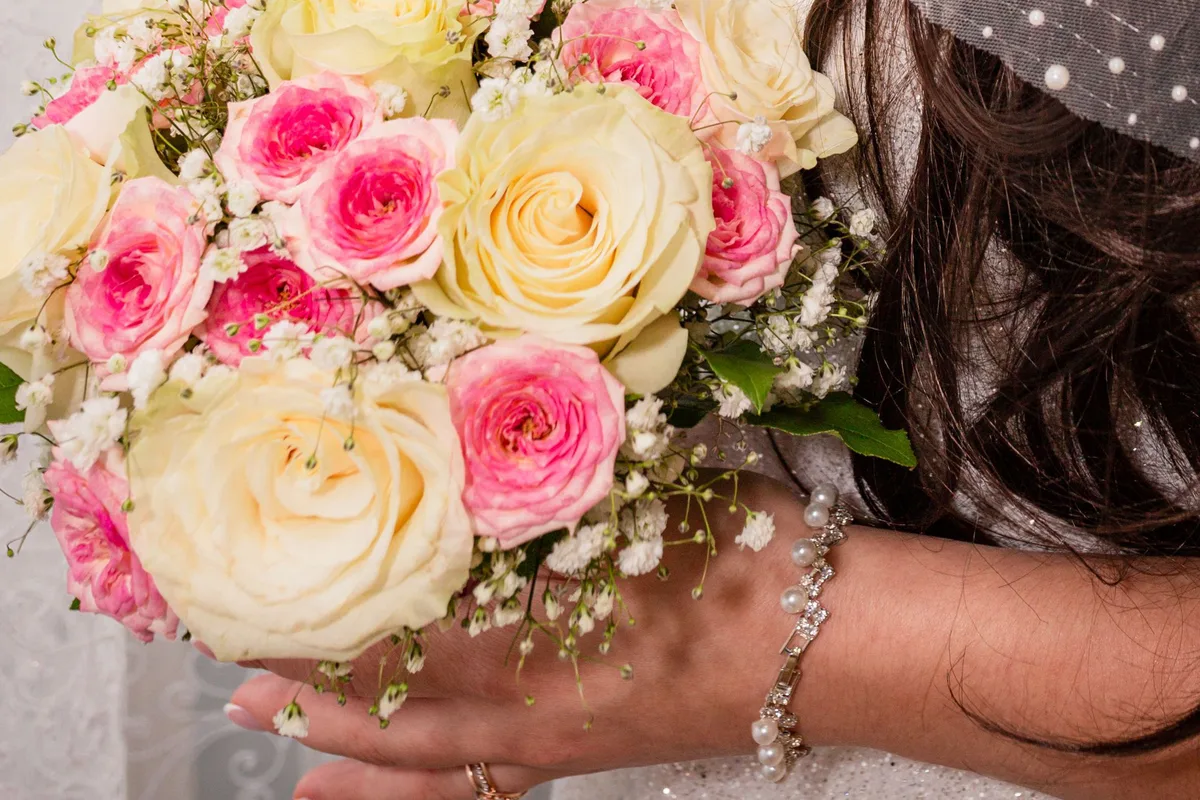
- The bouquet and any loose flowers: buttonholes, the groom’s flower, the parents’ flowers, if there are any.
- What comes from the family: a handkerchief, a watch, a piece of jewellery, with a few lines on who gave it and what it means.
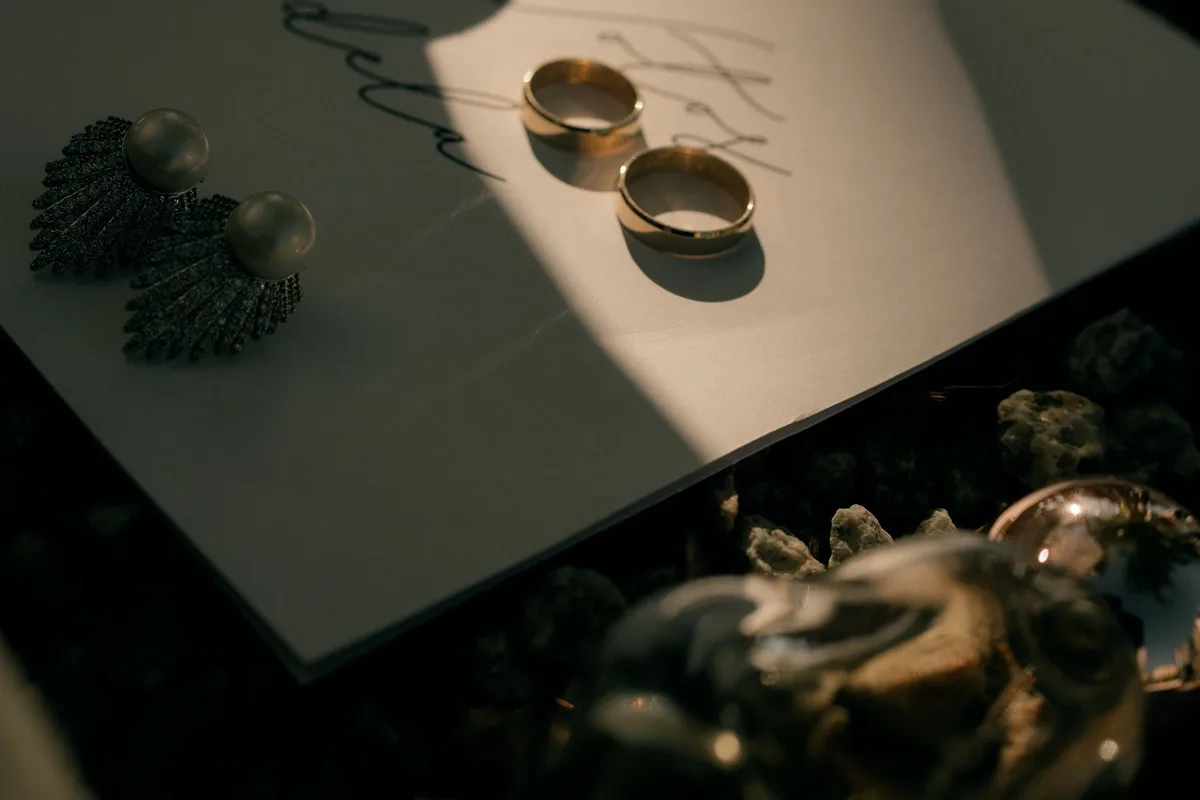
- The signage and the letters: welcome signs, directions, names, initials.
Those lines about what comes from the family are worth more than any framing: whoever photographs will know where to take care, and the object stops being just any watch.
When: before the guests arrive
The best moment to photograph a table or a sign is when it is finished and nobody is there yet. After that come half-empty glasses, chairs pushed back and people in front. It is a short window, and it is worth writing into the timetable rather than waiting for it to open by itself.
To find it, ask whoever decorates when everything will be ready, not when they start. Then fit that moment between the end of the set-up and the arrival of the first guests, with a name in the timetable and a person responsible for keeping it. Daylight is organised in the wedding timetable; one idea is enough here: whatever suffers in sun or heat, such as fresh flowers, is better placed last.
What is not ready by then need not be lost. One finished table works as a sample for the others, so it is better to complete one whole table than to leave every one half done. If time is short, say so to whoever decorates: one complete, well-set table counts for more than several half-built ones.
Whoever photographs rarely needs much room: a gap with nobody in front and whatever light there already is. If that gap coincides with another important moment of the day, there is no need to choose; you only need to put things in order, and decide beforehand what happens first.
Working with whoever decorates
Whoever decorates and whoever photographs do not know each other and work at the same time in the same place. The simplest thing is for one person to talk to both, and for that person not to be you on the day. What to tell them:
- To whoever decorates: that there will be photography right after the set-up, and to say when an area is finished, not only when everything is.
- To clear the frame of what is left over: boxes, cardboard, bags, ladders, water buckets. It is what shows most and is thought of least.
- That nothing is touched after sign-off. A centrepiece moved after it has been photographed makes a different table from the one the guests see.
- To whoever photographs: what has been put out and where, and a short list of what matters most to you.
- If there is stationery: who brings it and at what time, so that it is in place when everything is finished and does not turn up afterwards.
What is set up the evening before and what is left for the morning is explained in decoration: what is set up and what is not. Here, only the consequence: the earlier what is fixed is in place, the more room there is for what is done last.
What matters and what does not
It matters that the background is clean, that light reaches the table or the sign, and that what is written can be read and is spelt correctly. A typo on a sign stays in the photograph for good: have someone who did not write it read it through.
Coherence matters too. Typefaces, colours and materials that resemble one another make the details look like one thing and not a collection of purchases.
It does not matter that everything is costly, that every table is different or that there are many objects. A table with a few things well placed photographs better than a full one. Nor is there any need to photograph every table or every sign: with one well-made sample, the rest tells itself.
And a question of privacy. Seating plans and place cards carry guests’ names. If you plan to publish the photographs, decide beforehand whether those names may be legible or whether you would rather they were handled another way when photographing, with a different angle or a focus that does not single them out.
Where details fit into the day
The best thing about details is that they need nobody in front of the camera, so they take no time from the couple: they are done while you are somewhere else, getting dressed or having your portraits taken. How long those portraits need, and where, is in couple portraits at a wedding.
If there is also a film, these images often serve as a pause between scenes and as an introduction to the place; the difference between the formats is in trailer and film. That is why it is worth having them well made, even if nobody sees them while the wedding goes on.
If the list is done and one person knows where everything is, the small part of the day gets sorted without you having to look. If you would like us to plan that part with you, tell us your story.
Frequently asked questions
Who takes the rings to the photograph?
One person who knows where they are and brings them out when asked. Better if it is not whoever is getting married: they have other things on their mind that day.
Do I need to buy anything for the details to turn out well?
No. What you were going to use anyway is enough, complete, clean and in its place, with a background free of boxes and bags.
When is the table photographed?
When it is finished and no guests are there yet. Ask whoever decorates when that will be and write it into the timetable.
Will guests’ names be visible in the stationery photos?
They can be. If you would rather they were not, say so beforehand and it is handled when photographing, with another angle or another focus.