Guide · 4 min read · Updated
Wedding timetable:the half hour that decides your photos
One half hour of the day decides how half your photographs will look. Here is how to fit it in.
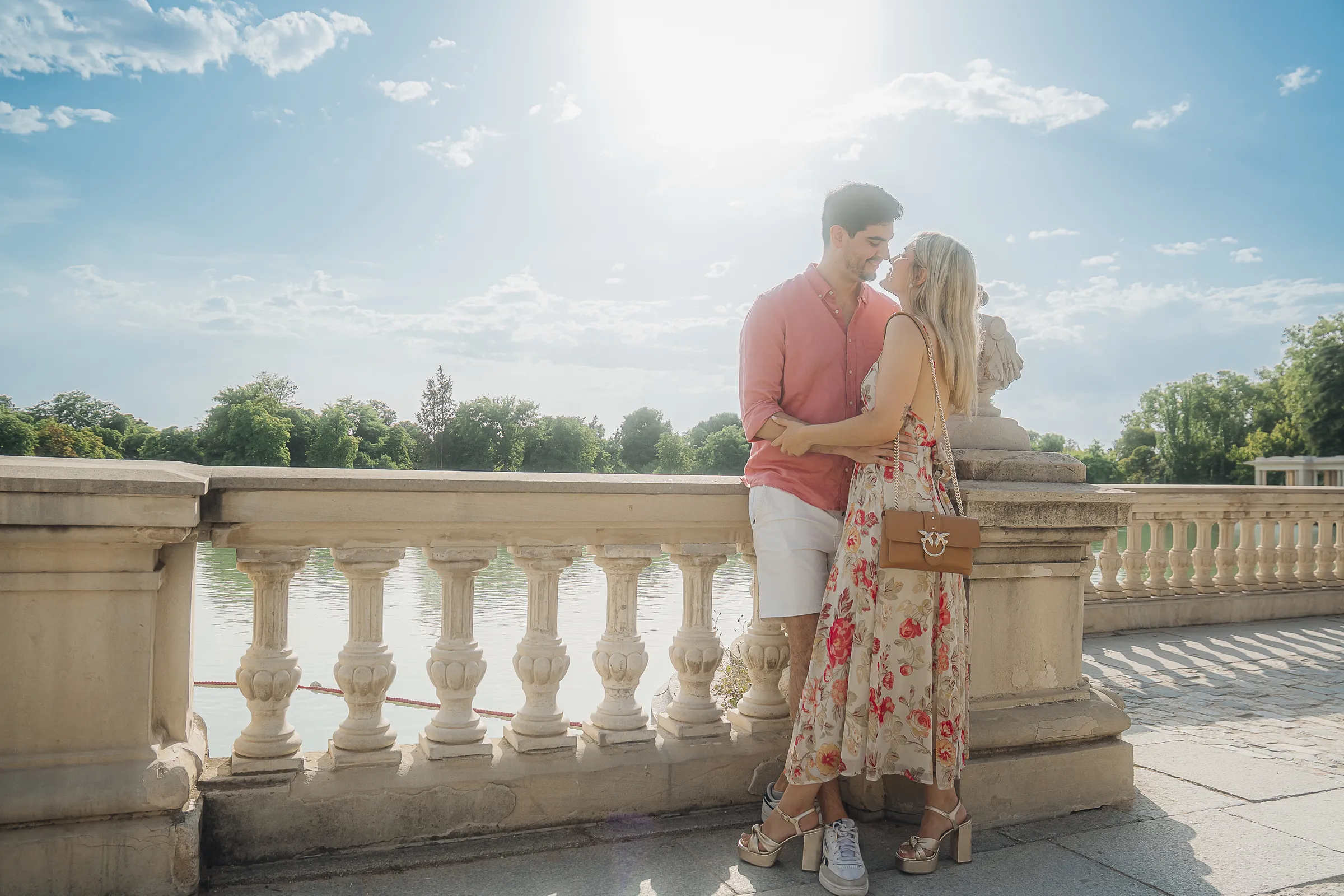
A wedding timetable is settled months ahead with the venue and the caterer, and is almost always decided by the meal. That is reasonable. But there is a half hour that determines how many of the images will look, and it rarely appears in any of those conversations.
Why half an hour
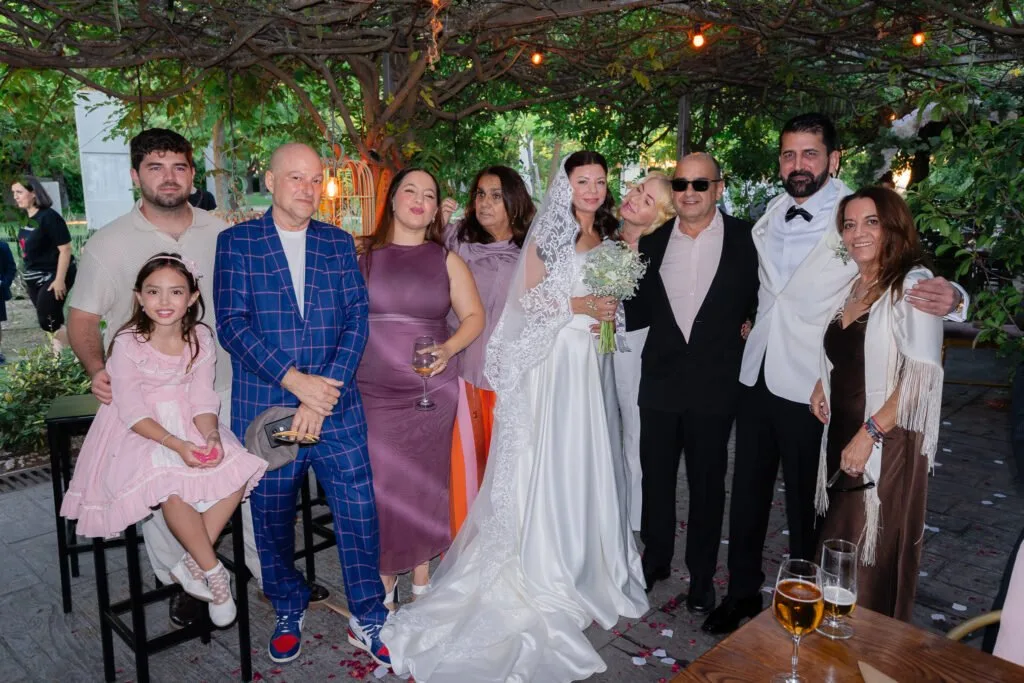
With the sun high, light falls from above: hard shadows under the eyes, the dress's white burnt out, the tailcoat's black without detail. It is the worst light of the day and it coincides with the cocktail hour. When the sun lowers to touch the horizon, light comes from the side, crosses more atmosphere and turns warm and soft. That window lasts between thirty and forty-five minutes. It cannot be recovered and no filter corrects it.
- is how long that window of warm light lasts
- 30–45 min
- that hour moves between May and October
- almost 2 h
- are enough for the couple to slip away
- 20 min
- the sunset point shifts between June and October
- 42°
The times in the Community of Madrid
"At sunset" is not enough to plan with: between May and October that hour moves by almost two hours. If your team comes from Palma, the sun sets in Madrid almost half an hour later.
| Date | Good light begins | Sunset | Where it sets |
|---|---|---|---|
| 15 May | 20:47 | 21:26 | North-west · 296° |
| 15 June | 21:06 | 21:47 | North-west · 302° |
| 15 July | 21:05 | 21:45 | North-west · 300° |
| 15 August | 20:37 | 21:14 | West-north-west · 289° |
| 15 September | 19:49 | 20:25 | West · 275° |
| 15 October | 18:59 | 19:36 | West-south-west · 260° |
The rule in one line
Find your date, take the first column and subtract twenty minutes. At that time you should be able to slip away from the cocktail hour. Two hours are not needed: twenty minutes of that light are worth more than two hours at midday.
Building the timetable backwards
The usual mistake is to build the day from the start and leave the couple's portraits "for when there is time"; they then fall where there is space, the worst place. It is best done in reverse. For a wedding in mid-June: On seeing each other before the ceremony: the first look, what to bear in mind.
- End of the preparationsFirst images of each of you.
- Ceremony
- The ceremony endsGroup portraits straight after.
- The cocktail hour begins
- The twenty-minute escapeThe axis of everything else.
The September clash
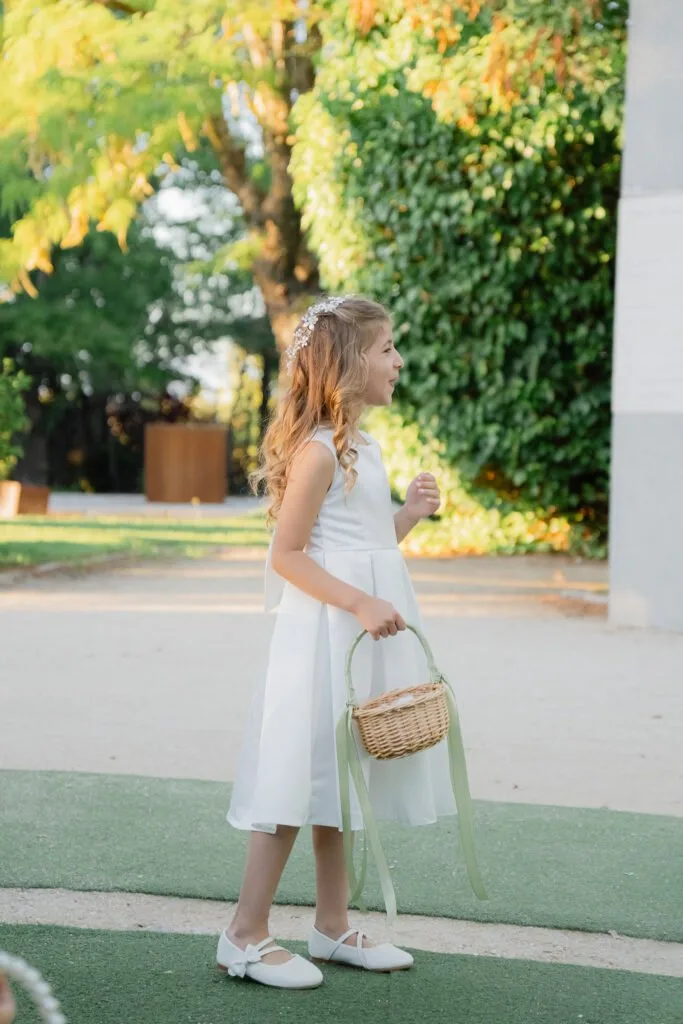
From September the good light begins before eight o'clock, in the middle of the cocktail hour. There are three ways out, best decided with the caterer present: move the ceremony half an hour earlier, step away between the cocktail and the banquet, warning that you will be twenty minutes, or handle the session with artificial light, which gives good results in skilled hands but is a decision, not an accident.
March, April and the October clock change
The table covers May to October, but weddings take place all year round. In Madrid, in 2027, the sun sets on 15 March at 19:22, on 15 April at 20:54 and on 15 November at 17:59. As in the table, the good light begins about forty minutes earlier.
Summer time also moves the clock: it starts on the last Sunday of March, which in 2027 is the 28th. From that day on, the same sunset falls an hour later on the clock. If your wedding is in early spring, check which local time each figure you are given refers to, so you do not plan with the wrong one.
October has a jump of its own. Summer time ends on the last Sunday of October, at 01:00 universal time (Directive 2000/84/EC); in 2027 that is Sunday 31st. On Saturday 30 October the sun sets at 19:16; on Monday 1 November, at 18:13. On the clock, sunset moves earlier by a little over an hour between those two days, mostly because of the clock change and not the sky.
If your wedding falls near that date, build the timetable backwards using the new time. It is wise to place the ceremony and group portraits in the early afternoon, because the cocktail will fall after sunset: ask your caterer and your team what changes with winter time.
Where the sun sets
The sun does not always set at the same point: between June and October its place on the horizon shifts by about forty-two degrees. When visiting the venue, bring your phone: the compass gives the degrees. Stand where the ceremony will be, find the degrees for your date in the table and look at what lies in that direction. If there is a mountain range or a wall, direct light will go before the stated time.
Four more details
- A ceremony in full summer sun is hard on guests and couple: find shade or delay it.
- Preparations with the blinds down waste the day's best light, which enters free through the window.What to have ready for the photos of the wedding preparations.
- Group portraits straight after the ceremony: half an hour later, people have dispersed. On family photos: how to organise them without losing the cocktail. And the couple's own: how long and where to take the couple's portraits.
- If it rains, cloudy light is soft and steady all day. A plan B with a porch is worth more than checking the forecast. On the rain and wind plan B: what to settle in advance. On speeches and the first dance: sound and indoor light, there is a separate guide.And for the light of the night, once the sun is gone: wedding party photos.
If the timetable resists
Tell us the date and the venue and we will tell you when your window of light falls. On the eve: what to settle the day before the wedding.