Guide · 6 min read · Updated
Wedding speeches and first dance:how to be heard and seen well
Who, when and with what sound: what to settle before dinner.
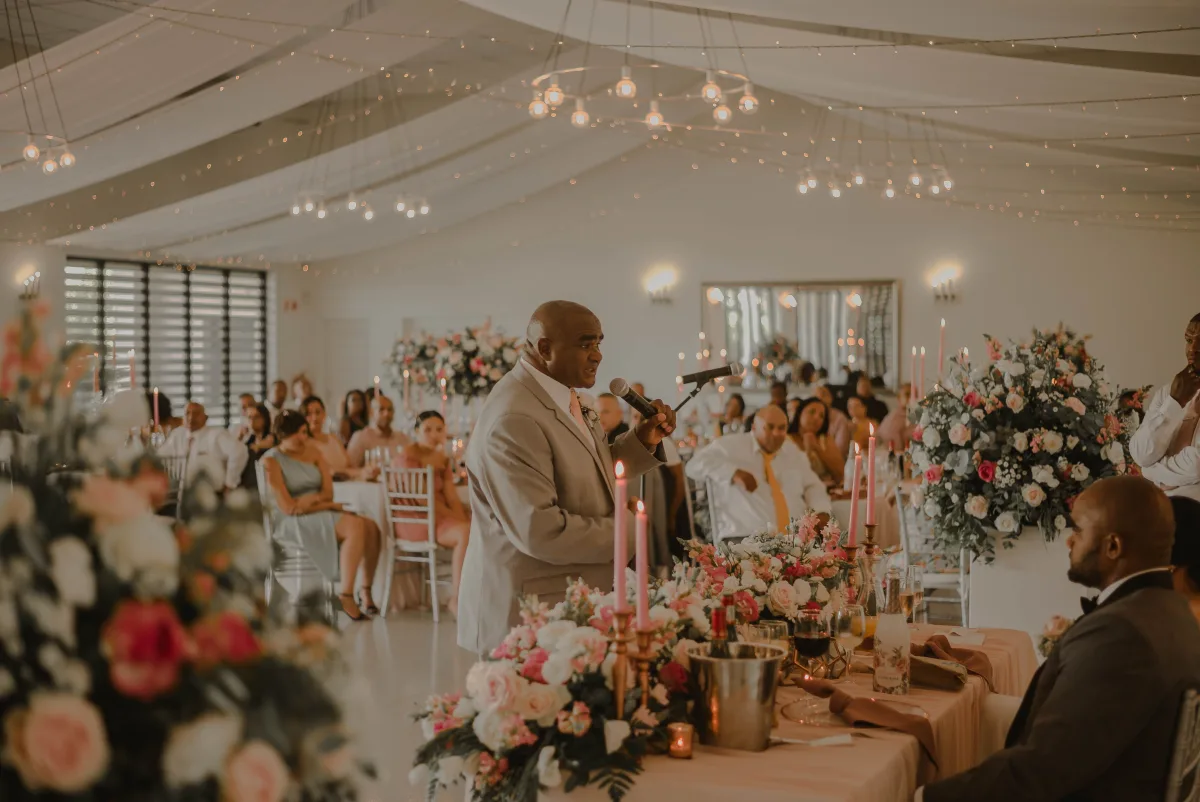
Wedding speeches are the moment when it shows most clearly whether someone thought about the sound. There are people who speak with all their feeling and cannot be heard from the back of the room, and people who are heard perfectly but standing in the darkest corner with a window behind them. What is said in those minutes will not be said again, which is why it deserves a little preparation.
This text is about the practical side: who speaks and when during dinner, how long each speech should last, how to make sure it is heard, where to place the speaker and what light to ask for at the first dance. And, at the end, what to tell whoever films. The light outside is dealt with in the timetable of the day and the joint work of photographs and film in one team; here, the light and sound inside. What follows is general trade judgement, not a rule.
Who speaks and when during dinner
Speeches work best between courses, when the room is seated, attentive and has something on the table. Not at the end of dinner, when half the guests have already got up, nor with the service moving between the tables. A pause after the first course or before dessert is usually the best moment: there is a natural silence and there is still energy left for the dancing.
Agree a closed list of people, with the order written down. Usually only a few speak: someone from each family, a very close friend and, if you wish, the two of you. More voices tire the room, and an improvised speech leaves whoever stands up with no microphone. If a guest wants to join in, let them say so before dinner and let one person decide the order.
That person, a friend at ease in front of people or whoever coordinates the day, gives the floor, introduces each speaker with a sentence and watches the clock. Without them, the microphone passes from hand to hand and the speeches collide with the service.
How long each should last
Typically, between three and four minutes per speech is a measure that works, and about twenty minutes in total usually fit into a dinner without the food going cold or the room tiring. Ask each speaker to rehearse aloud with a timer: a speech that lasts three minutes in the head usually lasts longer when read. If it is written down, better on a single sheet in large print.
The speaker’s microphone
In a wedding film the sound counts as much as the image: a well-framed speech with a poor voice cannot be watched, and one with a clean voice is enjoyable even with a simple picture. And the sound depends, above all, on how the speaker speaks.
The venue’s handheld microphone, the one passed from person to person, works well a hand’s width from the mouth and fails when it drops to the chest or is covered by a hand. Before starting, have someone test it and give every speaker the same instruction, in one sentence.
For whoever films there are two routes, and it is worth asking about both. One is for the venue, or whoever runs the music, to offer an output of the room sound that can be connected to the film team’s equipment. The other is for each speaker to wear a small microphone clipped to their clothes. The safest is both: if one fails, the other remains. What is possible depends on the venue; ask weeks beforehand, not with the room full.
And a courtesy that is appreciated: nobody unplugs, moves or lowers a microphone without warning. Whoever runs the music should know when the speeches are and change nothing in the middle of one. How the voice is recorded during the ceremony is in the article on the wedding film.
The loudspeaker and the noise in the room
The enemy of clean sound is the whistle that appears when a microphone points at a loudspeaker. A simple rule avoids it: the speaker does not stand in front of any loudspeaker, and the loudspeakers face the guests, not the speaker. Have the sound person check it in the test.
The other enemy is the noise of the room itself: plates, glasses, waiters, murmur. Ask the venue to pause the service while someone speaks, to lower the background music or switch it off, and to close the doors that open onto the kitchen or the street.
Where the speaker stands and what light they get
For a speech to look good you need three things: light on the face, a background with no windows or spotlights behind, and a position from which the couple can be seen too. At dinner the light is usually low and warm, lovely for the table and scarce for a face. Ask for the speaker’s corner to be brightened a little, or for a soft light to be added from the front, and for the coloured spotlights on the dance floor to be off meanwhile.
The speaker should not wander: they leave the light and the microphone. A marked spot, by their own table or by yours, avoids the problem. And the listeners must stay in view, the two of you first: the couple’s reaction is half of the speech, and a speaker standing in front hides it.
No flashes and no raised phones during a speech. A flash cuts across the speaker and spoils the picture of the film. One sentence from whoever introduces is enough: “now, let us just listen”.
The first dance: light and floor
The first dance is the opposite of a speech: there are almost no words and everything is light and space. It is decided with very little.
The light. Many dance floors are lit with coloured spotlights and smoke, which look striking but change tone every instant and tint the skin. Ask for a steady, warm light for the first dance, or at least a stable colour, for the two or three minutes a song typically lasts, and leave the effects for later, when the floor opens. If there is smoke, let it be light: it shows, but it veils the picture.What happens to the light after the first dance: wedding party photos.
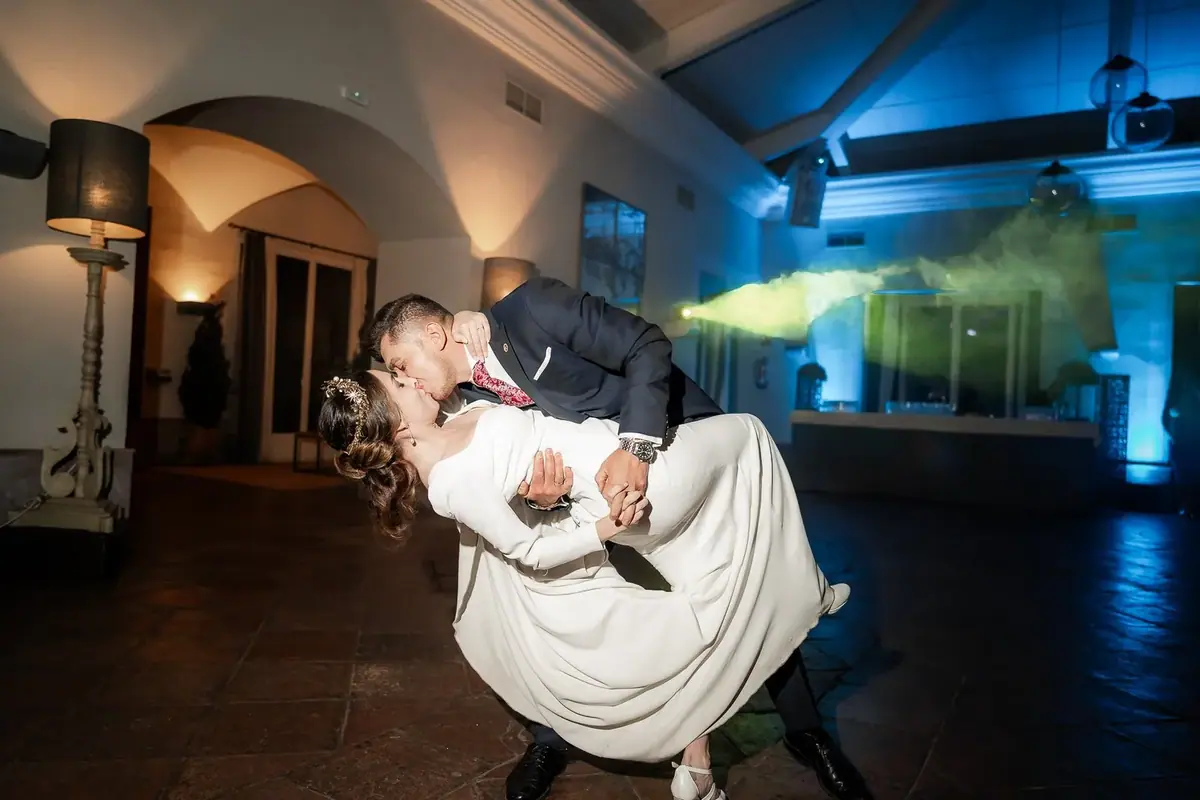
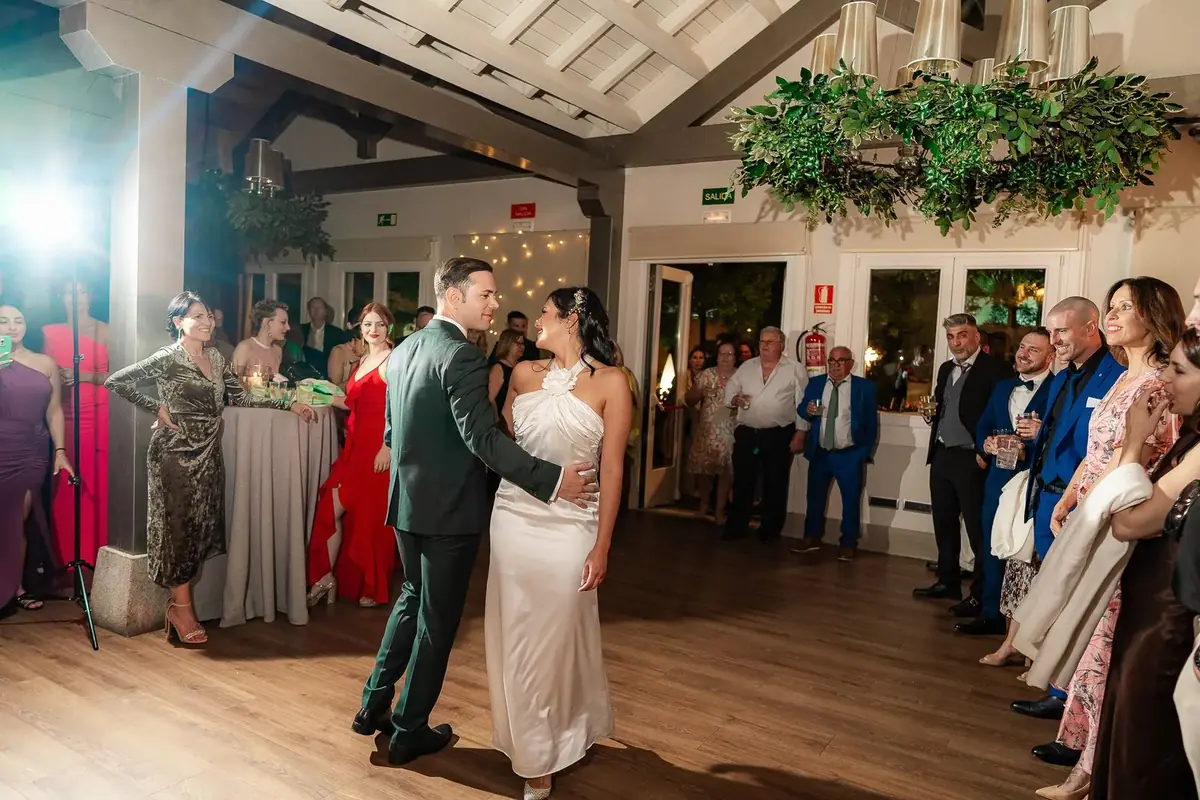
The floor. It should be clear, with no cables or chairs, and with room for the guests to form a circle at some distance from the two of you. And whoever films on a phone should stay in the circle and not stand in front of the cameras.
The song. Choose it in good time. If it is long, decide whether it is cut, or when the guests join in. Tell whoever runs the music the exact version and the start time, and hold a sound test before dinner, not with a full floor.
What to tell the film team
What helps whoever films most is a single sheet, sent a few days before, with this:
- The list of speakers, the order and the approximate time of each speech.
- Who gives the floor and who holds the venue’s microphone.
- Where each speaker will stand and whether there is room to see the couple too.
- The languages of the speeches, in case subtitles are worthwhile; if there are two languages: bilingual wedding.
- The first-dance song, the time and the planned light on the floor.
- Any surprise: a projected video, live music, a joint toast.
With that sheet, nobody improvises during dinner. Which sound stays in the trailer and which in the film: trailer and film. And the other moments only you know about: wedding film moments.
If you would like us to organise that stretch of the evening with you, tell us your story. And if you are unsure about one team or several for photographs and film, this guide explains it.
Frequently asked questions
How long should a wedding speech last?
Typically, between three and four minutes each, and about twenty for all of them. It is a trade judgement, not a rule. Ask each speaker to rehearse aloud with a timer: a speech that lasts three minutes in the head usually lasts longer when read.
When are the speeches held during dinner?
Between courses, with the room seated and the service paused: after the first course or before dessert. At the end of dinner, half the guests have already got up.
Who should hold the microphone?
One trusted person, who gives the floor, introduces each speaker and passes the microphone. The speaker holds it a hand’s width from the mouth and does not stand in front of a loudspeaker.
What light suits the first dance?
A steady, warm light for the song, which typically lasts two or three minutes. Coloured spotlights and smoke are better kept for later, when the floor opens.