Guide · 7 min read · Updated
Bilingual wedding: how to planthe ceremony and the speeches in two languages
Who translates, in what order and what is printed: what to agree before the day.
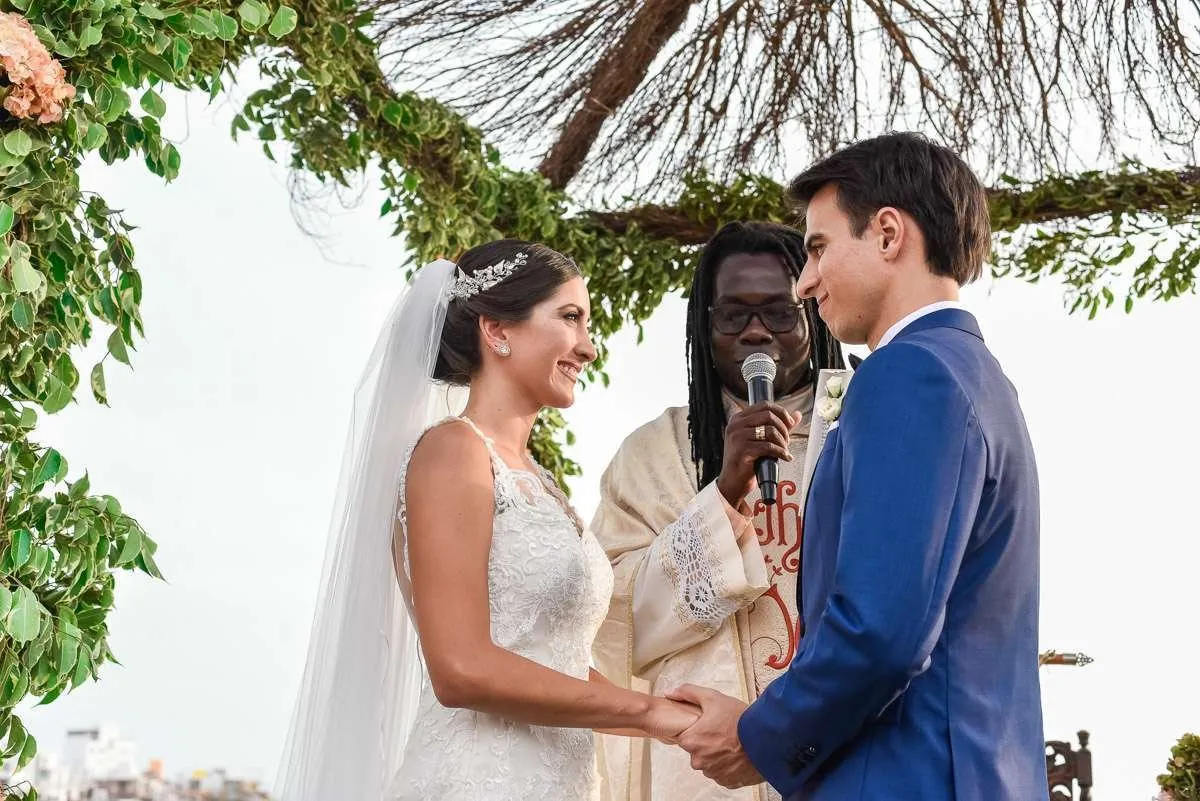
A bilingual wedding is decided in details that seem small and are felt a great deal: who translates, which language each thing is said in, how much longer the ceremony runs and what each guest holds in their hand. It is common on the islands, where couples and guests arrive with different languages, and it is best settled before the day, not during it.
This text is about the words: who translates, how to order the ceremony and the speeches, the printed texts and the film subtitles. The legal side of the civil act is in civil wedding: legal and symbolic; guests who travel far, in out-of-town guests; and the sound and light of the speeches, in speeches and first dance. We do not repeat them here. What follows is general trade judgement, not a rule.
Who translates: a named person
Name whoever translates, and let them know in good time. There are three usual routes:
- A friend or relative who speaks both languages. They bring closeness, but they are working through a moment that is also theirs.
- A professional interpreter. They bring craft and do not get emotional mid-sentence.
- Whoever officiates or leads the ceremony, if they speak both languages. It is the smoothest option, but ask them before taking it for granted.
Whoever it is, they need the texts before the day. Someone translating blind improvises, and vows and readings do not allow improvising. Send them the readings, the vows and the order of the ceremony with time to spare, and ask them to rehearse aloud with whoever will speak. And give them a place: a microphone or a spot next to the speaker, so they can be heard without effort.
There are two ways to translate. In consecutive, the speaker pauses and the translation follows: it is clear, but it makes every contribution longer. In whispered, the translation reaches a small group’s ear while the person speaks: it adds no time, but only serves whoever is sitting beside the interpreter. If few guests need it, whispered; if many do, consecutive or a printed summary.
The ceremony in two languages
The ceremony is where language weighs most, because these are the words you want to understand and feel. There are several ways to plan it and none is better than another: they suit different couples.
- Each part in one language, alternating. The reading in one, the vow in the other. It is balanced and does not oblige you to translate everything, but it asks that every guest understands the essentials.
- Everything in one language, with a summary in the other. Whoever officiates says one sentence at the start and another at the end in the second language, and the printed programme summarises the rest. It is the shortest.
- Everything in both languages, one after the other. Nobody is left out, but the ceremony runs longer and anyone who understands both hears everything twice. It works if each contribution is short.
- The vows, each in their own language. Each of you says yours in the one that feels like yours, and both are printed. It is often what is remembered most.
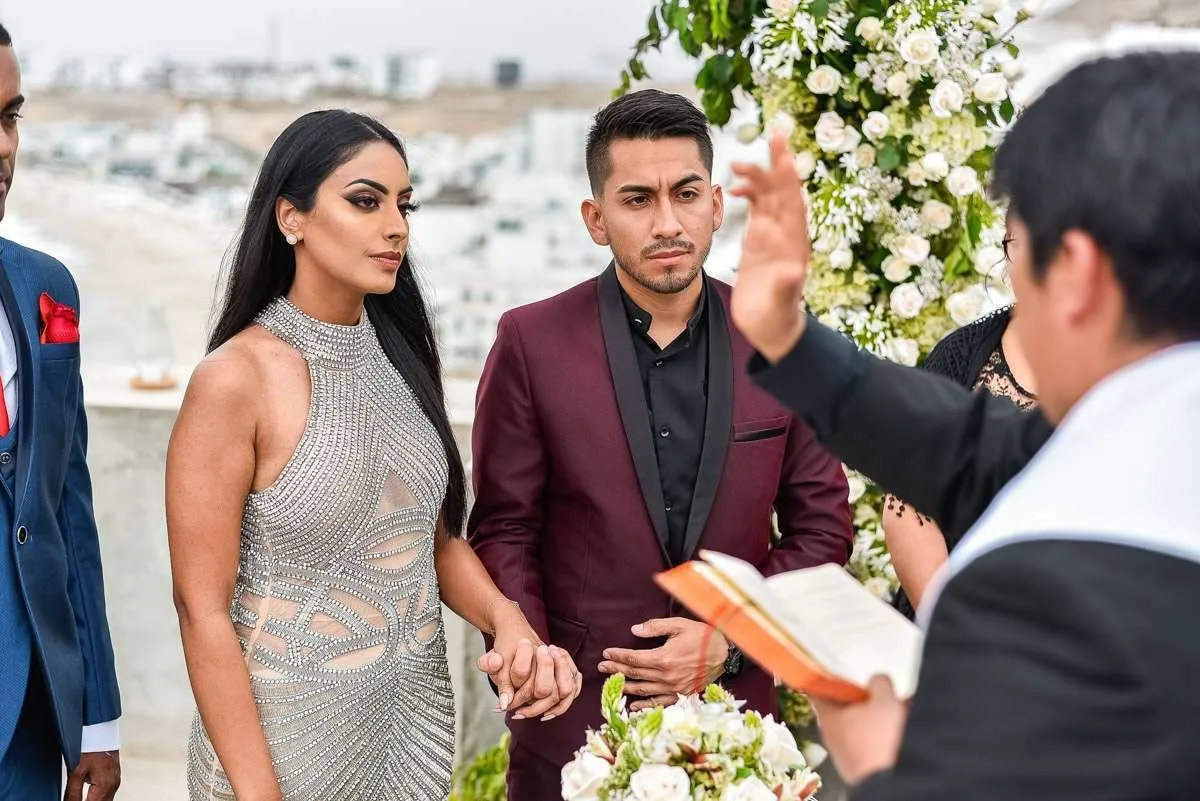
If the legal act is also the ceremony, ask whoever officiates which language they will read in and whether they can add a sentence in the other. In a symbolic ceremony, which has no such limit, there is more freedom to share out the languages, and whoever leads it can be someone who speaks both.
The order of the speeches
Something similar happens with the speeches, and the order solves it. Alternate the languages instead of grouping them: one speech in one, the next in the other, so that nobody waits too long to understand something. A speaker talking in their own language can close with a sentence in the other: not everything needs translating, and that sentence is often what is appreciated most.
Ask each speaker to say at the start, in both languages, which one they will use. If there is translation, they should pause at the end of a full sentence, not halfway through an idea; improvised, that rhythm does not happen, so ask for it beforehand. And whoever translates should have a copy of the speech if the speaker has written it.
Jokes and family references travel badly between languages. Ask the speaker to explain them in one sentence or to leave them for another moment. The person who gives the floor can introduce each speaker in both languages and make sure the turns alternate. When they speak, for how long and with what sound is in the text on speeches; here only the language changes.
Printed texts: programme and signs
What is printed solves what the voice cannot. A ceremony programme with the readings and the vows in both languages, in two columns or on two sides, lets people follow without translation. The same goes for the menu and the welcome signs. The day’s timetable in both languages is already covered in the text on out-of-town guests; here, what goes into each guest’s hand at the ceremony.
Take care over accuracy. Ask someone who speaks each language as their own to check the text before printing, above all the names, the titles of the readings and the accents. And a literal translation of a poem rarely sounds like a poem: better the version that already exists in that language, or one that someone you trust has worked on carefully.
The paperwork for the file and its translations is another matter, with its own order: it is in what I need for my wedding.
Subtitles for the film
If the film includes speeches or vows in a language that part of the family does not understand, subtitles can be the way for everyone to enjoy it. It is worth raising it with whoever films before the day, because it depends on how each team works: not all of them do it, so ask rather than assume.
What helps whoever films, and whoever subtitles afterwards, is little: the list of speakers with each one’s language (the sheet already sent for the speeches), a copy of the vows and the readings, and which language you want subtitled. If you already have the translation made for the printed programme, it is the best starting point.
Decide, too, for whom: a film subtitled in one language or in both, and what is possible at delivery. It is an easy conversation before the day and a hard one to fix afterwards. How the sound is shared between trailer and film: trailer and film.
One sheet for everyone
Just as a sheet goes to whoever films, it helps to have one for those who take part. A single one, a few days before, with this:
- Who translates and where they stand.
- The order of the ceremony and of the speeches, with the language of each contribution.
- The language of the vows and of the readings.
- The printed texts, checked and ready.
- The subtitles: yes or no, and in which language.
With that sheet, nobody improvises the language during the ceremony. If you would like us to organise that stretch of the day with you, tell us your story.
Frequently asked questions
Who should translate at a bilingual wedding?
A named person, told in good time and holding the texts. It can be a friend or relative who speaks both languages, a professional interpreter, or whoever officiates, if they speak both. It is a trade judgement, not a rule.
Does the whole ceremony need translating?
Not necessarily. You can alternate languages, say one sentence at the start and another at the end in the second language, or leave a printed summary. What matters is that every guest understands the essentials.
In what order should speeches go at a bilingual wedding?
Alternating the languages, with each speaker announcing theirs and, if they wish, closing with a sentence in the other. Whoever gives the floor makes sure the turns alternate.
Can the speeches in the film be subtitled?
It depends on each film team, so ask before the day. It helps to bring the list of speakers with each one’s language and a copy of the texts.