Guide · 6 min read · Updated
Wedding film moments:what to tell the team and what you need not ask for
A short list: what only you know, and is worth telling whoever films.
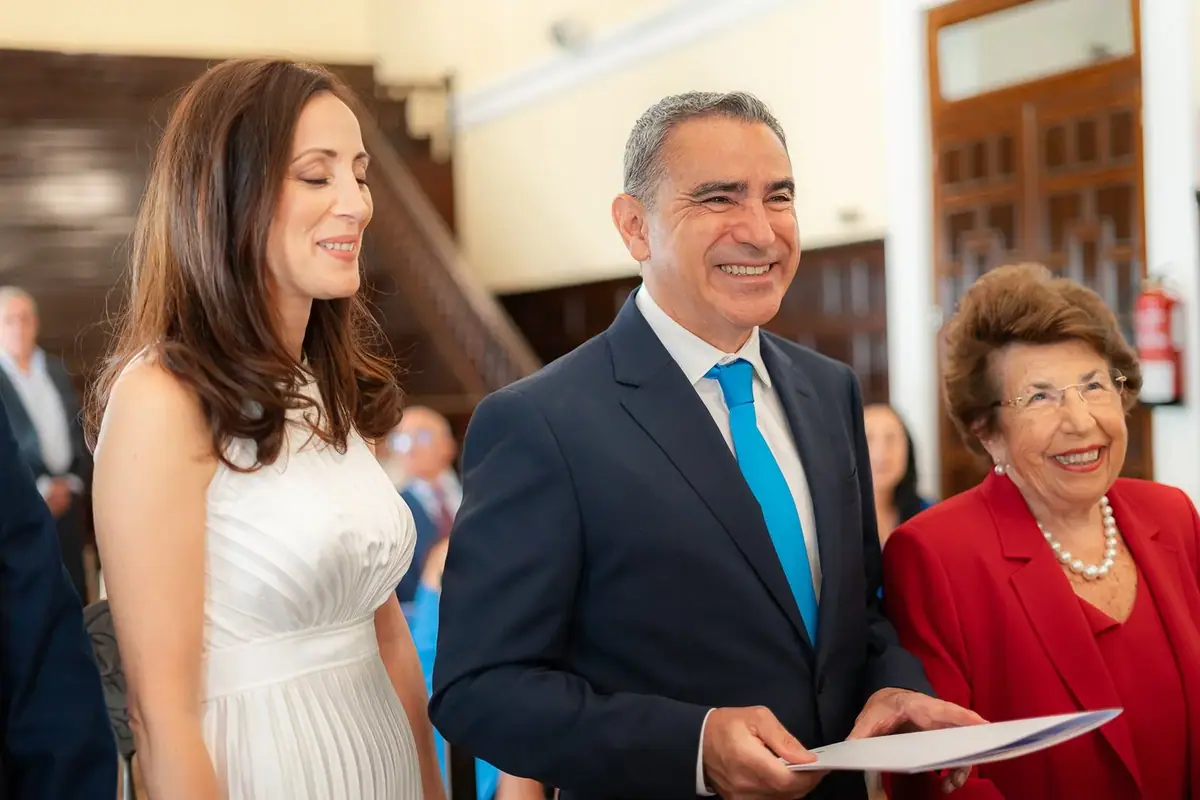
The wedding film moments that people are most grateful for afterwards are rarely in any script: they are the ones somebody mentioned beforehand and the ones nobody thought to ask for. Whoever films sees the ceremony, the toast and the dance without being told; what they cannot guess is which scene matters only to your family, which voice should be kept, or which gesture will happen in a corner where nobody is looking.
This text is a list of what is worth mentioning, in the order the day usually runs: the ceremony and the vows, the glances, the arrival, the toast and the dance; then the voices, the ambient shots and what you need not ask for. What each piece is, trailer or film, is in wedding trailer and film. What follows is general advice from the trade, not a rule.
A short list, not a script
A wedding film is not directed: it is told with what happens. That is why a script, with scenes and times, gets in the way, while a short list of moments, one line each, guides without constraining.
Write down only what whoever films cannot know: which moment means something specific to you, who is who in each family, what is going to happen outside the plan. The rest they see for themselves. Send it ahead of time, together with the information for the day, and, if photo and film come from one team, a single sheet serves everyone: one team explains it.
The ceremony and the vows
It is the moment people watch again most, and the only one that does not repeat. It is worth mentioning whatever is not in the programme: whether there will be a reading, who gives it and from where; whether you have written the vows yourselves; whether someone sings or plays; whether there is a family gesture, such as a few words from a grandparent or rings carried by one particular person.
It also helps to say where each of you will be, standing or seated, and whether there will be a moment when you turn towards your guests: that is where the faces of the room come from, and in the film they count as much as yours. Ask the venue or whoever officiates what is allowed. How the voice is recorded during the ceremony is in the section on sound before the day.
The glances and gestures nobody asks for
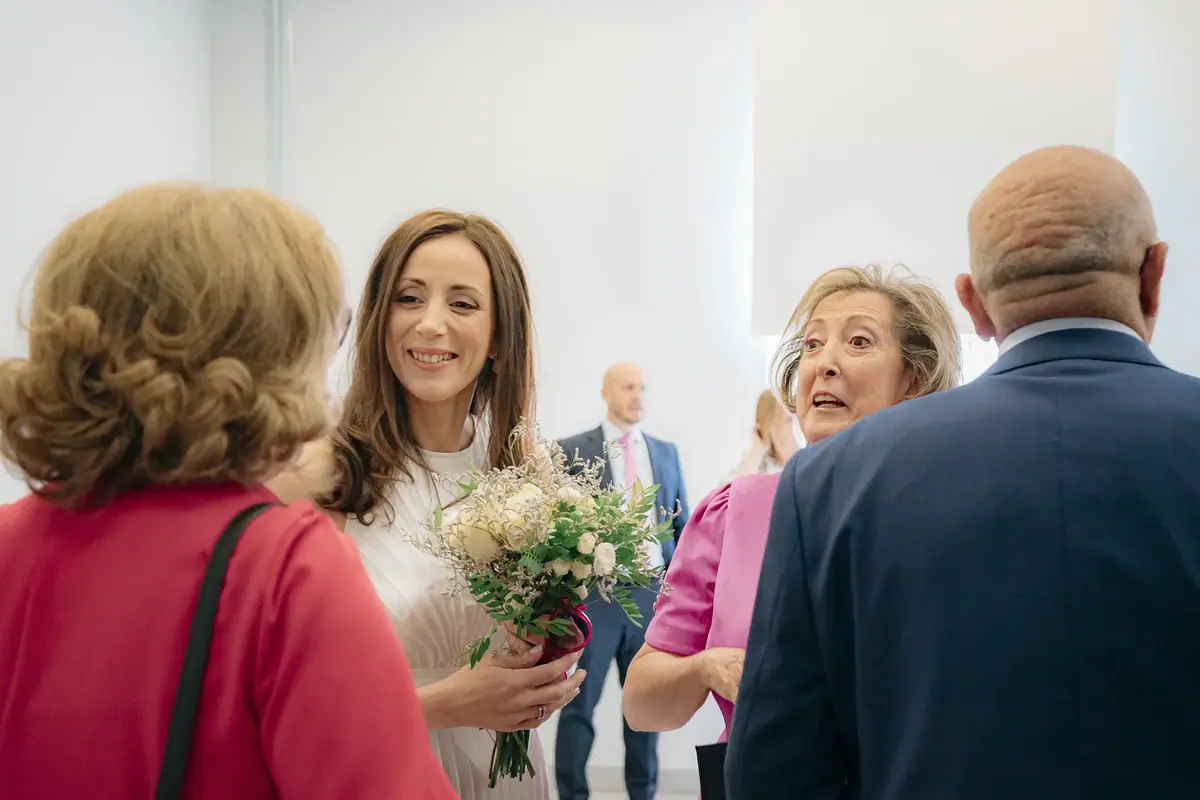
What is most appreciated in a film, with time, is usually small: the father adjusting his tie before going in, the grandmother wiping away a tear, the look between you when the music starts, the friend who makes someone laugh across the table. They cannot be requested, because nobody knows when they will happen.
What you can do is say who matters. Give the names of the people you most want to see, and, if someone who is no longer there is going to be remembered, with a chair, a photograph or a few words, put it in writing so that moment is respected. And ask someone you trust, with no role that day, to be ready to point people out: “that is the aunt who has come from far away” saves many questions later.
The arrival
The bride’s arrival, or yours together if you arrive together, opens the film and is rarely repeated. It is worth saying how you will arrive, by which way and who is waiting inside, according to the plan of the day. That way whoever films is already in place before the first step, and not running behind.
Do not forget the guests’ arrival: the hugs from those who have travelled, the greetings at the door, the nerves of waiting. If you prefer to see each other before the ceremony, the first look happens earlier and changes the order of everything: the first look explains how it is organised. The morning’s getting ready has its own guide: getting-ready photos.
The toast
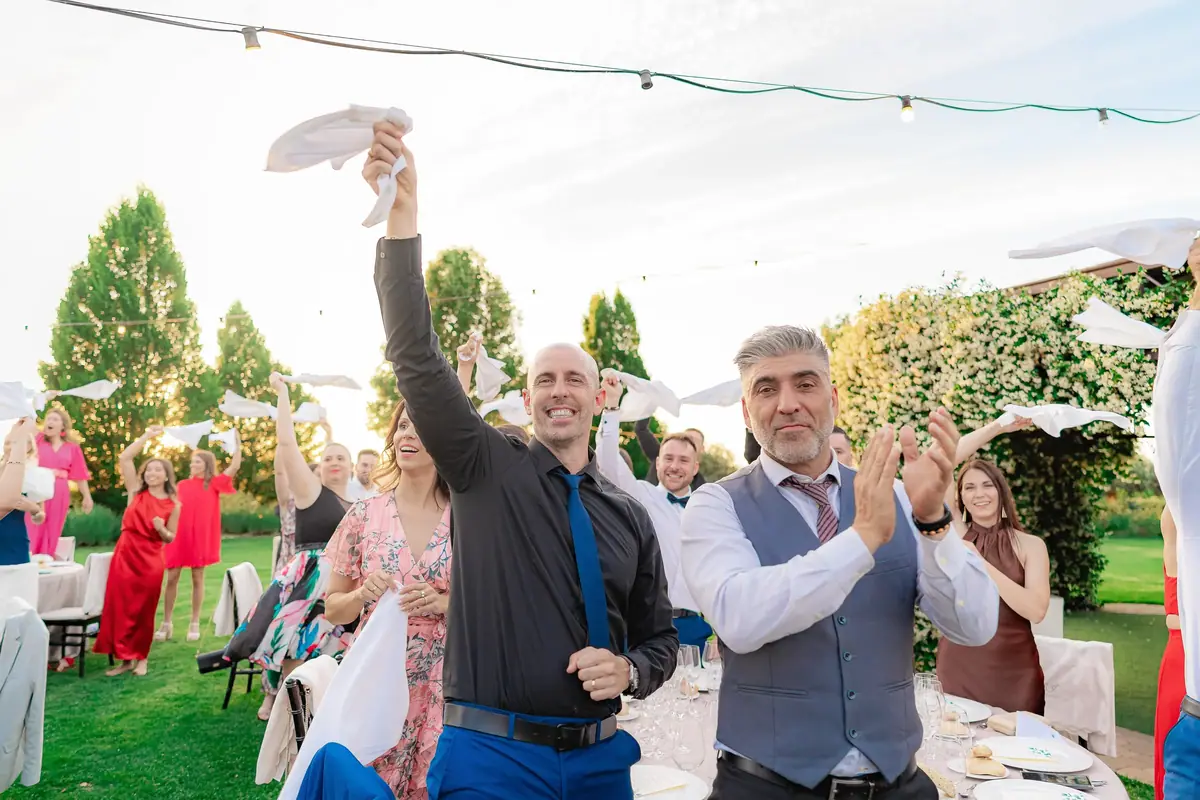
The toast is the moment when the room stands up and looks at itself. Say who gives it, when, and whether something comes before it: a sentence, a song, a family custom, such as raising a handkerchief or a napkin, which has its own instant and which whoever films has no reason to know.
There is no need to stop the party; whoever films just needs to know when it will happen, and nobody should turn the music down or unplug a microphone without warning. How to make sure what is said is heard and seen well is in speeches and first dance.
The dance
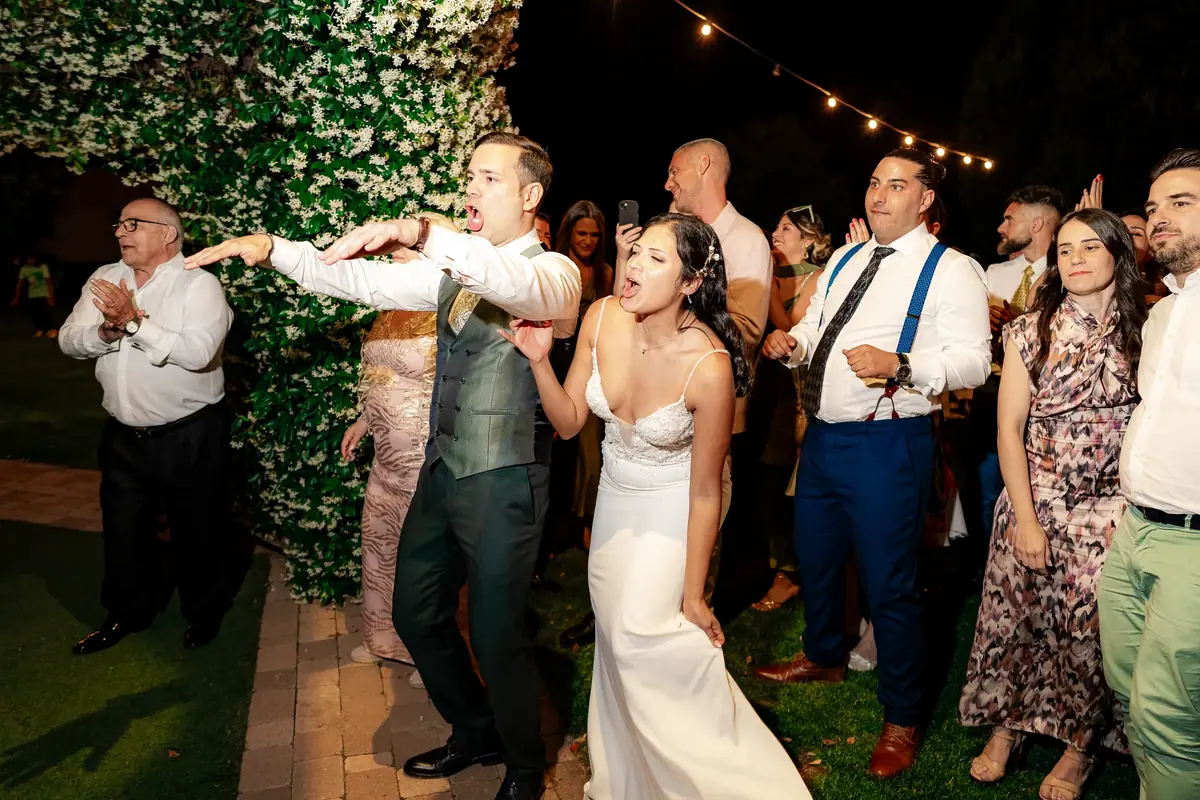
There are two kinds of image from the dancing: the first dance, which is prepared, and the open floor, which is not. The first deserves a conversation with whoever runs the music about the exact song and the moment to begin, and that is already covered in speeches and first dance. The open floor asks for the opposite: let it be.
What people enjoy most afterwards are the grandparents who join in, the friends hugging, whoever dares to dance alone. Nobody asks for it, but it can be left within reach if you say one thing: how long the team will stay at the party, and which moments you want to see recorded before they leave. The light, the smoke and that goodbye have their own guide: wedding party photos.
The voices and real sound
What a photograph cannot keep is the voice. So, when you make the list, mark which ones you want to keep exactly as they sounded: the vows, the speech of someone dear, the laugh of whoever laughs loudest, a few words in another language, if the wedding has more than one: bilingual wedding. It is what is missed most when nobody mentioned it, because a voice badly recorded cannot be repaired afterwards.
You can also mark the opposite. If there is an intimate moment you would rather have without a microphone, a conversation aside or a few words between the two of you, say so: that is a decision too. Music against real sound is covered in wedding trailer and film.
Ambient shots and how they are ordered
Between one moment and the next there are images that belong to nobody: the table before anyone has sat down, light coming through a window, the flowers, a pair of shoes, the façade, the sky. In the film they are the breathing space: they carry you from one scene to another and say where we are.
You need not ask for them either, but you do need to give them a chance: the empty room exists only before the guests arrive, and for it to be filmed someone has to be able to get in. Ask the venue when the team can have access and whether there are areas where it cannot be.
As for the order, it usually follows the day, from morning to dancing; it is an editing decision, not something a list settles. Ask how the team usually orders things and look at earlier work.
What you need not ask for
There are things any team with experience tends to take for granted, and writing them down only lengthens the sheet: the whole ceremony, the exchange of rings, the kiss, the cutting of the cake. Nor do you need to ask for tears, laughter or a pose: what happens, happens, and asking for it spoils it.
Nor camera angles, nor framing, nor how much music: those are decisions of craft and editing, and they are talked through when choosing a team, with their work in front of you, not on the wedding day. If you would rather nobody direct anything, the difference is in documentary or posed photography; and the questions for comparing teams are in questions for choosing a photographer.
If you would like to go through that list with us, tell us your story.
Frequently asked questions
Which moments should I tell the film team about?
Those only you know: readings, songs, family gestures, people you want to see and voices you want to keep. The ceremony, the kiss or the dance are usually taken for granted. It is advice from the trade, not a rule.
Do I have to give whoever films a script?
No. A short list of moments, one line each, guides better than a script with scenes and times. A film is told with what happens, and a rigid script gets in the way.
Can the vows be recorded?
It is usually possible, but it depends on the venue and on whoever officiates. Ask beforehand what is allowed and how the voice will be recorded, and say whether you have written the vows yourselves.
What do I not need to ask for in a wedding film?
The obvious, such as the ceremony, the kiss or the cake, and also camera angles, framing, tears or poses. What happens, happens, and asking for it spoils it. Framing is talked through when choosing a team, with their work in front of you.