Guide · 6 min read · Updated
Where to hold a wedding in Mallorcatypes of place and what to ask
Five kinds of place and what to ask each one in writing before you fall for the setting.
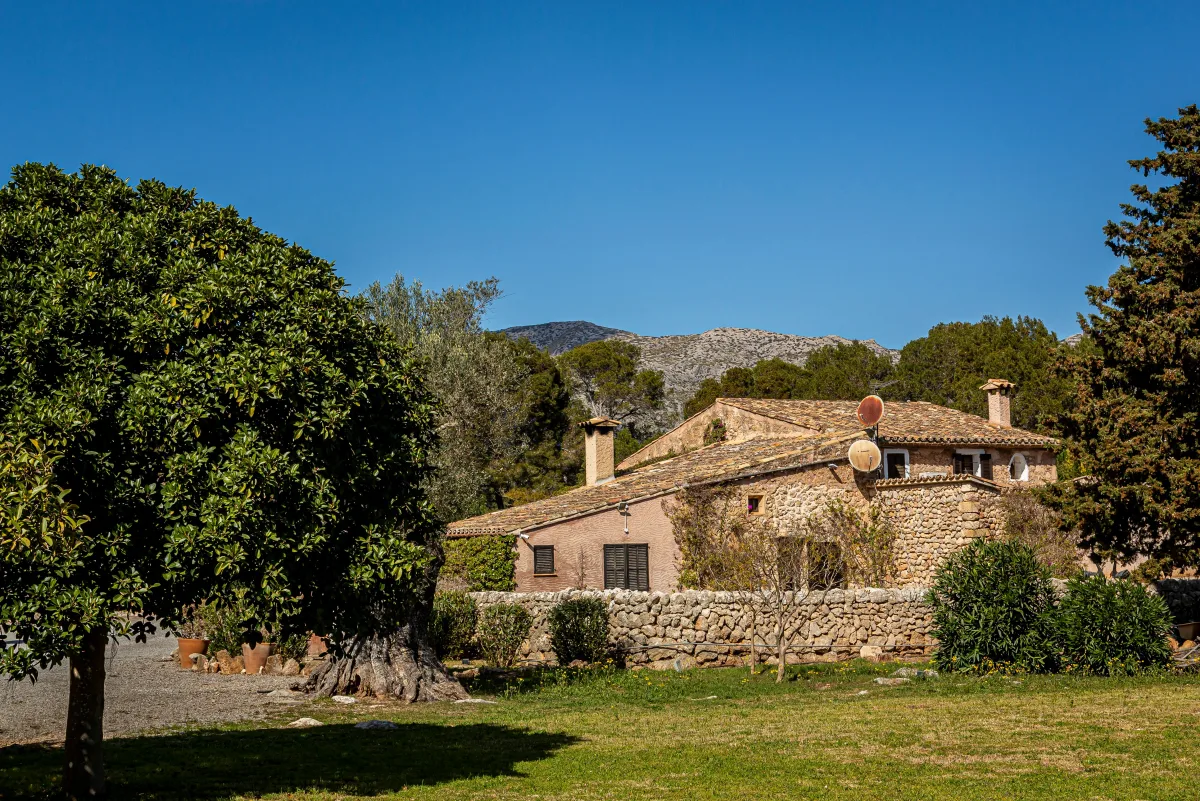
Before comparing the names of estates, it helps to decide what kind of place you are after. A country house, a hotel, a cove, a village and a garden solve the day in very different ways, and each one means asking different things. This guide is arranged by type, not by area: if you already know which part of the island, you will find it by area, and the time the sun goes down in the light guide. No type is better than another: there is one that suits how many you are, the month you marry in and what you want to remember.
A country house or possessió
The possessió is the type of rural house native to Mallorca: living quarters plus outbuildings for the farming of a large surrounding estate. What it offers a wedding is space and calm: ceremony, cocktail and dinner can all happen without leaving the property, and the couple get ready in the house. What it asks in return is logistics: tracks, distance from the village, and accommodation. We talk about the stone and how the light falls on it in stone estates; here something else matters.
Ask, and get the answer in writing:
- How many people sleep in the house and how many must find a hotel; how far it is and how they get back at night.
- How you arrive: whether the track takes a coach or only cars, and what happens to it if it rains.
- How much of the property can be seen from the ceremony spot and how much is left for the suppliers' set-up.
- Whether another wedding or event is taking place the same day, or that weekend, and how the access is shared.
A hotel
The advantage of a hotel is that everything is in the same building: rooms, halls, kitchen and staff used to weddings. The trade-off is that the building is not only yours. What changes in a hotel wedding we describe for another city, but it applies here too: hotel weddings, good light without a garden.
- Which areas you share with other guests during the ceremony and the couple session: pool, terrace, lobby, lifts.
- Which hall is the fallback if it rains, how much natural light reaches it and how it looks at seven in the evening. On the rain and wind plan B: what to settle in advance.
- How many rooms are held for your guests, until what date, and what happens to those not taken up.
- By what time rooms must be vacated the next day and where luggage is kept in the meantime.
By the sea or in a cove
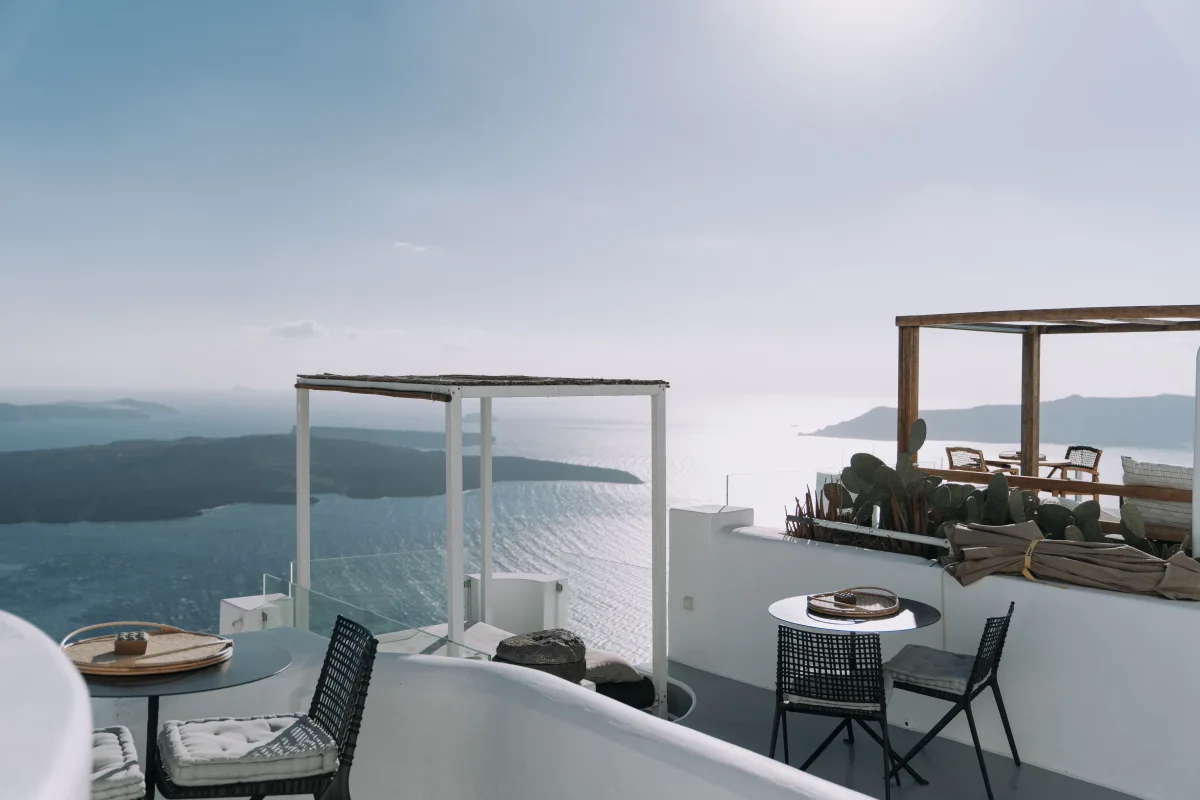
One of the most wanted images is the ceremony with the sea behind it, and there are two ways to get it, each asked about differently. One is the terrace or garden of a house or hotel above the sea; the other, the sand of a cove itself.
In the second, the rules change. Spain's Coastal Law declares the use of the sea and its shore free, public and without charge for common uses, such as walking, staying or bathing, provided they need no works or installations of any kind; uses that do need them can only rest on a reservation, assignment, authorisation or concession (article 31). And beaches are not for private use (article 33.1). Two practical consequences follow: nobody can guarantee that the cove will be empty at the hour of the ceremony, and if you plan to set up anything on the sand, such as chairs, an arch or sound, you must ask the town hall and the coastal authority (Demarcación de Costas) whether authorisation is needed and who applies for it.

- Whether the ceremony spot is the property's land or public domain, and who says so in writing.
- Who applies for the permit, if one is needed, and how long before the answer arrives.
- How you get down to the spot: steps, path, sand; think of older guests and of footwear.
- Where everyone shelters if the wind rises or it rains, since on the coast there is no plan B without a roof close by.
The other conditions of a beach ceremony, with their timings, are summed up in wedding suppliers in Mallorca. If you plan to throw confetti or petals, here is what to ask and what venues usually require.
A village and its old town
This is the place for those who prefer a wedding on foot: church or town hall, square, narrow streets and, sometimes, a stately house turned into a hotel. Here the public calendar rules: each town hall sets its own days, hours and closed periods, so ask before fixing the date.
In other words: you do not choose the hour of the ceremony, the town hall gives it, and the rest of the day is organised around it. Each municipality will have its own rules, so the first question is always the same. For a ceremony in a private venue, see civil ceremony at the same estate. What is legal and what is symbolic, in civil wedding in Mallorca.
- Whether the village town hall holds civil weddings, on which days and at what times, and how far ahead you must book a slot.
- How cars arrive, where guests park and whether the old town has restricted access.
- Whether a square can be occupied or a street closed for the procession, and who authorises it.
- Until what hour a square or a terrace in the old town may have music: ask the town hall, not the venue.
A garden
It may be the garden of a house, of a hotel, or an orchard of almond trees. It is the setting closest to what one imagines and the one that depends most on the hour: at six on a July evening it can be a kind place, and at five an oven with no shade.
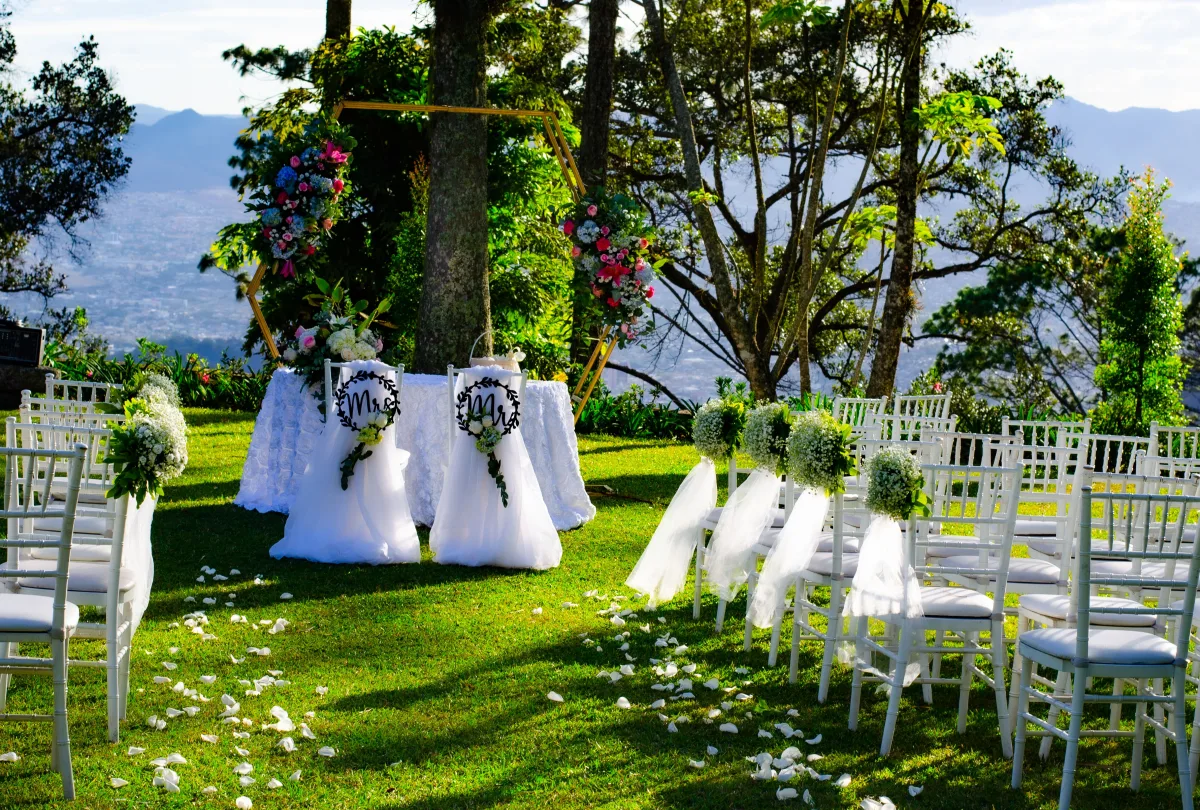
- At what hour direct sun reaches the ceremony spot in the month of your wedding, and how much shade there is for guests.
- Whether there is automatic irrigation and when it switches off; it is the question most often forgotten.
- What the ground is like (lawn, gravel, earth) and whether heels can walk on it or a carpet is needed.
- Whether there is a covered area in the garden itself or the plan B is far away.
How to compare them
Types are told apart by what they say about themselves and compared by what they answer. Write the same email, with the same questions, to each place, and keep the answers in one document. Three apply to all: where guests from abroad sleep, what happens if it rains, who decides and by what hour, and until what time the celebration lasts. For what moves a budget from one place to another, read why no estate publishes its rate; for guests from abroad, where they will sleep. With an email template: outside catering and music. And if there are few guests, how to plan an intimate wedding.
And from the photography and film side there is something no brochure tells you: how a place feels at a given hour. Visit the place at the hour and in the month of your wedding, even for twenty minutes. If you then want to compare two or three, you can tell us your story. The same approach for the other island: where to hold a wedding in Ibiza.
Frequently asked questions
Can a ceremony be held on a beach in Mallorca?
Spain's Coastal Law declares the use of the sea and its shore free for activities such as walking, staying or bathing, provided they need no works or installations, and requires a reservation, authorisation or concession for those that do. Beaches are not for private use. If you want to set up chairs, an arch or sound, ask the beach's town hall and the coastal authority first.
What is a possessió?
It is the type of rural house native to Mallorca: living quarters and outbuildings for the farming of a large surrounding estate. Many of these houses now host weddings, though not all do.
Is a hotel or a country house better?
It depends on what weighs most for you. A hotel gathers accommodation, halls and staff in one building, but you share it with other guests; a country house offers more space and calm, and asks you to settle accommodation and transfers. Ask both the same things and compare the answers.
What should you ask a place in writing before deciding?
Three things that hold for any type: where guests from abroad sleep, what happens if it rains and who decides, and until what time the celebration lasts. Then the ones specific to each type, above.
If you are planning a wedding in Mallorca, explore MAKERSWED's wedding photography and film collections, read the frequently asked questions or shape your story in three short questions.