Guide · 6 min read · Updated
Getting to Ibiza for a wedding:airport, ferry and guest transfers
Two ways in: how guests and the team arrive, and how they get around on the wedding day.
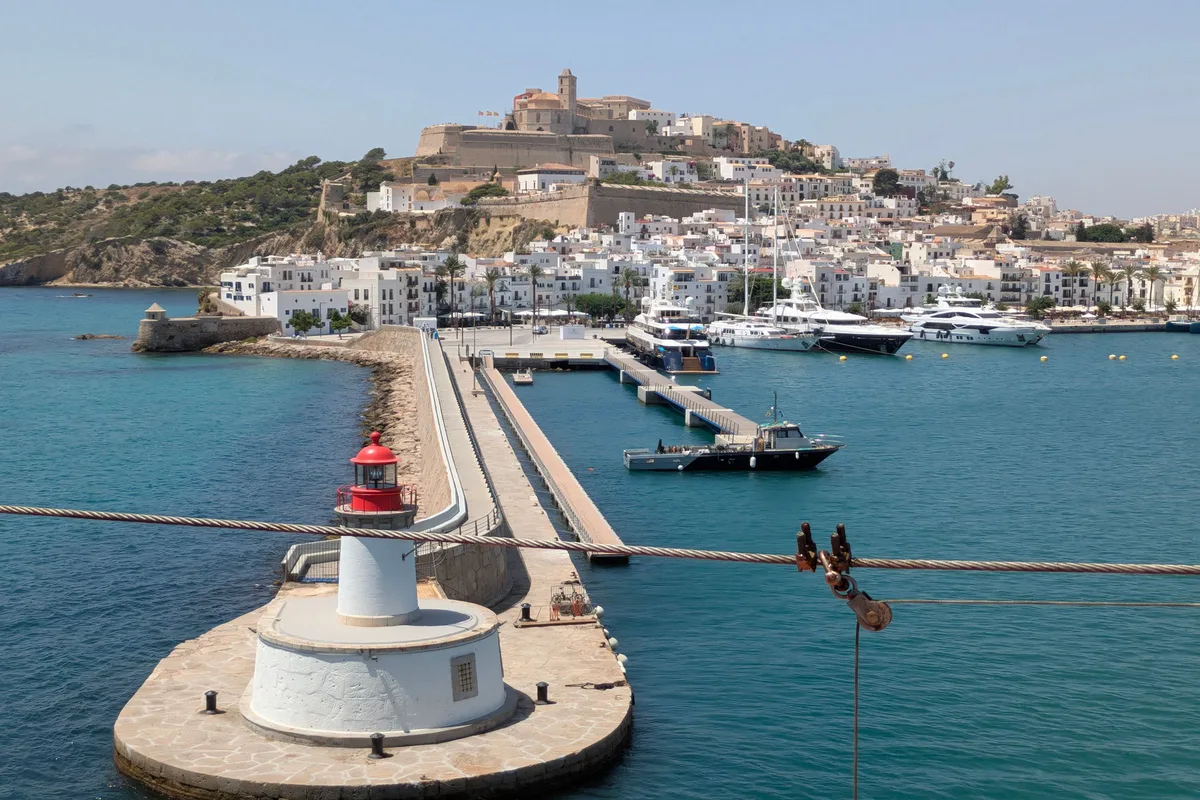
Getting to Ibiza for a wedding looks simple: it is an island, there is an airport, there are boats. And it is, until you have to decide who arrives by which route, who picks up whom and how each group gets back to bed in the early hours.
This text covers how guests and the team arrive, by airport or by ferry, getting around a small island, transfers on the wedding day and the margin to leave for arrivals. Where guests will sleep and which papers they need are in out-of-town guests; the businesses that work on the island and their crossing to Formentera, in wedding suppliers in Ibiza; and the timing of the light, in weddings in Ibiza. What follows mixes official facts, with their source, and general rule-of-thumb judgement, which is not a regulation.
Two ways in: airport and port
Ibiza has one airport, run by Aena, and a port with passenger quays in the city of Eivissa, which belongs to Ports de Balears. Almost everything that comes from outside enters through those two doors: guests who fly, guests who cross by boat, and the equipment and vans of those working at the wedding.
Having only two helps and hinders. It helps because the plan fits on one sheet; it hinders because a delay at either one is felt all day. Hence the document that saves the most work: a guest list showing how each person arrives, by air or by sea, and when.
From the airport to the island: bus and taxi
According to Aena, Ibiza airport connects with the rest of the island by several bus lines, the AERO routes: to Ibiza town and its bus station, to Sant Josep and Sant Antoni, to Santa Eulària and Cala Nova, and to Platja d’en Bossa and Ses Figueretes. Some have existed only since April 2026, so do not trust old information: check the lines and timetables in force on the date of your wedding.
To reach a country house, the usual choice is a taxi or a vehicle agreed in advance. Aena advises taking one only at the signposted rank at the terminal and avoiding anyone who offers a ride elsewhere. It also notes that carrying luggage is free, that you should ask for an invoice in case of any complaint, and that the fleet is reinforced from June to September. Fares are official and metered; the night or public-holiday fare differs from the day fare, a detail that matters to anyone coming home from the party in the small hours.
If a friend is going to collect guests by car, they should know this: according to Aena, access to the taxi, public transport and car-rental areas is controlled, and anyone not authorised must use the general or express car park, the latter meant for dropping off and picking up passengers.

By ferry: from the mainland and between islands
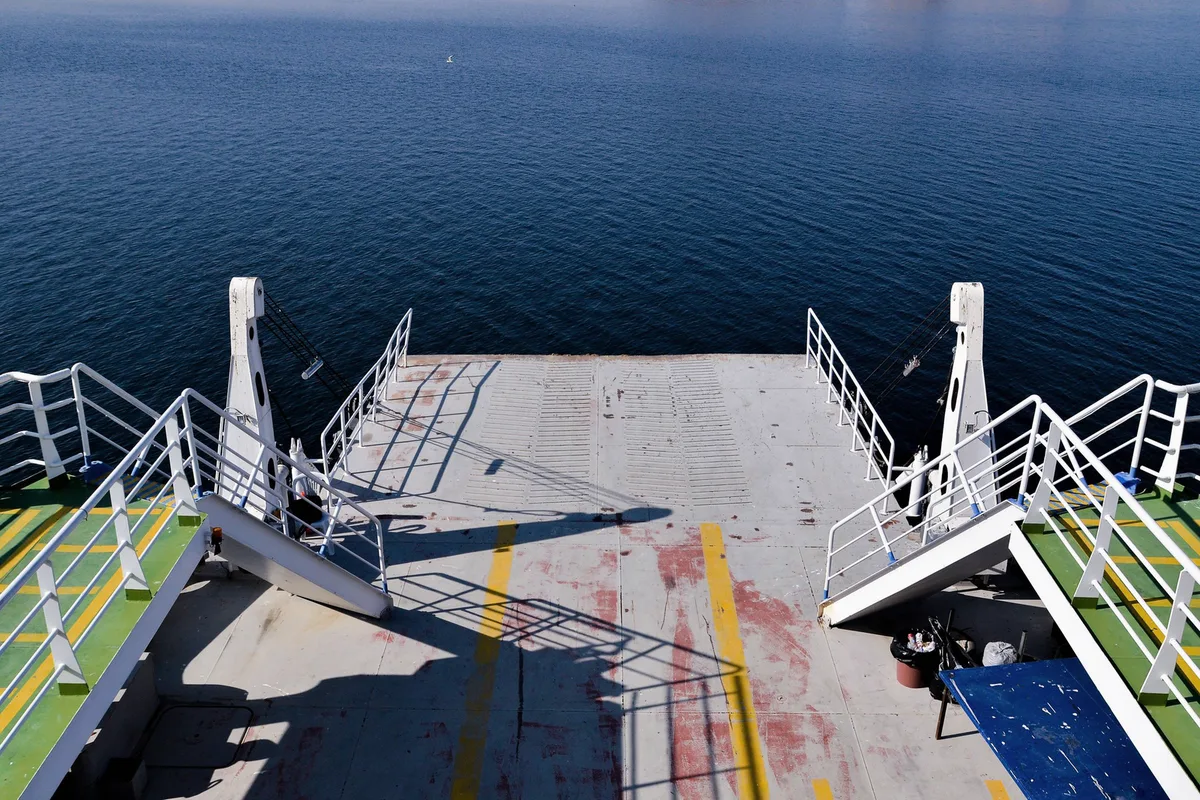
The port of Eivissa is the way in for anyone travelling by sea. From the mainland there are sea links to Ibiza from several ports; the route, the operator and the timetable change with the season, and we do not fix them here: check them for the date of your wedding, ideally before guests buy their tickets.
Formentera cannot be reached by air: you cross from Ibiza, and that is covered in getting married in Formentera.
Three questions before buying tickets. If the journey includes a vehicle, does the chosen boat take it? How much margin is there between the boat’s arrival and the time you need to be at the venue? And if the sea is rough, what happens to the last boat of the day? A day of bad weather can upset timetables: on a crossing, the day before is not a luxury.
Getting around a small island
Ibiza is compact, and that helps: its dimensions and what they mean for each type of venue are in where to hold a wedding in Ibiza. But a small island is not travelled the same way all year. A summer Saturday, with the roads full, is nothing like a winter Tuesday. Work out the journeys with the time and the month of your wedding, not with an empty map.
It helps to sketch three routes on paper: from the airport or the port to the accommodation, from the accommodation to the wedding venue, and the return in the small hours.
And a rule of thumb: the more separate departure points, the more cars, the more timetables and the more chances that someone arrives late. Grouping guests at a few pick-up points simplifies everything else. The time the sun sets that month, which decides when people must leave so as not to arrive after the ceremony has begun, is in weddings in Ibiza.
On the wedding day: transfers there and back
There are three ways to move guests: their own cars, taxis, or a shared transfer, by coach or with hired vehicles. Each solves something. Their own car gives freedom, but someone has to stay sober. A taxi cannot be improvised at the door of a country house. A shared transfer puts everyone on the same time, and the departure time becomes part of the day’s timetable.
Send guests a short timetable with three details: pick-up time and place, expected arrival at the ceremony and the phone number of a contact person. If they come from other countries, in two languages; the rest of what out-of-town guests need is in out-of-town guests.
The return is what almost nobody plans: in the small hours, with the last group tired and the music already off. Agree the time of the last transfer with whoever drives, and compare it with the time the music ends, which is covered in outside catering and music. Getting a taxi to the door of a country house in the small hours is not always immediate; better to have it arranged.
And do not forget those who work at the wedding: the team that photographs and films, the music and the catering arrive before the guests and leave after them. Ask the venue where they park, how the equipment gets in and at what time they can enter, and put it in the same document.
The arrival margin: guests and team
A flight or a boat can be delayed; the wedding cannot. So the question about arrival is not whether to leave a margin, but how much.
For guests, the ideal is to arrive the day before. If that is not possible, their arrival should fall with room to spare before the ceremony, and never on the same day with a flight in between if they can avoid it. And remind anyone coming from outside the European Union to check the entry requirements early; they are explained in out-of-town guests.
For the team, the sensible approach is to arrive the day before, see the venue at the time of the ceremony and confirm the timetable with whoever coordinates the day; that is what we advise in destination weddings and in the day before the wedding at an estate. On an island it weighs more: if something does not arrive, there is nowhere to replace it overnight.
Two lists to start today: who arrives, by which route and when, and how each group moves, with the time of the last transfer back.
If you are marrying on the island and want to organise the day with us, tell us your story. And if you are still choosing between islands, there is Ibiza or Mallorca.
Frequently asked questions
Is there an airport in Ibiza?
Yes. Ibiza airport, run by Aena, connects with the island by bus and taxi. Formentera has no airport: you reach it from Ibiza by boat.
Can you get to Ibiza by boat?
Yes: there are sea links with the mainland and with other islands to the port of Eivissa. Routes and timetables change with the season, so check them for the date of your wedding.
Is a shared transfer worth it for guests?
If several are staying in the same place, it usually is: it avoids extra cars and late arrivals. Ask the venue whether it can arrange or recommend one.
When should the team arrive?
The sensible choice is the day before: it lets them see the venue at the time of the ceremony and confirm the timetable, and leaves a margin if a flight or a boat is delayed.