Guide · 6 min read · Updated
Children at a wedding:how to include them in the photos and the film
Role, rhythm and permission: the youngest guests, inside the day and the story.
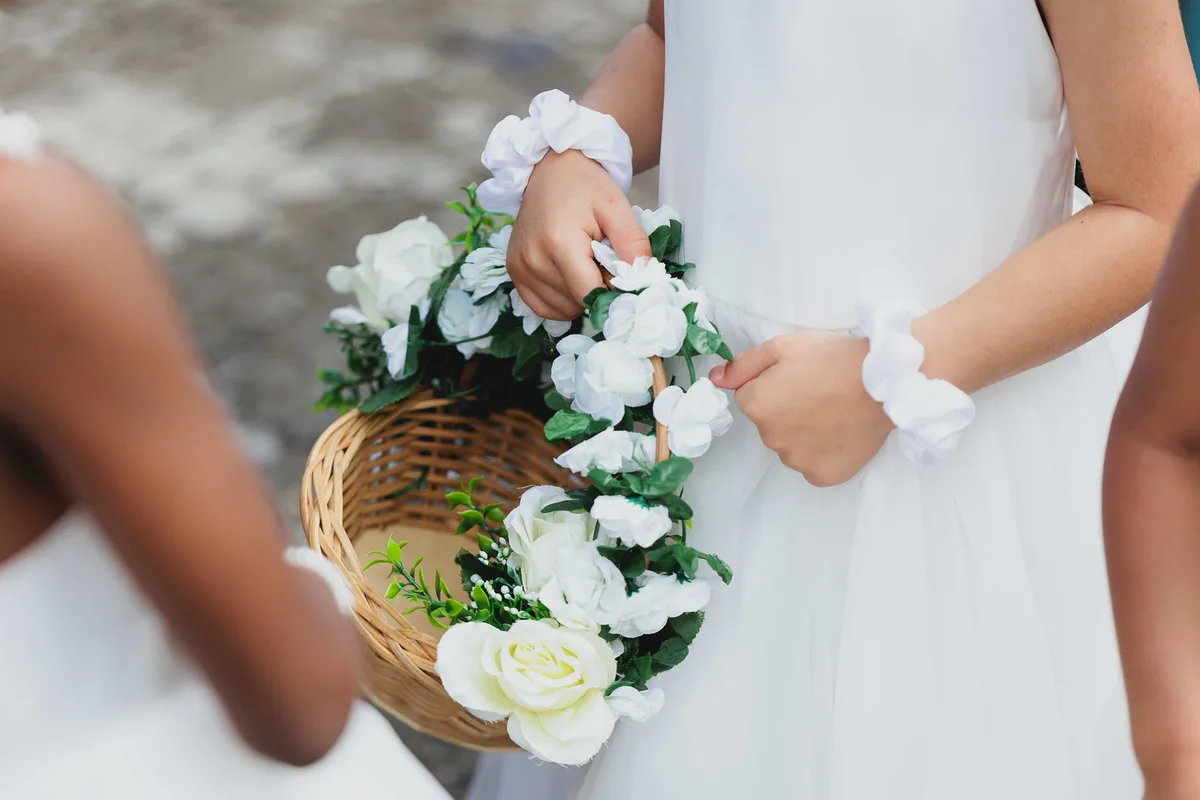
Children at a wedding are the hardest thing to plan and, almost always, the thing you are most glad to see afterwards: a page boy with the rings who will not let go of his mother's hand, a niece asleep across two chairs, the couple's own children running towards them when the ceremony ends. This text covers their role in the day, their rhythm and tiredness, who looks after them, when to take their photos, how they are told in the film and what permission to ask their parents before publishing anything.
Family photos with children are already in how to organise the family photos, with one idea: the little ones, early. Here is the rest of the day, seen from their height.
What role to give them
There are three kinds of child at a wedding, and each asks for something different. Page boys and flower girls carry the rings, the flowers or the procession, and have a task. The couple's own children are not guests: they are part of the story, and it is worth deciding in good time how they enter it. And nieces, nephews and guests' children have no role, they are simply there, and the best thing to give them is a comfortable seat and an adult who knows them.
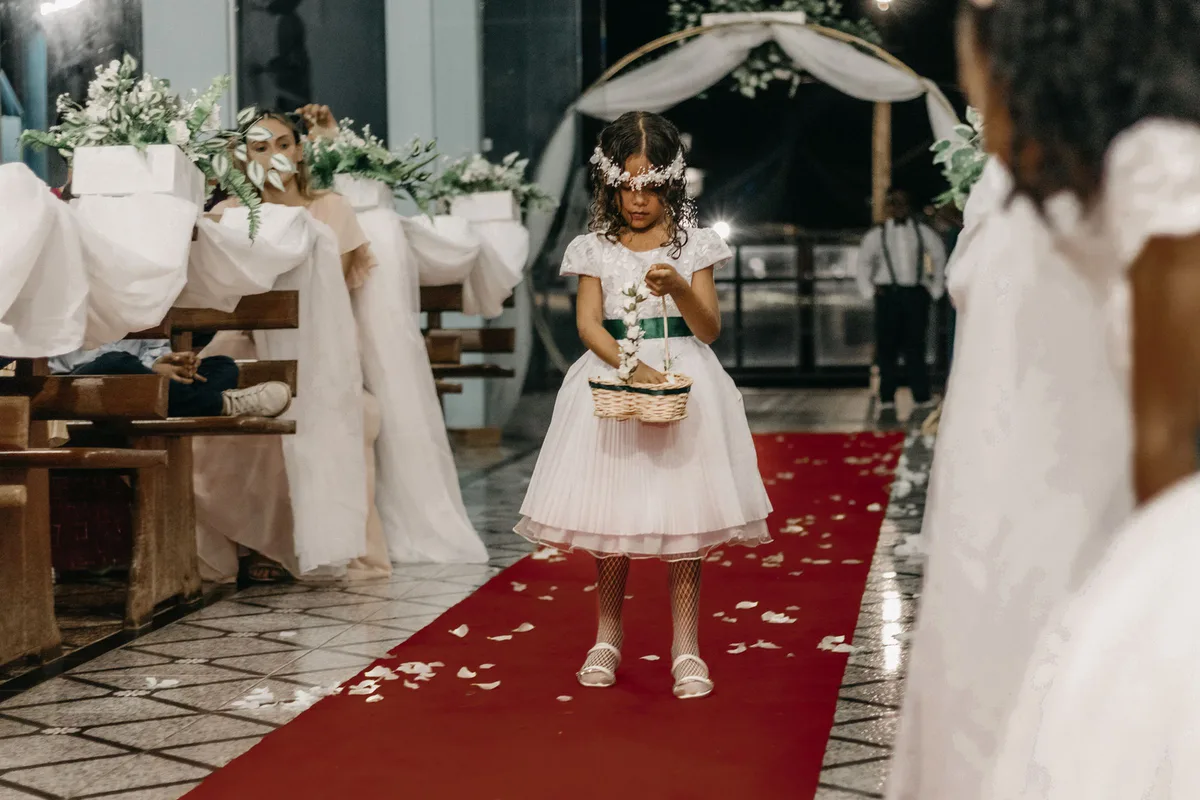
The rule for those who do have a task is that it should be small, clear and short. Carrying a cushion down an aisle is a task; holding a piece of paper while adults speak for twenty minutes is not. A short procession works better than a long one, and a child who says at the moment that he does not want to is not a problem: he is a child.
If the couple's children take part, a simple gesture is usually enough: walking in with them, having them sit at the front, hugging them at the end. If there are words, better few and rehearsed: the day before the wedding is a good moment.
The rhythm: where they tire
A wedding day is long for an adult and very long for a child. The points where they tend to fade are always the same: the wait before the ceremony, the ceremony itself, the gap between it and the meal, and the long evening, when the dancing starts and the light is no longer daylight.
What helps is not complicated. That they arrive fed and, if possible, rested; that they have somewhere to sit and a little shade while they wait; that the ceremony runs no longer than it needs to for them, and that the meal has something they like and room to get up from the table. After a certain hour many fall asleep or leave: better to plan it than to discover it.
This matters for the images because tiredness shows. A child who has waited standing in party clothes does not look like one who has just arrived. That is why what matters most about them, photos, procession and their part of the ceremony, should fall in the first hours. The hours of good light for each date are in the article on the wedding timetable.
Who looks after them
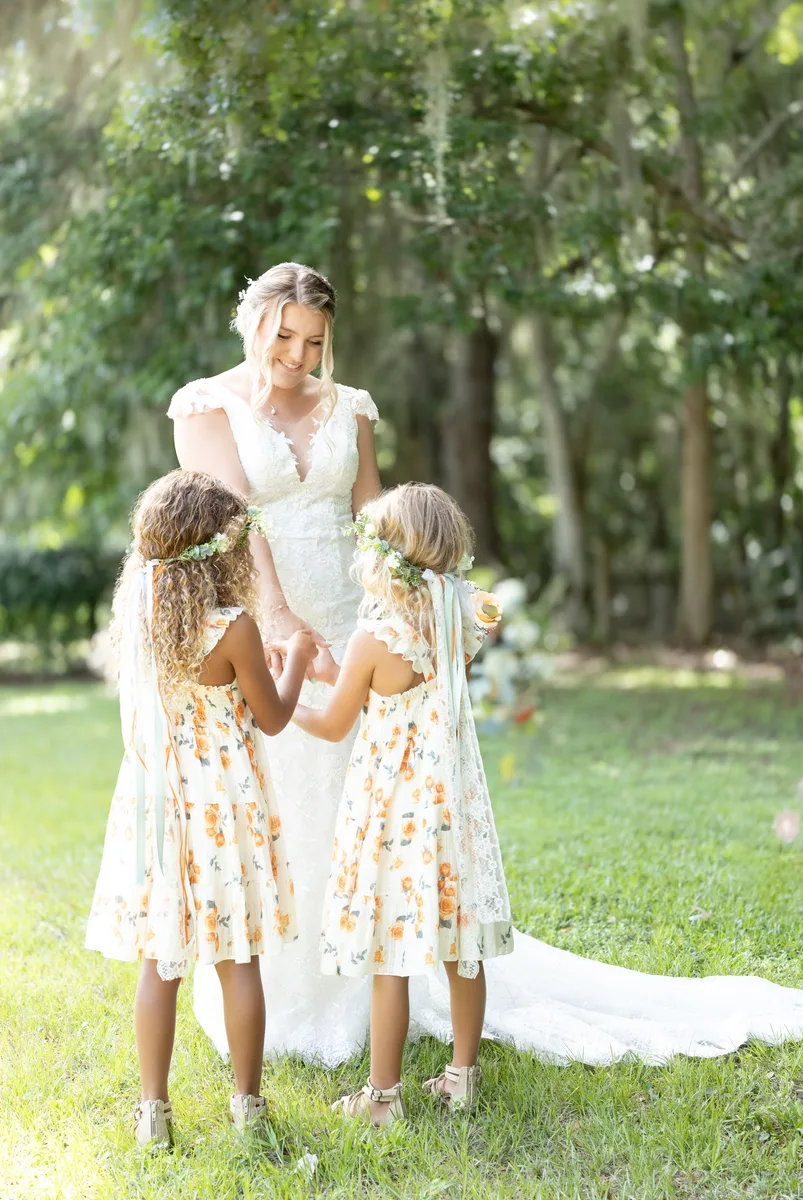
This is the question most often left unanswered, and it is paid for on the day. The couple cannot take it on: they have their own day. The parents of the page boys cannot either, if they are in the ceremony or at the top table. And neither can the people photographing and filming: their job is to watch, not to look after anyone. If a pet is coming too, who looks after it and when it leaves: pets at the wedding.
The solution is a trusted person, named in the plan: a cousin, a friend, someone hired for it. Someone who knows the children, knows when each of them does what and carries a bag with water, something to eat, a change of clothes and a quiet game. If there are many, ask the venue whether it has a room or a shady corner for them.
When to take their photos
First, and short. The children's photos are taken in the first part of the day, while they are clean and in good spirits: the procession dressed before the ceremony begins and, after it, a short while before the cocktail hour, alongside the family photos. Five minutes with a happy child are worth more than twenty with one who wants to leave, and posing a tired child only gives you the photograph of a tired child.
If the couple has children, a moment with them alone is worth having, separate from the two-of-you session explained in couple portraits at a wedding: that way the children do not compete with the couple's walk or with the afternoon light. With a first look, that meeting also fits before the ceremony.
The rest, without asking. Almost everything good about children at a wedding happens when nobody tells them anything: a race across the grass, a hand looking for a grandmother's, a dance standing on an adult's shoes. Those images are not organised, they are waited for. And for the older generation: grandparents at the wedding.
How they are told in the film
In the film children do not need to look at the camera. Quite the opposite: what lasts is the page boy walking slowly with his cushion, the laughter of a group chasing a ball, the child who falls asleep against someone's shoulder. Children give the day more movement and more truth than almost anyone.
Sound counts too. A line from a child at a toast, a «long live the bride and groom!» or a whisper in the middle of the ceremony is just the kind of thing you hear in the film and, in a few years, no longer remember. So if a child has a line, let it be short and his own, not learned; and if he does not want to say it, he need not.
Photo and film from one team, in wedding photo and video from the same provider.
Privacy and parents' permission
This guide is about publishing images of children, on a website, on social media or in an open gallery. The usual and prudent course is not to publish images of minors without the written permission of their representatives.
Spain’s Ley Orgánica 1/1982, on the protection of the right to one’s own image, provides (art. 3) that minors give their consent themselves if their maturity allows, in accordance with civil law, and that in other cases it is given in writing by their legal representative. This is a general guide, not legal advice: for a specific case, ask someone who knows the law.
Three things are in your hands. First, let the parents know that there will be photos and film, and that their children may appear in them. Second, know in advance who prefers their child not to appear, and say so at the start of the day, not afterwards. And third, ask your photographer and film team how they handle images of minors: whether they share them, where and with what permission, and ask for it in writing. The same applies to you: what is posted on the couple's own social media also portrays other people's children.
How to put it in the plan
One sheet is enough, read by everyone involved in the day: which children have a role and what it is; the name of the person looking after them; when they rest or eat; when their photos are taken, and who told the parents about the images. With that written down, the rest sorts itself out.
If you would like to talk it through, tell us your story. What we do and how we work is in wedding photography.
Frequently asked questions
What time are the children's photos taken at a wedding?
Early: the procession before the ceremony, and the children generally right after it, before the cocktail hour and alongside the family photos. In general it is five minutes with them rested. It is a professional rule of thumb, not a rule.
Who looks after the children during the photos and the meal?
A trusted person named in the plan, not the couple, not the parents who are in the ceremony, and not the photo and film team. With a bag with water, something to eat and a quiet game.
Do you need the parents' permission to publish photos of children?
The usual and prudent course is not to publish images of minors without the written permission of their representatives. Ley Orgánica 1/1982 (art. 3) provides that the minor gives consent if mature enough and, in other cases, the legal representative in writing. It is worth confirming in your specific case.
What if a child does not want to do what is asked?
It does not matter. A task that is not wanted is not done, and you plan who steps in. A forced child comes out worse in the photo and the film than one who watches from a chair.