Guide · 6 min read · Updated
Civil wedding in Mallorcathe legal ceremony and the symbolic one
What is legal, what is symbolic and how to order the day before you settle place and hour.
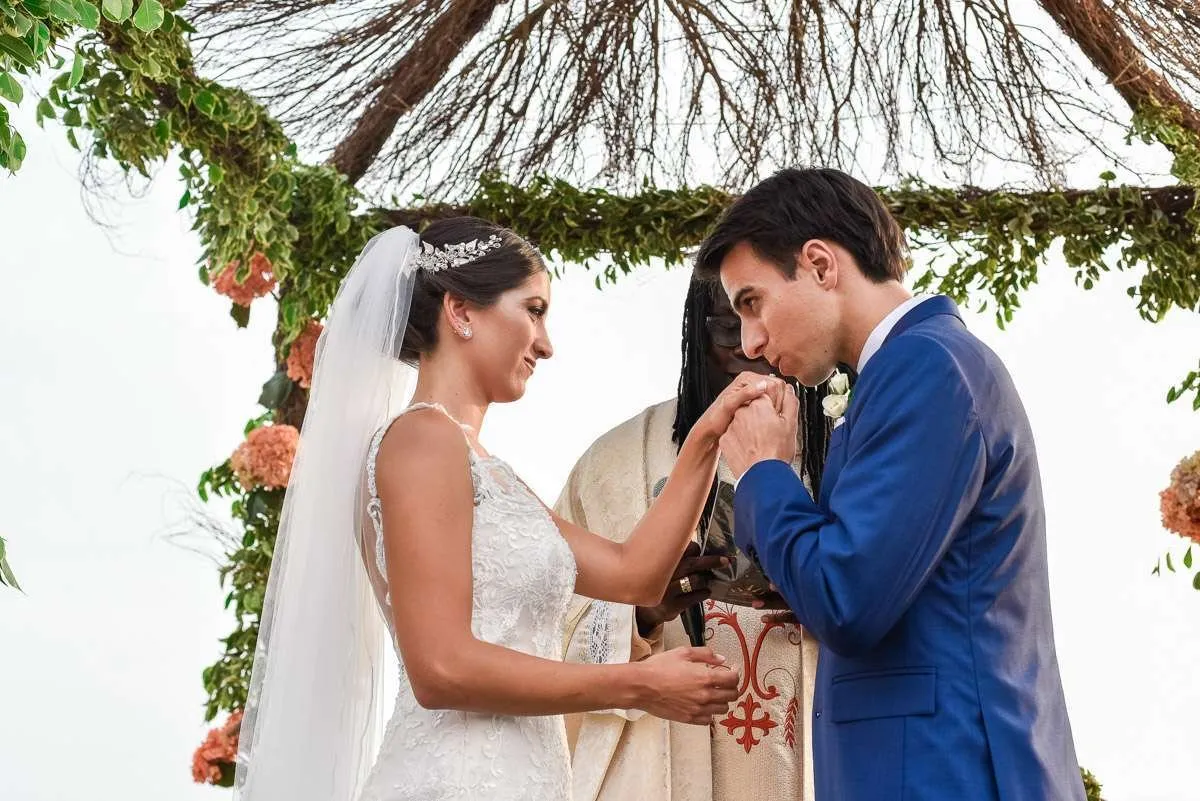
A civil wedding in Mallorca brings together two things worth keeping apart: the act the law recognises as marriage and the ceremony you imagine for the day. Sometimes they are the same and sometimes not, and understanding the difference before choosing place and hour avoids surprises with your guests, with the town hall and with whoever officiates. This guide explains what is legal and what is symbolic, who can officiate outside a town hall and how the day is ordered in each case. The paperwork beforehand is in marrying in Mallorca from abroad, and what to ask an estate about the civil ceremony is in a civil ceremony at the same estate. We do not repeat them here.
What is legal and what is symbolic
Spain's Civil Code says a Spanish national may marry in two ways: in the civil form the Code itself regulates, or in a religious form provided for by law (article 49). There is no third. If both parties are foreign nationals, article 50 adds the form set by the personal law of either of them; in that case, ask whoever handles your file.
A symbolic ceremony is neither of those forms. It is an act, with words, rings, music and readings, that is not a marriage in the eyes of the law: it does not replace the legal act, it can only be held in addition to it. And it can be as beautiful as the legal act, or more; they are different things, not better and worse.
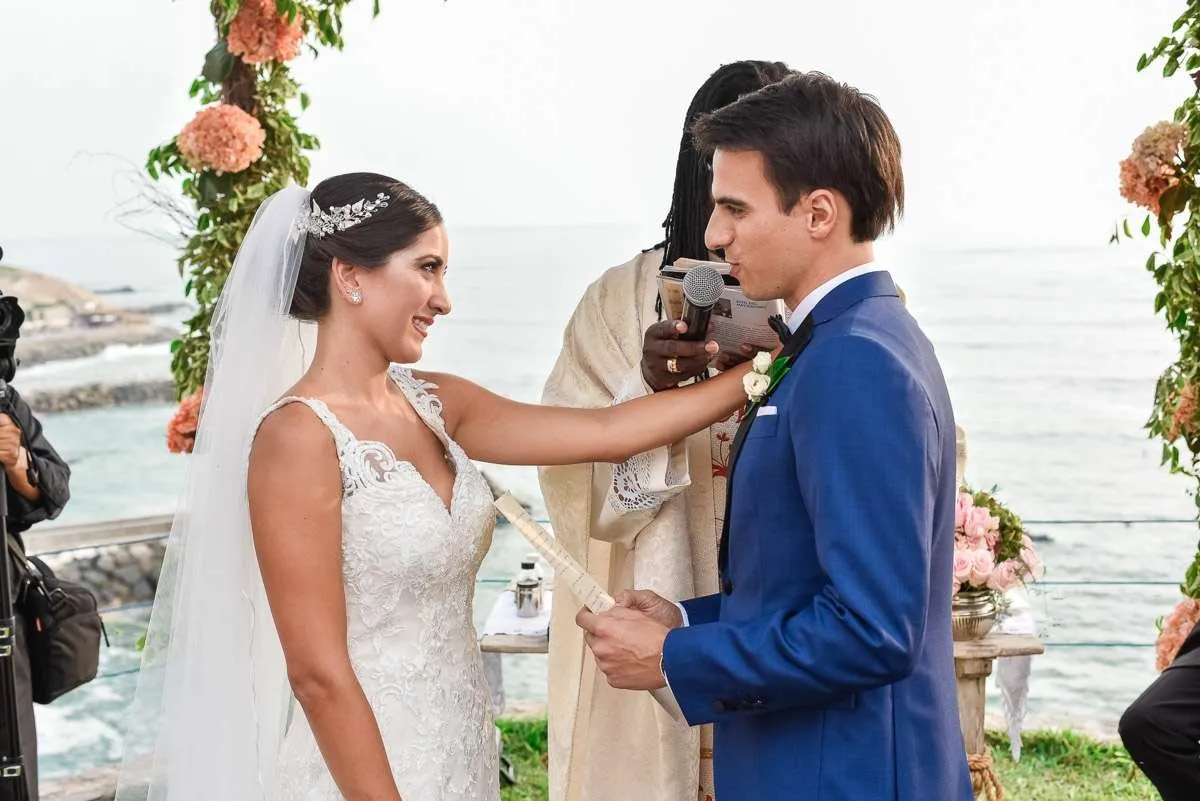
The legal act, by contrast, has four parts. The first is the prior file, which establishes that you are free to marry. The second is the officiant, who must be one of the people the law lists. The third is the consent of both, given before that person. The fourth is the record or deed of the ceremony, signed by the officiant, the two parties and two witnesses (article 62).
What the law describes of the central moment is simple. The officiant reads articles 66, 67 and 68, on the rights and duties of spouses; asks each of you whether you consent to marry the other and, if both answer yes, declares you united in marriage (article 58). The marriage has civil effects from its celebration, and for full recognition it is entered in the Civil Registry (article 61); the officiant sends a copy of the record to the Civil Registry for entry, not you (article 62).
Who can officiate, and where
For the legal act, the law lists who may celebrate it: the mayor of the municipality where the marriage is held or the councillor the mayor delegates to, or a lawyer of the Administration of Justice or a notary, freely chosen by both and competent in the place of celebration (article 51). Which of them may marry you depends, in one case, on who handled the file (article 57), and that is explained in the guide to a civil ceremony at the same estate.
Two ideas follow that are almost never mentioned. The first is that competence belongs to the place: the mayor is mayor of the municipality where the wedding is held, and the notary must be competent in the place of celebration. If the estate lies in a given municipality, that is where to ask. The second is that who may marry you is one thing and whether they come to the spot you choose is another. Whether the councillor or the notary will go to an estate, a garden or the water's edge is agreed with them, and is worth asking before fixing the date, not after.
Some town halls also celebrate in spaces of their own other than the council building: Palma's, for example, names a room in Bellver Castle on its online office. It is not an estate, but it shows that «at the town hall» does not always mean the same room. Each municipality has its own regime, and the first question is always the same: what it offers and how far ahead it must be requested. And if the town hall conditions the date: choosing a wedding date in Mallorca.
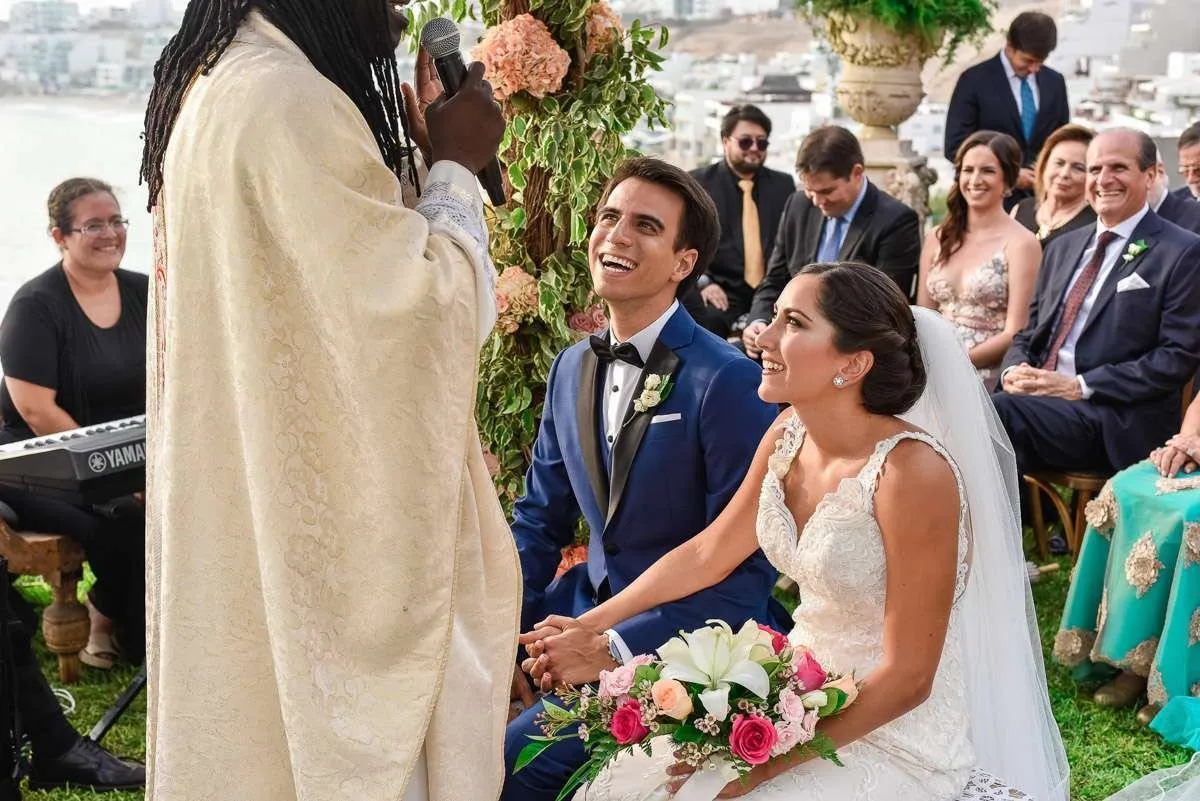
A symbolic ceremony needs no authority. Since it has no legal effect, it can be led by whoever you choose: a friend, a relative, a master of ceremonies or a celebrant. What matters is that your guests know, so that nobody takes you to be married that day when you are not yet. For the nuance between a civil and a religious ceremony, see civil or religious ceremony at the estate.And if it is held in two languages: bilingual wedding.
Three ways to order the day
With that clear, the day almost orders itself. There are three usual ways and none is better than another: each suits a different couple.
One act, if the officiant agrees to come. The ceremony your guests see is the legal one, at the wedding place itself. It is the simplest to follow and asks for the fewest journeys, but it depends on the mayor, the councillor or the notary agreeing to go. What the law fixes is what is described above, the question to each of you and the signing with the two witnesses; readings, music or words of your own are agreed with whoever officiates.
Two acts on the same day, in two places. The legal act at the town hall or before a notary, then the ceremony at the estate. It is practical if the officiant does not come to the place, but it adds a transfer, and the transfer takes time from the afternoon light. How to share out the hours is in wedding timetable: the key half hour. Fix the legal act first, since it depends on someone else's diary, and place the ceremony after it.
Two separate days. The legal act earlier, even before the trip if you live abroad, and on the wedding day a symbolic ceremony that is only yours. It is the freest way, because no word, hour or place of the big day has to pass through a public calendar. In return, you must tell your guests clearly. The order of the paperwork, if one of you lives in another country, is in marrying in Mallorca from abroad. If what you are after is a wedding with few guests, how to plan one. And if something will be thrown at the exit: confetti at a wedding, what you can throw.
What to decide in any of the three
Whatever the order, there are five decisions worth settling in writing:
- Who the two witnesses will be, and that they are present when the signing takes place.
- At what point of the day the legal act falls and who tells the guests exactly what they are about to see.
- Who leads the symbolic ceremony, how long it lasts and in what language, if guests come from several countries.
- Whether the legal act may be photographed and filmed, and from where; for the symbolic one, it is agreed with whoever leads it.
- What happens to each act if it rains: the one held somewhere that is not yours cannot be moved as easily.
From the photography and film side, the two acts look different. The legal one is formal and has one moment that cannot be repeated, the signing; the symbolic one allows more time, more words and more movement. Knowing in advance which of the two your guests will see, where the witnesses stand and who leads each one helps neither go without its moment. If you would like to order it with someone who already knows how each act moves, you can tell us your story.
Frequently asked questions
Does a symbolic ceremony have legal validity?
On its own, no. The Civil Code provides two ways to marry, the civil and the religious form provided for by law (article 49), and a symbolic one is neither. It can be held in addition to the legal act, not instead of it.
Can we be married at the estate?
It depends on who officiates and whether they agree to come. The law lists who may celebrate a civil marriage (article 51); whether that person goes to a particular place is agreed with them. Ask the town hall, the lawyer or the notary before fixing the date, and ask for the answer in writing.
How many witnesses are needed?
The record or deed of the celebration is signed by the officiant, the two parties and two witnesses (article 62 of the Civil Code).
Who sends the record to the Civil Registry?
The officiant: once the record is drawn up or the deed authorised, they send a certified copy to the competent Civil Registry for entry (article 62).
Can a friend lead the ceremony?
The symbolic one, yes: since it is not a marriage in the eyes of the law, no authority leads it. The legal act, no: it is celebrated by the people article 51 lists, that is, the mayor or the councillor they delegate to, a lawyer of the Administration of Justice or a notary.
If you are planning a wedding in Mallorca, explore MAKERSWED's wedding photography and film collections, read the frequently asked questions or shape your story in three short questions.