Guide · 6 min read · Updated
Pets at a wedding:dogs at the ceremony and in the photos
What to ask, who looks after them and when they appear: what to settle before the day.
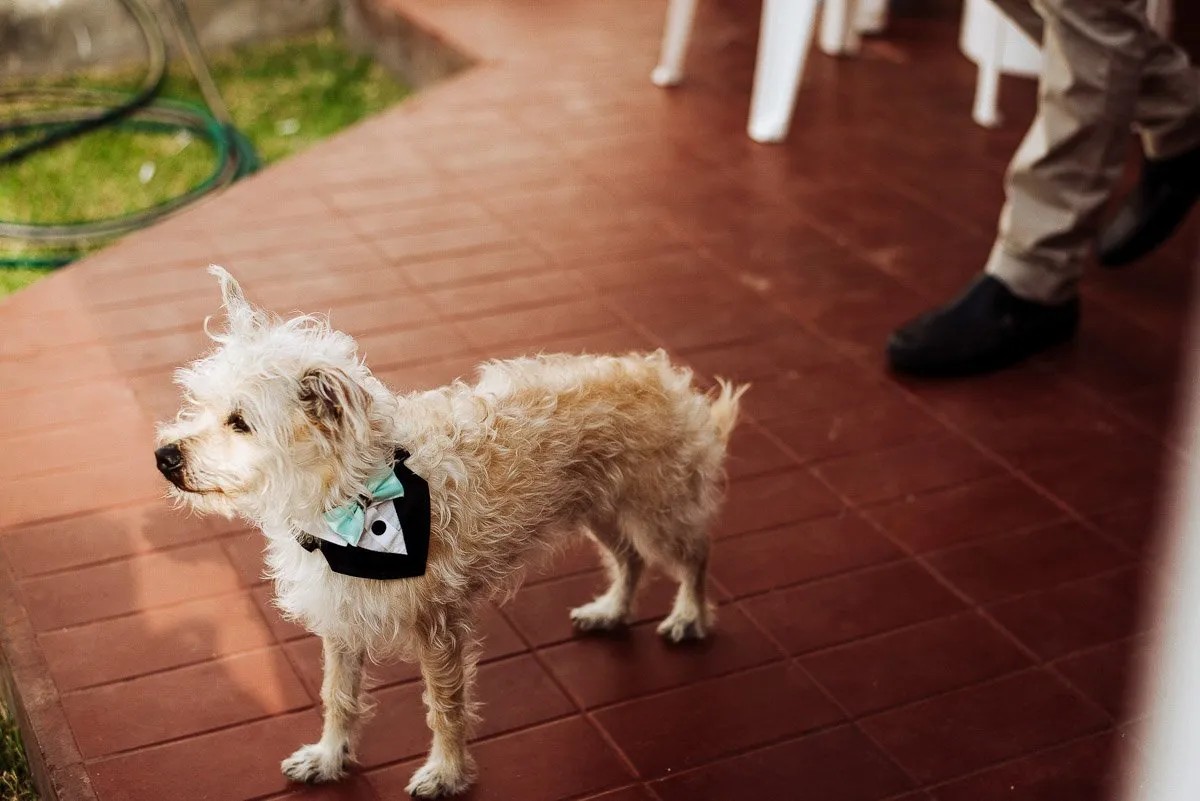
Pets at a wedding are at once what brings the most joy and what is most often left to chance. A dog waiting at the end of the aisle, a cat watching from the window while you get ready: it can be the most endearing thing in the photographs or the film, and what goes wrong is almost always a matter of organisation, not of the animal’s character.
This text is about the practical side: what to ask the venue, what the rules say in general terms, who looks after the animal during the day, when it appears in the photos and in the film, and how to look after its welfare. It talks mostly about dogs, the most common case. Whatever does not cite a rule is a trade judgement, not a regulation. If children will come, this other text covers them; for photographs and film together, see one team.
What to ask the venue
The first question is the simplest and the most often forgotten: are animals admitted? The law does not give one answer for every place. For restaurants, accommodation and places where food is consumed, it says they may allow entry to areas not used for preparing or handling food, and that if they do not, they must say so with a sign visible from outside; all of it without prejudice to municipal ordinances. At an estate or a reception hall, the prudent assumption is that the house decides, and its rule should be asked for in writing.
These are the questions worth asking, in good time and not the week of the wedding:
- Are animals admitted? And where: the ceremony, the garden, indoors, the banquet.
- Are there written rules? Lead, areas that are off limits, cleaning, and what happens if the animal causes damage.
- Are there other animals? The venue’s own, or those nearby, may upset yours.
- Where can it rest? A quiet, shaded corner with water, away from the music and the service.
- What about the kitchen? The animal stays out of the areas where food is prepared, and whoever serves the banquet should know.
And one question that is not for the venue: whether any of your guests are allergic to dogs or afraid of them. Better to know beforehand and decide where each person sits. Ask for anything important in writing. The order of everything else is in what you need for your wedding.
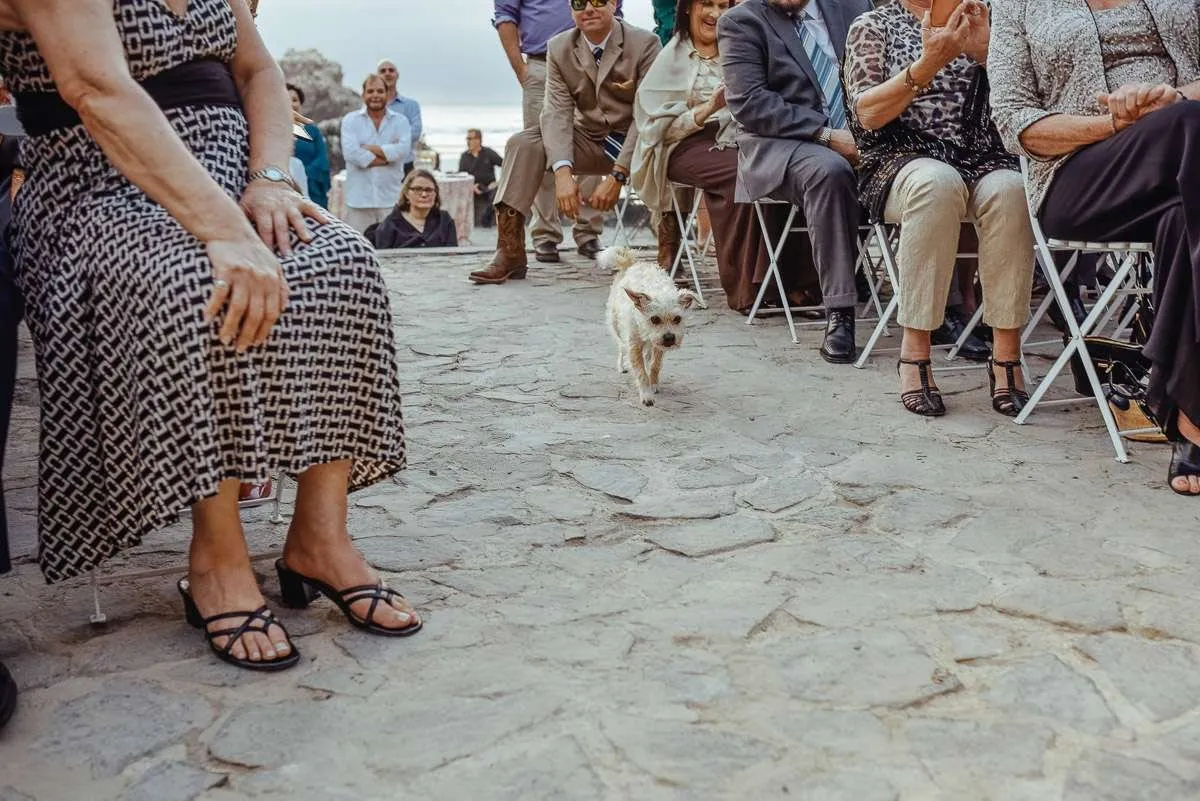
Beach, countryside and natural areas
A ceremony or photographs on the beach with the dog depend on something other than the venue: the town hall. The law says that town halls will promote access for pets to beaches and parks, but always without prejudice to their ordinances, and each municipality has its own. There is no single answer for every beach: check the ordinance of the municipality concerned or ask the town hall, and keep the reply.
In the countryside and in protected areas there is another limit. The law prohibits leaving animals loose, or in a position to cause harm, in public places or private places open to the public, and it expressly names national parks, droving routes where livestock graze and other protected natural areas, because of the harm they can do to people, livestock or the natural environment. In a natural setting it is wise, then, for the animal to be held and watched, and whoever manages the space may have rules of its own: ask before planning a photograph there.
Who looks after the animal during the day
The animal cannot be the responsibility of whoever is busiest: not yours, not your parents’, not the person carrying the rings. Name a trusted person, by name, with no other task during the day and whom the animal knows. That person brings it to the moment it appears, takes it back when it is over and looks after water, walks and rest. If nobody can, better the animal takes part in only one stretch of the day, or stays home, than is left half-managed.
The law backs that arrangement. It requires whoever keeps an animal to supervise it and prevent its escape, to keep it identified and traceable, and not to leave it alone in closed vehicles where the temperature could endanger its life; and it makes that person liable for harm or nuisance it causes without provocation or negligence by a third party. A collar with a contact number, in case it slips away, never hurts.
A word of experience: whoever photographs or films cannot hold a lead. Their job is to watch, and an animal that depends on someone with a camera in their hands comes out badly or is badly looked after. If the place allows it, a rehearsal with the animal the day before the wedding solves half the scares.
Welfare: noise, heat and rest
A wedding is long, noisy and crowded, and for an animal few things are so all at once. Before deciding whether it comes and for how long, think about what yours is like: sociable or not, frightened by noises, old. If in doubt, talk to your vet; the law provides for turning to a professional when the animal’s situation requires it, and it asks for handling that does not cause anxiety or fear, a good yardstick for the whole day.
- Noise. Loud music, applause, voices, confetti or fireworks. Let the animal leave before the party starts and go back to a quiet place.
- Heat. Shade, fresh water and ground that does not burn. Never waiting inside a parked car.
- Rest. A corner with its blanket, away from foot traffic. Nobody should give it food from the table without the say-so of whoever looks after it.
- Accessories. A bow tie or a party collar, only if the animal tolerates them and has worn them at home first.
- The exit. The animal leaves when it tires, not when the programme ends.
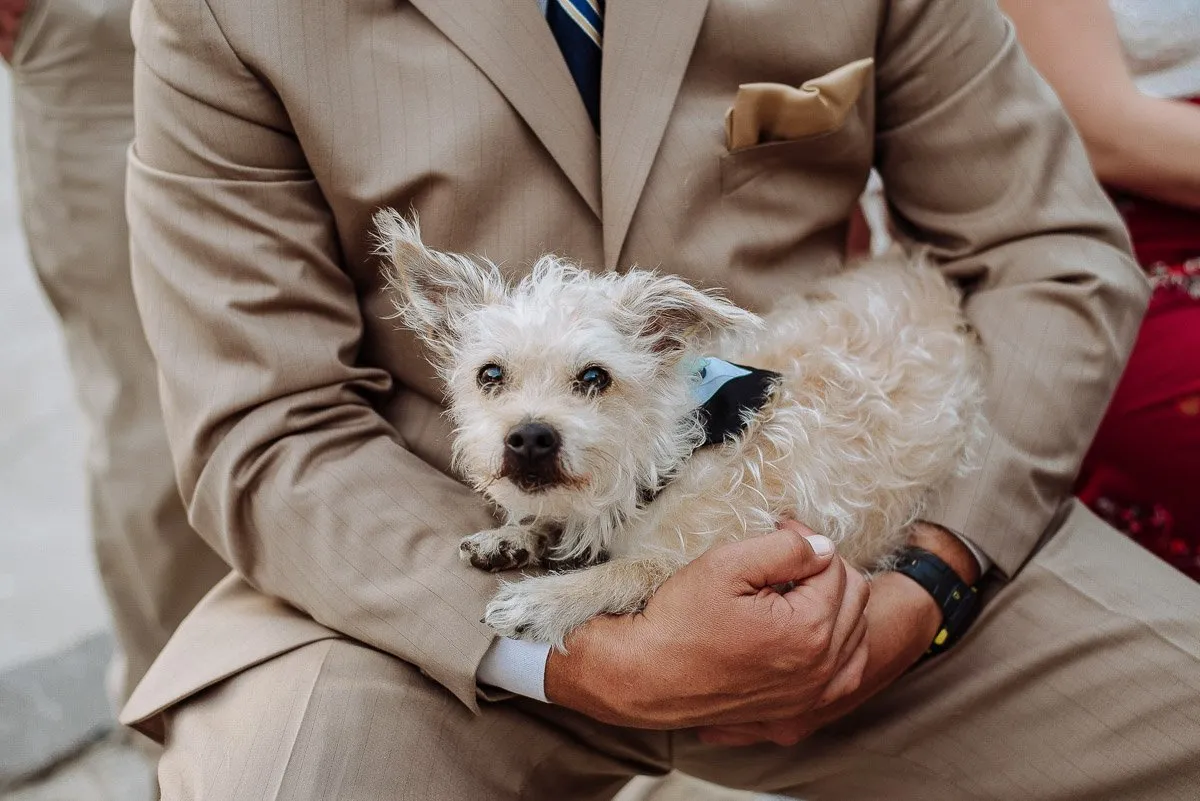
When they appear in the photos and the film
What is best for the animal is best for the image: a short time, at the start and with someone it knows close by. A tired animal does not look good in any photograph. Think of specific, brief moments:
- Getting ready. A quiet moment with the couple, at home or at the venue, before the day speeds up. It is where the closeness shows best.
- The aisle. If it is part of the ceremony, let it walk a short stretch and have its trusted person take it away before the vows. If it carries the rings, make them pretend ones: real rings and an animal do not mix.
- A separate portrait. With the couple, during the portrait session, or with the family, in the group photographs. Whoever photographs crouches to its level; so should you.
The order of the afternoon is set by the light, not by the animal: the day’s timetable is in this text.
In the film, the animal tells its story another way: with movement, claws on the floor, the jingle of a collar, a dash behind the couple. All of that is kept if the animal is calm. Sound at a ceremony is explained in the article on the wedding film.
What to tell the photo and film team
What helps whoever photographs and films most is a single sheet, sent a few days before, with this:
- The animal’s name and who is handling it, with their phone number.
- When it arrives and when it leaves, and where it rests meanwhile.
- The moment it appears: getting ready, the aisle or a portrait.
- How it reacts: whether it is frightened by noises or sudden lights, or does not like being touched.
- What it is wearing: collar, bow tie, ribbon.
With that sheet, the animal appears when it should and nobody goes looking for it in the middle of the ceremony.
If you would like us to plan with you the place the animal will take in the photographs and in the film, tell us your story.
Frequently asked questions
Can a dog come to the ceremony?
It depends on the venue. For restaurants, accommodation and places where food is consumed, the law says they may allow entry and, if they do not, must say so with a visible sign, without prejudice to municipal ordinances. At an estate or a hall, the prudent assumption is that the venue decides. Ask the venue and get the reply in writing.
Who should look after the pet on the wedding day?
A trusted person, by name, with no other task during the day. That is a trade judgement, and the law places on whoever keeps the animal the duty to supervise it, to prevent its escape and liability for harm it causes.
Can the dog go to the beach for the ceremony or the photos?
The ordinance of each municipality decides. The law only says that town halls will promote access for animals to beaches and parks, without prejudice to their ordinances. Check the municipality’s ordinance or ask the town hall.
When is it best to photograph the pet?
Early and briefly: while getting ready or in a separate portrait, with its trusted person nearby. That is a trade judgement: a tired animal does not look good in any photograph.